
The bikes are lined up outside the cafe. One of your riding buddies holds up a phone and calls out, "Photo first! Jackets off, so we look relaxed." You unzip your riding jacket, then remember what's under it: the committee T-shirt from your neighbourhood's Independence Day games, with a neckline that has already lost its shape.
The photo lands in the WhatsApp group that same afternoon and gets saved to everyone's camera roll. The route will soon be forgotten. That committee T-shirt won't.
A laid-back afternoon ride with the group usually follows the same pattern. Two hours on the road, then three hours of chatting at the cafe until there's nothing left of your iced coffee but the ice. So you actually spend longer stopped than riding. Oddly, most of us dress for the time on the motorbike and nothing else. Yet your clothes have to feel right in two situations: on the move, and sitting around the table talking.
Treat Your Riding Jacket Like a Helmet
A riding jacket with protective pads at the elbows and back is safety gear. It looks after you while the bike is moving, and its job is done the moment the stand goes down. Nobody sips coffee with their helmet still on. Your riding jacket doesn't need a seat at the table either.
Think of it as an outer layer that's just along for the ride. So build your outfit from the inside out. Ask yourself first: once the jacket is hanging on the mirror, what will people see? That's your outfit for the day. If the answer is a crumpled T-shirt or a thin undershirt, that inner layer is what needs fixing.
What to Wear Under Your Motorcycle Jacket
This is the layer people look at longest, so don't just grab the first thing in the wardrobe. For a relaxed day out, a plain T-shirt is enough. Just make sure the fabric doesn't crease easily and actually soaks up sweat. After two hours squeezed under a jacket, a tee that wrinkles easily usually comes out with creases running across the stomach.
A short-sleeved shirt is worth a try too. A lightweight one stays cool under the jacket, and once you sit down, the collar makes you look more put-together than an ordinary tee.
Thick fabric is the thing to avoid. The riding jacket is warm enough on its own, especially on the road at midday. A heavy T-shirt underneath will only make you overheat, and you'll be soaked in sweat before you get there.
Pack a Denim Jacket for When You Stop
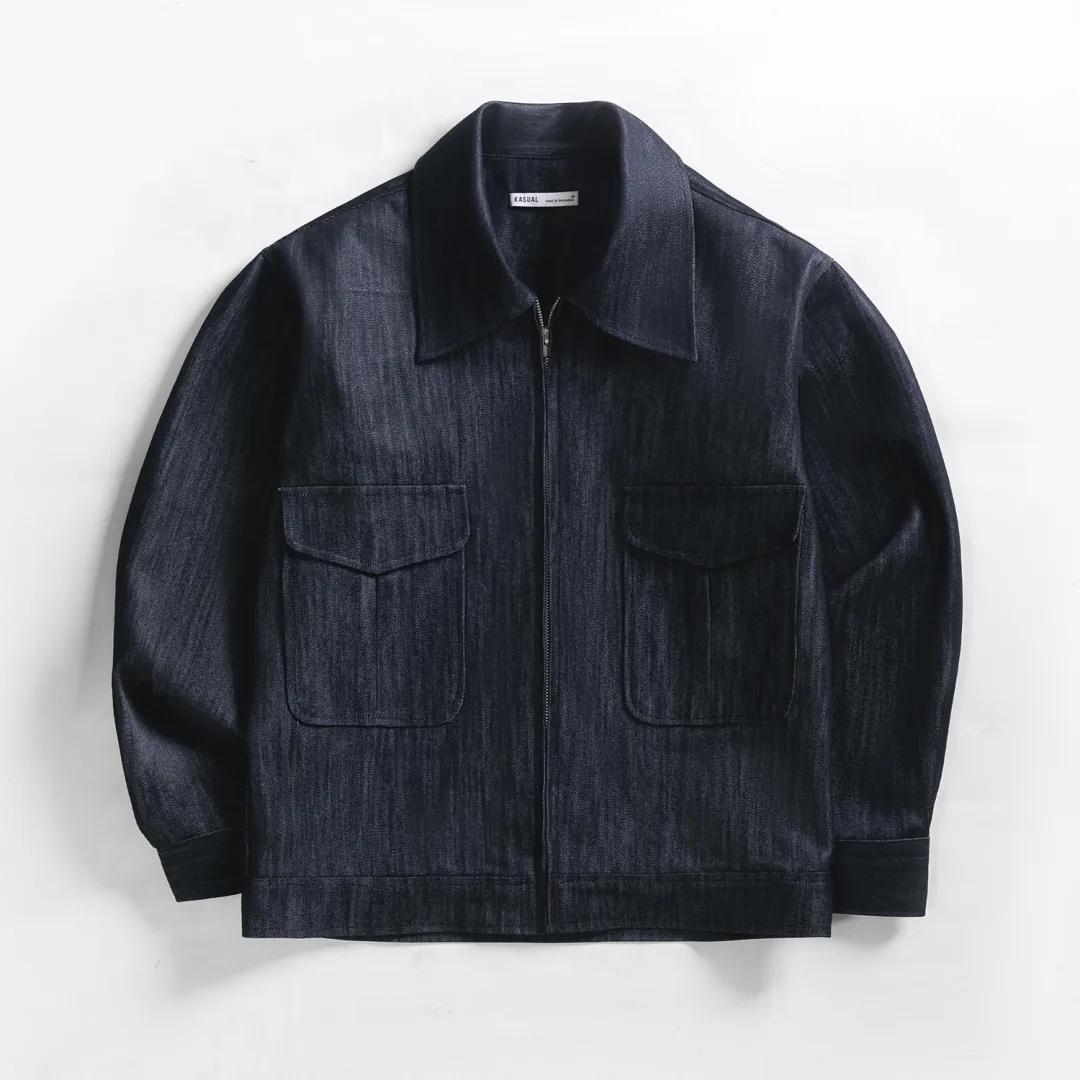
If you want to look a bit sharper once you sit down, keep a light outer layer in your bag or in the storage under the seat. The most practical choice here is a denim jacket. The fabric is hard-wearing, so it doesn't matter if it spends hours folded up. Wear it over a plain T-shirt and your shoulders instantly look more structured.
Take the dark blue Atelier denim jacket, for example. Fold it, tuck it into your bag, then put it on once your helmet is off. If your wardrobe is mostly black and grey, the black version of the same jacket will be easier to pair with the rest.
Remember, the denim jacket goes on after the bike is parked. On the road, it's still the riding jacket that protects you. Some people do wear a denim jacket for slow rides around town. Even so, there's no protective padding in it at all.
A jacket you've worn while hanging out near the parked bikes often comes home smelling of exhaust. Hang it somewhere airy overnight before you store it, and resist the urge to fold it right away. If you can, park and sit a little further from the row of exhaust pipes.
One extra layer like this is usually enough if you're only going for coffee. It's a different story if the ride ends at an event that calls for something smarter, like a wedding reception. For that, bring a full change of clothes.
Pants That Are Roomy in the Thigh but Still Hang Neatly
Your pants get tested twice in one afternoon. First on the seat, where your knees stay bent for a long time and your thighs move every time you put a foot down at a red light. Then on the cafe chair, where you sit for hours, leaning back one minute and forward over the table the next.
If the thighs are cut narrow, the fabric pulls the whole way there. Once you reach the cafe, it's the creases at the top of your thighs and behind your knees that join you at the table.
So look for pants that give your thighs room but still look straight and neat from the outside. One pair that fits the bill is the brown Regular Comfort pants. The cut is roomy where you need to move, and the colour is understated enough for any cafe. If you prefer a cut that stays loose all the way down, take a look at the black-brown wide-leg pants from the City line. They give you more room and still look tidy. Nobody will mistake them for pyjamas. Heavyweight jeans work too, as long as they aren't tight through the thigh.
As for colour, road dust is the main enemy. Brown, black and grey-green can hide it all afternoon. White or pale cream pants have usually gone dull before the first coffee even arrives.
Two Quick Tests Before You Start the Engine
Before you set off, stand in front of the mirror for a moment with your riding jacket on. Then take it off and look at what's left. If what you see makes you want to keep the jacket on until you're home, one of your layers still needs work.
The second test is for your pants. Lift one knee as if your foot were on the footrest, or crouch for a moment like you're about to tie a shoelace. If the fabric pulls tight across your thighs, look for a roomier cut.
If you pass both, the next shout of "photo first" won't send you into a panic. Just take off the jacket and join the front row.