
That night you take off the new denim jacket that has kept you company all day and drape it over the back of a chair. It won't slump. The shoulders stay squared and the sleeves keep a slight bend at the elbow, as though an invisible guest were still wearing it and in no hurry to go home.
The first thought that comes to mind is usually the same: what if it's the wrong size?
Most likely, it isn't. Almost every new denim jacket behaves like this for the first few weeks, including the dark blue denim jacket from the Atelier line. The fabric has to be worn for a good while before it softens and settles into the shape of your body. Breaking it in isn't hard, as long as you don't fall for the quick fixes.
Why a New Denim Jacket Feels So Stiff
At heart, denim is thick cotton, tightly woven. After it's dyed, the fabric still goes through a finishing stage at the mill, so by the time it reaches you the fibres are stiff and the surface feels dense. What softens it later is the warmth of your body and the way you move every day, with some help from water when the jacket finally goes in the wash.
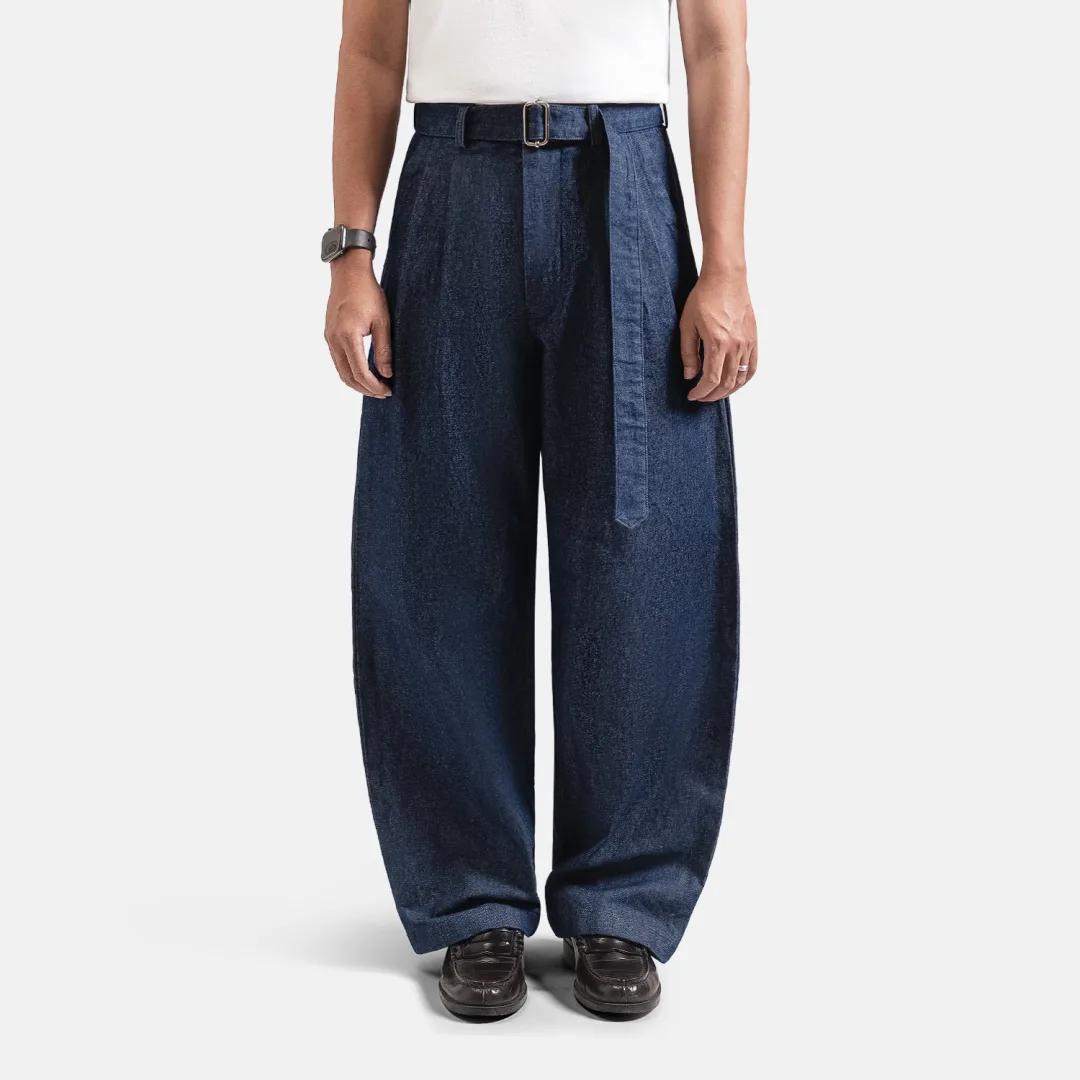
Raw denim is usually the stiffest of the lot. The name refers to denim that hasn't been washed even once since it was dyed. Starch and leftover indigo from the mill are still clinging to its fibres. The same goes for jeans. A pair of navy blue raw denim trousers feels hard at first, then slowly takes on the bend of the wearer's knees and the way they sit.
So the stiffness isn't a defect. The fabric just hasn't been lived in yet.
Is Your Denim Jacket Too Small, or Just Stiff?
That worry about the size is still worth checking, because stiff fabric and a jacket that's too small are two different problems.
Stand in front of a mirror and do up all the buttons. If the fabric around them pulls into X-shaped creases, the body of the jacket is too narrow. Then feel for the bony point at the edge of your shoulder and find the jacket's shoulder seam. If the seam stops before it reaches that bone, the shoulders are too small.
Finally, cross your arms over your chest. New fabric is bound to feel a little restrictive. But if the back of the jacket pulls drum-tight and your arms get stuck halfway, the problem is the size.
If you see none of these signs, your size is fine. If you see any of them, waiting won't help. Softer fabric will be nicer to wear, but it won't move a shoulder seam.
Wear It at Home for Two to Three Hours a Day
The surest way to soften stiff denim sounds boring: wear it, then wear it again. You don't even need to leave the house. Just put it on while you reply to work messages at your laptop or wait for the kettle to boil. It doesn't have to be all day. Two or three hours will do. If the afternoon is sweltering, do it in an air-conditioned room. The jacket won't mind.
While you have it on, get the stiff parts moving. Bend and straighten your elbows over and over until the crease lines appear. Reach both arms far out in front of you, as if passing a plate across the dinner table. Every so often, hug yourself like someone shivering in a cinema.
Each time you bend your elbow, the fabric there folds along the same line. Over time, helped by the warmth of your body, the fibres along that line loosen. The elbows, shoulders and back move the most, so they usually give in first.
There's one safe way to speed things up: gently knead the stiffest parts with both hands, like bread dough, while the football's on. The rest is down to time. Wear it for a few hours almost every day and the jacket will usually start to feel supple after two to four weeks. So don't give up on day three.
You Don't Need to Wash a New Denim Jacket Before Wearing It
Washing new clothes before you wear them is a habit you can skip with a denim jacket. If it's raw denim, resist the urge to wash it until your movements have set some creases. Those creases are where raw denim gets its distinctive fades.
To get rid of the packaging smell, just leave it to air overnight by an open window. When it's finally time for a wash, turn the jacket inside out and use cold water.
Hot Water and Other Quick Fixes That Ruin Denim
Advice on softening denim overnight is easy to find online, and most of it does damage you can't undo.
A hot-water soak can shrink the cotton unevenly and pull the jacket out of shape. The indigo also bleeds out faster than it should.
Fabric softener gives a slick feel that doesn't last. The residue stays on the fibres as a coating, and the fabric starts to feel different in your hand. On raw denim, that coating also holds back the natural fading its owner has been waiting for.
Some people wash the jacket several times a week to soften it faster. The result is indigo that fades in all the wrong places instead of along the creases your movements have made.
Turning the iron up to its hottest setting won't help either. The fibres stay stiff, and the surface of the denim can end up with a shine that never goes away. If the wrinkles bother you, use a steam iron on low heat and put a thin cloth between the iron and the jacket.
All of these tricks make the same mistake: they try to squeeze several weeks of work into a single afternoon.
Signs Your Denim Jacket Is Broken In and Moves with You
One morning you lift your coffee and realise your elbow no longer has to fight the fabric. Crease lines have started to show along the inside of the sleeves and across the back, in a pattern that follows the way you move. The shoulders have settled onto the line of your body too, no longer boxy the way they were on the hanger in the shop.
The same process applies to the slub denim work jacket. Slub means the yarn runs thick in some places and thin in others, so the surface feels slightly uneven under your fingers. The texture is different, but the story is the same as with any other denim: the more you wear it, the more comfortable it gets.
Then one night you drape it over the same chair again. This time the shoulders slump and the sleeves hang limp. The invisible guest has gone home.