
Men's Work Trousers: Choosing a Fabric That Stays Neat After Hours of Sitting
Published
The lift stops at the seventh floor, and for the first time since this morning you see yourself head to toe in the mirror. Your shirt is still crisp. The problem is your trousers. Creases fan out from the tops of your thighs towards your knees, like a sheet of paper that's been scrunched up and smoothed flat again. Your client meeting starts in five minutes.
You run your palm over your lap, twice. The lines stay right where they are.
This morning those trousers were perfectly smooth. Since then you've spent almost five hours at your laptop and got up only once, for a toilet break. If you're shopping for men's work trousers that can handle days like this, the thing to check above all is what happens to the fabric after hours in a chair.
Why Trousers Crease When You Sit for Hours
The moment you sit down, the fabric folds in two places: across your lap and behind your knees. Your weight then presses down on those folds and your body heat warms them, for hours on end. It's a lot like ironing, except you end up with lines you never wanted.
So the question isn't whether your trousers will crease. Any fabric will if you sit on it that long. What makes the difference is recovery: how quickly the fabric smooths out once you stand up and walk a few steps. A fabric with good recovery already looks neat by the time you reach the meeting room. One with poor recovery carries the imprint of your chair well into the afternoon.
Try a Scrunch Test and a Sit Test Before You Buy
You don't need any tools to check how well a fabric recovers. Grab a small handful of fabric at the thigh, squeeze it tight while you count to ten, then let go.
Now look at what's left. Wrinkles that soften quickly and have almost vanished within a minute mean the fabric will be fine at the office. If you're left with sharp lines that refuse to fade, that's roughly what your lap will look like by late afternoon, and those trousers should go back on the rack.
Next, take the trousers into the fitting room and sit on the bench for two or three minutes. Cross your legs for a moment, then stand up and walk a few steps before you turn to the mirror. Two minutes is a far cry from five hours. But if the fabric is already marked after so little time, it won't look any better after a whole day.
Shopping on an app instead? Go by the fabric details on the product page, then match them against the two fabrics below.
Hold the Trousers Up and Watch How the Fabric Hangs
Drape is the way a fabric hangs when nothing is pulling on it. Hold the trousers by the waistband and lift them to chest height so both legs hang free.
Good work trousers hang straight and still, with a little weight pulling the fabric down. That weight is on your side when you stand up, because it slowly draws the creases in your lap downward until they even out.
There are two warning signs. Fabric that's too thin and light swings around and clings to your skin, so even the smallest crease shows. Fabric that's too stiff does the opposite: it hangs like a pipe, then folds sharply behind the knee the moment you sit down.
One more quick check: gently pull the fabric sideways, then let go. A good fabric settles flat straight away. If the surface stays rippled, the knees will usually bag out after you've been sitting for a while.
Cotton Chinos or Polyester? Let Your Office Decide
Those tests will usually narrow your choice down to two kinds of fabric.
The first is the chino, a diagonal-weave cotton trouser that's more relaxed than dress trousers but still smart enough for the office. On the label, this weave is often listed as twill. Look for a pair with a little elastane or spandex blended in. The cotton keeps you cool, while the elastane helps the fabric bend with you when you sit and spring back into shape when you stand. You'll still get some light creasing, and in a relaxed office that's perfectly normal.
The full-length chinos in the Chino Workpant line use this kind of blend. If you'd rather your trousers finish around the ankle bone (a cut usually just called ankle), there's a coffee-brown ankle version in the Smart Waist Ankle Chino line. The pressed crease down the front of each leg keeps a clean line even when the lap is a little rumpled.
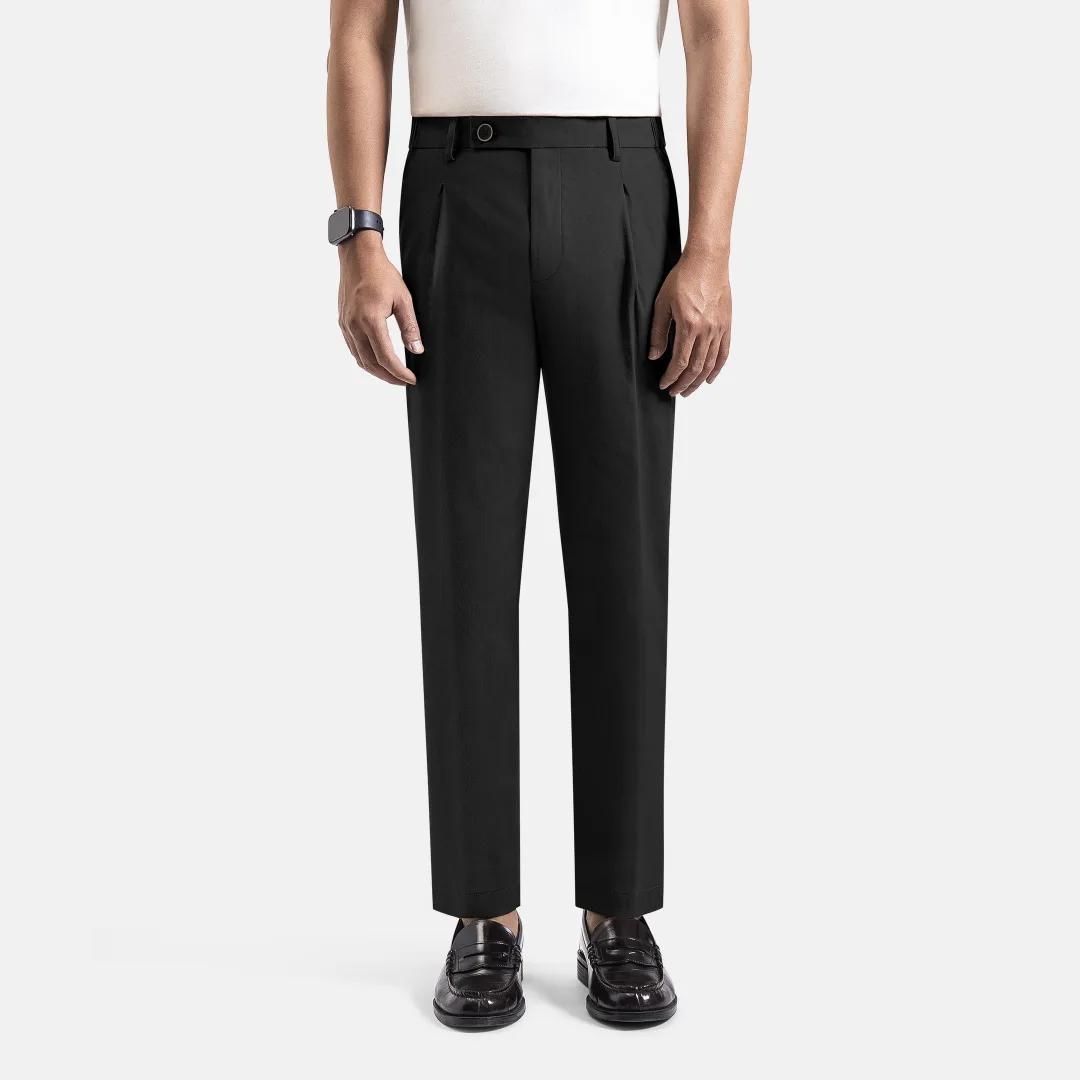
The second is a tightly woven polyester. It drapes more smoothly and looks more like the dress trousers worn in formal offices. It also resists creasing better. This is the fabric for days packed with meetings, or for business trips. One example is the Ankle Prime trousers in black, which keep a steady drape and dry quickly in humid air.
Save linen for the weekend. It's cool to wear, but it creases fast and the creases stick around.
A Cut That Leaves Room in the Thigh and Waist
The cut plays a part too. Trousers that are too tight through the thigh pull when you sit, and that pull leaves lines running across your lap. While you're standing in the fitting room, try pinching the fabric at your thigh. If there's still something to pinch, you have enough room. For the difference between slim and straight, the KASUAL Help Centre has a short explainer.
Mind the waist as well. Trousers that look neat but dig into your stomach after lunch will make the rest of the day drag. The Smart Waist line tucks elastic inside the waistband, so there's less pressure on your stomach when you sit for long stretches, while the front still lies flat.
Small Habits That Keep Your Trousers Neat Until You Head Home
Even a good fabric needs a little help. Get up every hour or two, whether to refill your water bottle or just to stretch your legs. A few steps are enough to give the folds in your lap a chance to relax before they set for good.
When you get home, hang the trousers upside down, clipped at the hems. Overnight, the fabric's own weight will pull out whatever creases remain, so tomorrow morning a quick press will do, or you may not need the iron at all.