
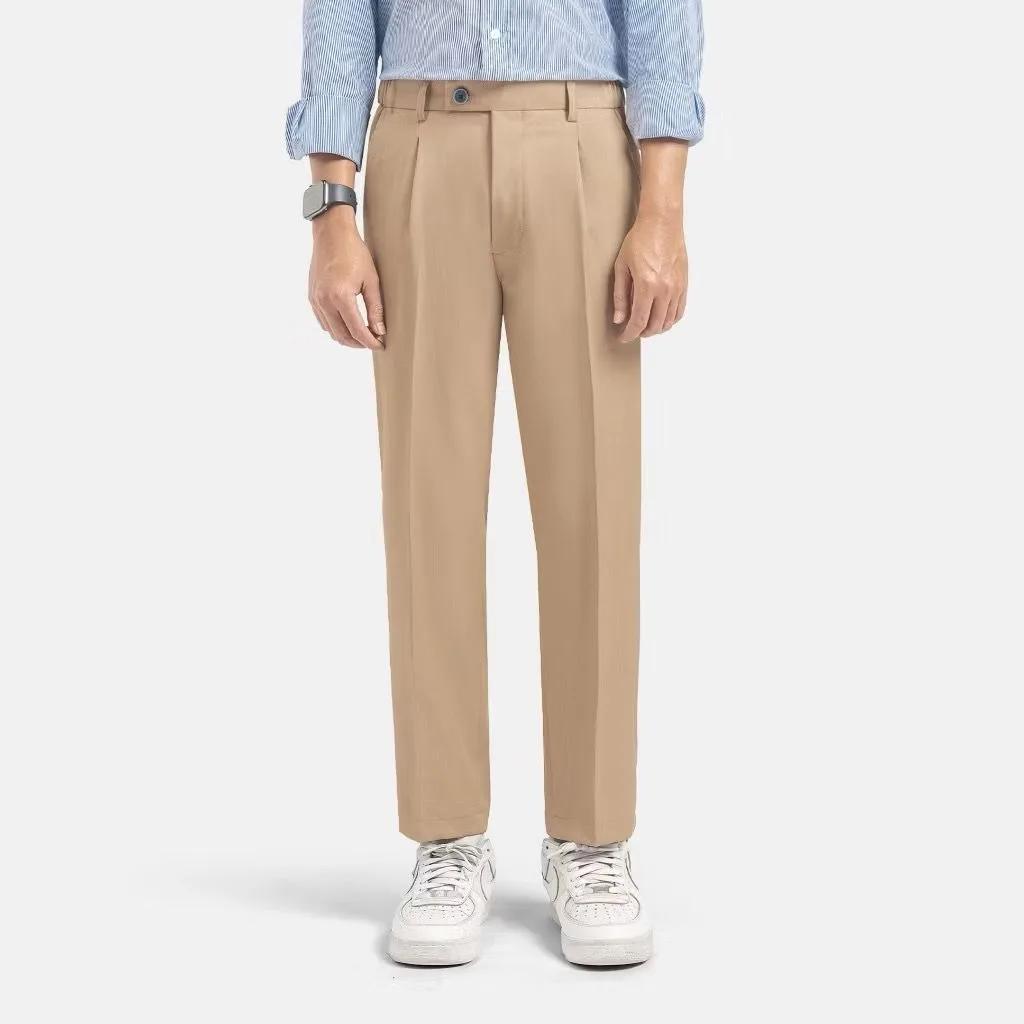
You're almost at checkout. The pants are in your cart, your address is filled in, all that's left is to pay. Then your cursor stops at one small menu labeled fit: slim, skinny, straight. Three terms that sound alike, and nothing explains the difference before the package arrives. As it turns out, the answer isn't in those names at all.
Fit names only describe silhouette, not size
Skinny, slim, straight, regular all actually answer the same question: how closely the fabric sits against your leg.
Skinny is the tightest, from thigh all the way down. Slim follows the shape of the thigh, then loosens slightly toward the ankle. Straight falls in a clean line with the same width from the knee down. Regular is the roomiest of the four, but still looks normal, not oversized. There's one more name that sometimes shows up: athletic (roomy at the thigh, then tapering downward). If you want a more detailed explanation, there's a full breakdown of what skinny, slim, athletic, and straight fit mean in the Help Center.
One thing to keep in mind: every brand interprets these names on its own. One label's slim can be as roomy as another's straight. So treat the name in a product title as a rough hint, not a guarantee.
Measure pants that already fit, don't trust the name in the title
Grab the pair of pants you find most comfortable right now. Lay it flat on the floor, then measure three things: waist circumference, hip circumference, and thigh width. Match those three numbers against the size chart on the product page, not against the fit name.
If your numbers fall between two sizes, take the larger one. A loose waist can still be helped by a belt or a tailor. Thighs that are too tight can't be fixed at all.
So what if thigh width isn't listed in the size chart? There are two routes. Ask customer service directly before checkout, or pick a fit that doesn't depend heavily on the thigh (straight, for instance, since the fabric falls in a straight line and isn't cut to follow the shape of your leg).
The safest starting point for a first online purchase
If this is your first time buying pants online, start with slim in an ankle length, meaning a length that stops right at the ankle. Polished enough for the office, not too tight for all-day wear, and the style won't go out of fashion quickly. Black ankle pants make a good starting point; if you'd like another color, there are navy pants in a similar cut.
If your day involves a lot of sitting and standing, a slightly flexible waistband helps too. Chino pants with a smart waist are worth a look: chinos are cotton pants with a smart-casual look, while smart waist means an elastic waistband that still looks neat from the outside.
What to avoid for a first online purchase: skinny. Not because it looks bad, but because the result depends most on your thigh circumference, and that's the single measurement brands list least often.
Frequently Asked Questions
What's the difference between slim fit and skinny fit in men's pants?
Skinny hugs the leg tightly from thigh to ankle. Slim follows the shape of the thigh but eases up slightly toward the bottom, making it more comfortable for all-day wear.
Is straight fit the same as regular fit?
No. Straight falls in a clean line with the same width from the knee down, while regular is roomier overall without looking oversized.
Why does a slim size feel different from one brand to another?
Because every brand interprets fit names its own way. One label's slim can be as roomy as another's straight, so always check against the size chart.
If my size falls between two options, which should I pick?
Go with the larger one. A loose waist can be fixed with a belt or a tailor, but thighs that are too tight can't be altered.
What if thigh width isn't listed in the size chart?
Ask customer service before checkout, or choose a fit that depends less on the thigh, like straight.
Which fit is the safest bet for a first-time online pants purchase?
Slim in an ankle length. Polished enough for the office, not too tight for daily wear, and it won't look dated quickly.