The last trailer is still rolling, and the cinema's air-con is already biting. Luckily you came prepared: a hoodie underneath, a new denim jacket on top. You cross your arms over your chest, like almost everyone else in your row. That's when the jacket starts to push back. Across the back, it feels like a backpack with its straps pulled too tight. The cuffs creep up, and the cold slips in at your wrists.
Yet in the shop, the jacket felt right. That day, you tried it on over a T-shirt, with your arms hanging straight at your sides.
The trouble is, you need a jacket most when it's cold, and in the cold your arms tend to cross on their own. So the right jacket size is the one that stays comfortable with your arms folded, over the clothes you'll actually wear underneath.
How to Do the Crossed-Arms Test
Start with what goes underneath. If the jacket will spend most of its time over a shirt, wear one when you try it on. If it will mostly sit over a hoodie, take the hoodie with you to the shop. A thin T-shirt can trick you, because over a tee even a size that's too small can feel roomy.
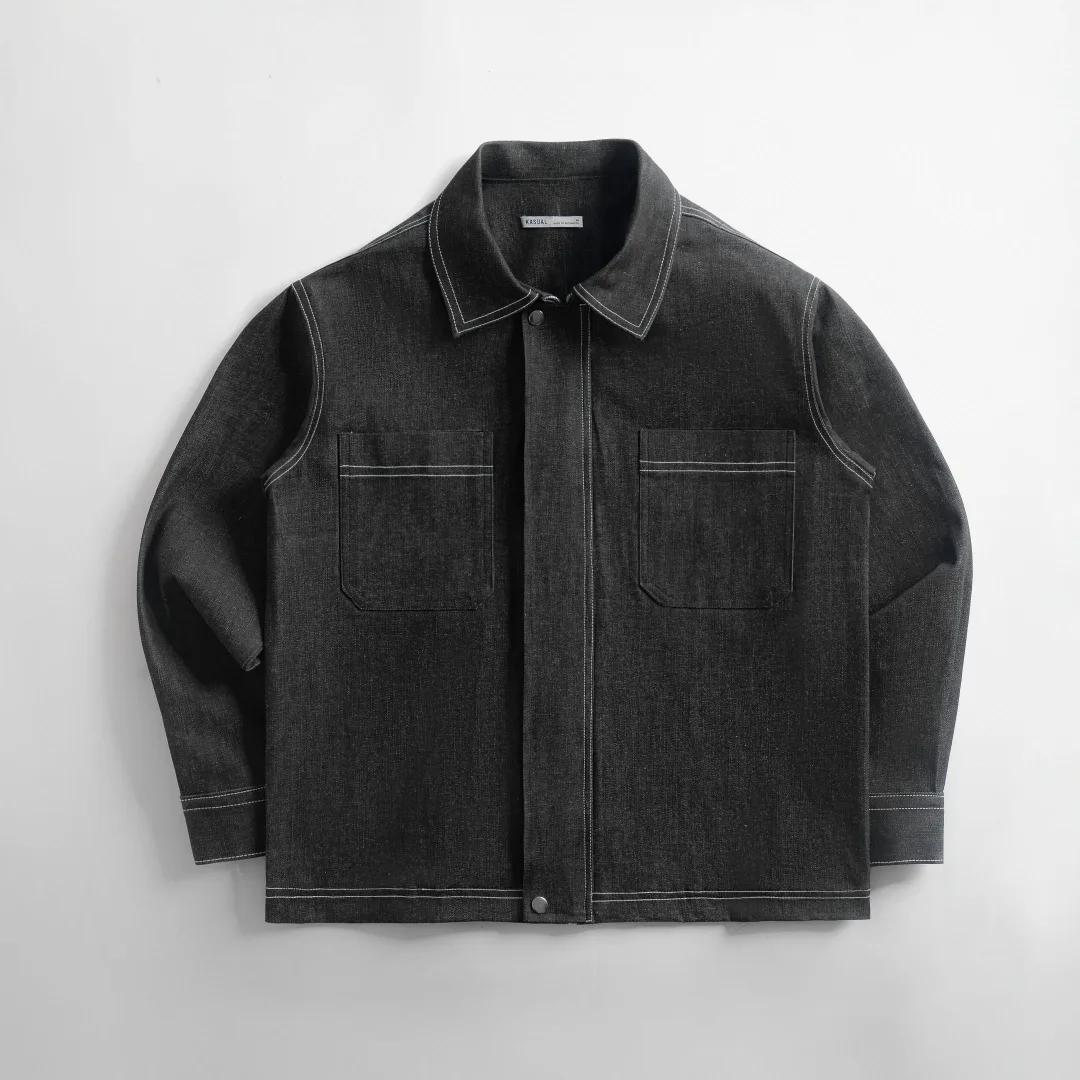
Fasten the jacket all the way. If it closes with a zip, like the Black Atelier Denim Jacket, pull it right up to the top. Then cross your arms and grip each upper arm with the opposite hand, the way people do when they're cold. Hold the position for a few breaths.
If you're shopping online, do the test as soon as the parcel arrives, before you cut off the tags.
Signs a Jacket Is Too Tight With Your Arms Crossed
First, notice how your back feels. A jacket that fits can feel a little snug there. A tight one makes it a struggle to reach the opposite upper arm, and every deep breath strains against the fabric behind you.
Don't confuse tight with stiff. Raw denim, meaning denim that has never been washed, is genuinely rigid when it's new, as with the Dark Blue Work Denim Jacket. Stiffness feels even all over and fades gradually once the jacket gets regular wear. Tightness hits the same spot every time you fold your arms, and it usually stays put.
After that, look at the cuffs. If they only pull back a little and stay around your wrist bone, that's normal. If they ride up to the middle of your forearm, either the sleeves are too short or the back is too narrow and is pulling the sleeves up with it.
Finally, check the front in the mirror. A zip that ripples, or buttons that strain sideways, means the chest has run out of room.
Between Two Sizes: Size Up or Down?
Try both over the same layer, then repeat the test. If the smaller size passes, take that one. The next size up just adds fabric that balloons out on days when you're only wearing a T-shirt.
If only the bigger size passes, drop your arms and look at the shoulder seams. As long as they sit near the bony tip of your shoulder, the bigger size is the right one for you. Sleeves that run a little long can be rolled up. There's no getting around a shoulder seam that falls well down your upper arm.
If both fail only because of a hoodie you wear now and then, make the shirt your benchmark. On hoodie days, leave the jacket open. If a hoodie is actually your everyday layer, look for a cut that's roomier through the body rather than a bigger size.
In a size that passes the test, the cinema's air-con can be as cold as it likes. You can keep your arms crossed in peace until the lights come back on.
Frequently Asked Questions
Should your jacket be the same size as your shirt?
Not necessarily. Some jackets already leave room for layers underneath, and some are cut close to the body. The size on your shirt label is a fair starting point. The final call still comes down to the crossed-arms test.
What if you're buying a jacket online and can't try it on first?
Use an old jacket that passes this test as your benchmark. Fasten it, lay it flat on the floor, then measure from armpit to armpit and double the number. Compare that with the chest measurement on the size chart, as long as the chart measures the jacket itself, not the wearer's body.
Do you still need the test if you usually wear your jacket open?
You do, although an open jacket passes more easily. An open front gives your chest room, but the back and sleeves still have to move with you.
Is there an extra move to try if you often ride a motorbike in your jacket?
There is. Stretch both arms straight out in front of you as if you were holding the handlebars, then lean forward slightly. The back hem should still cover your waistband, and the cuffs shouldn't pull far back from your wrists.
Does the test work for nylon windbreakers too?
It does. The fabric is thin and slippery, so it gives more easily across the back. You still need to check the sleeve length, though, because the night wind gets in fastest at the wrists.