
The invitation is a single line in your old classmates' group chat: "Dinner Friday night, yeah? Venue to follow." You reply "I'm in" straight away, like the ten people before you. It's only when you put the phone down that the real question lands. What are you going to wear?
Get-togethers like this usually fall into what's known as smart casual. Not formal, but not anything-goes either. The term gets thrown around a lot and explained very little. Luckily, the method is simple: get a read on the occasion first, then give one piece of clothing the job of looking sharp.
What Counts as Smart Casual Depends on the Occasion
Plenty of people assume smart casual comes with one fixed recipe, say a shirt with tailored trousers and leather shoes. If it were that simple, nobody would ever turn up in the wrong outfit.
Think of it as a line instead. One end is almost a suit. The other is almost what you lounge around the house in on weekends. Your only job is to guess where this particular occasion falls. A team lunch and a first dinner with your future in-laws are obviously in very different spots.
Even at the same table, someone who arrives in a shirt and someone who decided a T-shirt and tidy trousers were enough can both be right.
How to Read a Dress Code Nobody Spelled Out
An invitation that says nothing about clothes is still dropping hints. A spur-of-the-moment invite in a group chat usually leads somewhere relaxed, while a formal invitation sent well ahead of time tends to mean something dressier.
Beyond that, look at three things. Venue first. A restaurant where you have to book a table, especially one with a valet to park your car, calls for a smarter look than the café near the office or a barbecue at a friend's place.
Then the time. Lunch rarely asks much of you. Move the same get-together to the evening and the bar rises with it.
Finally, the guest list. Will there be a boss or a client at the table, or even someone's parents? Dress up a little. If it's all old classmates, there's more room to keep it relaxed.
Now tally it up. If two of the three lean dressy, the occasion is dressy. If only one does, casual clothes will still pass, as long as you keep one piece properly sharp.
One Sharp Piece of Clothing Is Enough
Of everything you have on that night, one piece is enough to keep the whole look tidy. Call it your anchor. It could be a shirt collar that stays upright, or trousers that fall in a clean line. Shoes that have clearly been looked after can play the part too. The rest is free to relax, and that small contrast is what makes the outfit feel balanced.
When you walk into a room, people don't inspect your clothes item by item. Their eyes stop at the most put-together part, then judge the whole outfit from there.
If everything is sharp, you end up looking like you're on your way to a job interview. If nothing is kept sharp at all, you look like you've come straight from futsal and just happened to drop in. One anchor tells people that the rest of your outfit is relaxed on purpose.
The Oxford Shirt Is Rarely Out of Place
If you don't know where to start, reach for an oxford shirt. The weave has a slight texture, so it never looks as stiff as a sleek office shirt. The collar doesn't wilt easily either, not even by dessert.
Even worn casually, this shirt still looks like you made an effort. Undo the top button and roll the sleeves up twice. You can even wear it untucked. As long as the collar stands, you'll look put-together.
For dinner, a navy oxford shirt is a safe pick, because the dark colour sits well under a restaurant's warm yellow lights. For a daytime occasion, choose a lighter shade from the same range.
Smart Casual in a T-Shirt? Then the Trousers Have to Be Sharp
Sometimes it's the top half that goes casual. The event is at midday and the sun is fierce, so a plain T-shirt makes far more sense than a shirt. In that case, the job of looking neat moves down to your trousers.
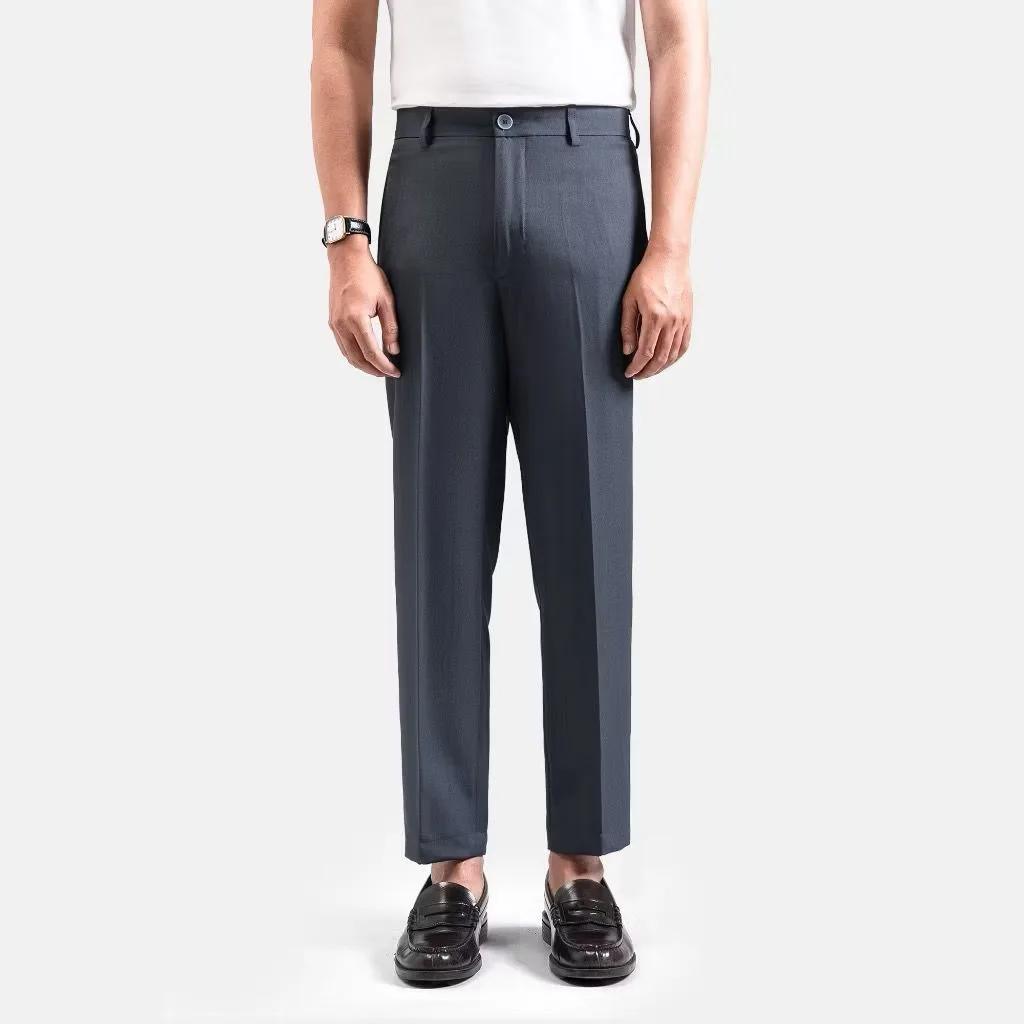
There are just two conditions: the legs fall straight, and the hems don't bunch up on your shoes. An ankle cut makes both easy, because trousers like these are made shorter on purpose and stop at the ankle. Take the Ankle Prime in charcoal grey. The leg drops straight, and the colour is dark enough for dinner without feeling heavy in the daytime. If you don't own a pair yet, start with the Ankle Prime colour range and pick the shade you reach for most days.
The T-shirt can't be just any T-shirt either. Keep it plain and well fitted, with a neckline that hasn't stretched. Even the neatest trousers can't rescue a T-shirt you slept in last night.
Overdressed Is Just as Wrong as Underdressed
The first way to get it wrong is overdoing it. Shirt tucked in tight, dress shoes polished to a gleam, as if you were off to have your graduation photo taken. At a table full of T-shirts and rolled-up sleeves, you become the only one who seems to have misread the invitation.
The second is the opposite: a crumpled T-shirt and flip-flops, since nobody said you had to dress up. The trouble is, nothing about it suggests you took a moment to get ready.
Both come from heading out without reading the occasion, and neither needs a drastic fix. If you're overdressed, take one thing away, say by untucking your shirt. If you're underdressed, add one thing, like swapping the flip-flops for a clean pair of sneakers.
The Two-Second Mirror Test
Before you leave your room, look in the mirror and point to tonight's anchor. If your finger finds it within two seconds, head out. If you're still searching, change just one item. There's no need to pull your whole wardrobe apart.
Still torn between two combinations? Go with the one that's a notch smarter. You can always roll up your sleeves at a red light, but if you left the collar at home, you can't borrow one from the friend sitting next to you.
On Thursday afternoon, the name of the place finally pops up in the chat: a restaurant where you have to book a table. Add the dinner hour, and that's two clues leaning dressy. The oxford shirt comes straight out of the wardrobe and onto the ironing board. As for the top button, that gets decided in the car park, once you've seen what the friends who got there first are wearing.