
You stop at the window of a fabric shop in Jakarta's Pasar Baru. The plan is to wait for people to walk past so their reflections drift into the frame. The first reflection you notice, though, is your own. Your collar is standing up on one side. Your shirt has come untucked at the left hip. And a crumpled line runs diagonally from your right shoulder to your left hip, following the camera strap exactly.
For the past two hours you've been fixing all of this almost without noticing. You tug the strap out from under the collar and tuck the shirt back in. Each time, your eyes leave the street and drop to your own clothes. Yet the best moments on the street never give you a cue, let alone wait for you to finish tidying up.
The camera isn't at fault, and neither is the strap. What needs rearranging is the clothing along its route.
Your Camera Strap Never Changes Its Route
Street photography, which means shooting whatever happens on the street, needs the camera ready in front of your body at all times. So does a photo walk, an easy stroll where you shoot as you go. You can hang the strap around your neck or sling it across your body from shoulder to hip, and neither way is wrong.
Wearing it cross-body is steadier if you crouch a lot, because the camera doesn't swing with you. A camera hung around your neck comes up to your eye faster when something happens out of nowhere.
Whichever you choose, the route is the same every day. From your neck or shoulder, the strap always crosses your chest and ends at your side, where the camera hangs. That route isn't up for negotiation, so whatever stands in its path is what has to give.
The culprits are usually small: a stiff collar and a top button that sticks out. Sometimes it's shoulders bulked up by too many layers. When the strap catches once, you just grumble. When it catches every five minutes, your favourite shirt starts to feel like the enemy.
A T-Shirt Is Safest, and a Shirt Works on Two Conditions
Check what sticks up around your neck, because that's where the strap catches most often. A plain T-shirt wins hands down, since it has no collar or buttons for the strap to hook on.
If you're more comfortable in a shirt, that still works. The first condition is a soft collar that flattens easily when the strap presses on it. The second is leaving the top button undone. That button sits at the base of your neck, right beside the strap's path. As for the shirt with a collar starched so stiff it can stand up by itself, save it for weddings.
A Jacket With a Lay-Flat Collar and a Smooth Front
With a jacket, there are two things to check. The first is the collar. A collar that lies flat lets the strap pass over it, while one that stands up blocks the way right beside your neck. The second is the front. The flatter it is, the less chance a cross-body strap has of snagging when you pull the camera up.
Take the navy blue denim jacket. Its collar folds down like an ordinary shirt collar, so the strap keeps sliding freely when you lift the camera in a hurry. The front closure hides behind a fold of fabric, so a strap slung across your chest never runs into a row of buttons. Its two chest pockets are handy for small things you need to grab fast.
Denim does run warm. In the full midday sun, you'll feel it. Wear a thin T-shirt underneath and aim to walk in the morning or late afternoon. If your walk has to be at midday, fold the jacket into your bag and put it back on once the sun starts to drop.
Lens Caps and Spare Batteries Need a Pocket of Their Own
The things that go missing most often on a street shoot are the smallest ones. Lens caps and memory cards rarely get stolen. They usually go astray because you shift them from pocket to pocket yourself, then forget.
The answer is to give each item a permanent address before you leave, then stick to it until you're home. For example, the right jacket pocket is for the lens cap alone and the left one is for the spare battery. Jacket pockets are safe for things you use often, as long as they aren't stuffed to bulging. A spare memory card, important but rarely touched, is better off in the front pocket of your trousers.
After a few outings, your hands learn where to reach on their own. No more patting down every pocket like someone hunting for their motorbike key in a car park.
Trousers That Don't Hold You Back When You Crouch
A day of street photography alternates between two movements. You walk a long way, then drop into a crouch for a low angle and stand up again. Your trousers have to get along with both.
If the thighs are cut narrow, the fabric pulls tight and holds you back every time you go down. If the waistband is stiff, it's your stomach that complains while you wait, half bent over, at the kerb.
Jeans shrug off abrasion, but they start to feel heavy after a few hours. For long routes, chinos usually make more sense: lighter cotton twill trousers that won't leave you sweltering as quickly.
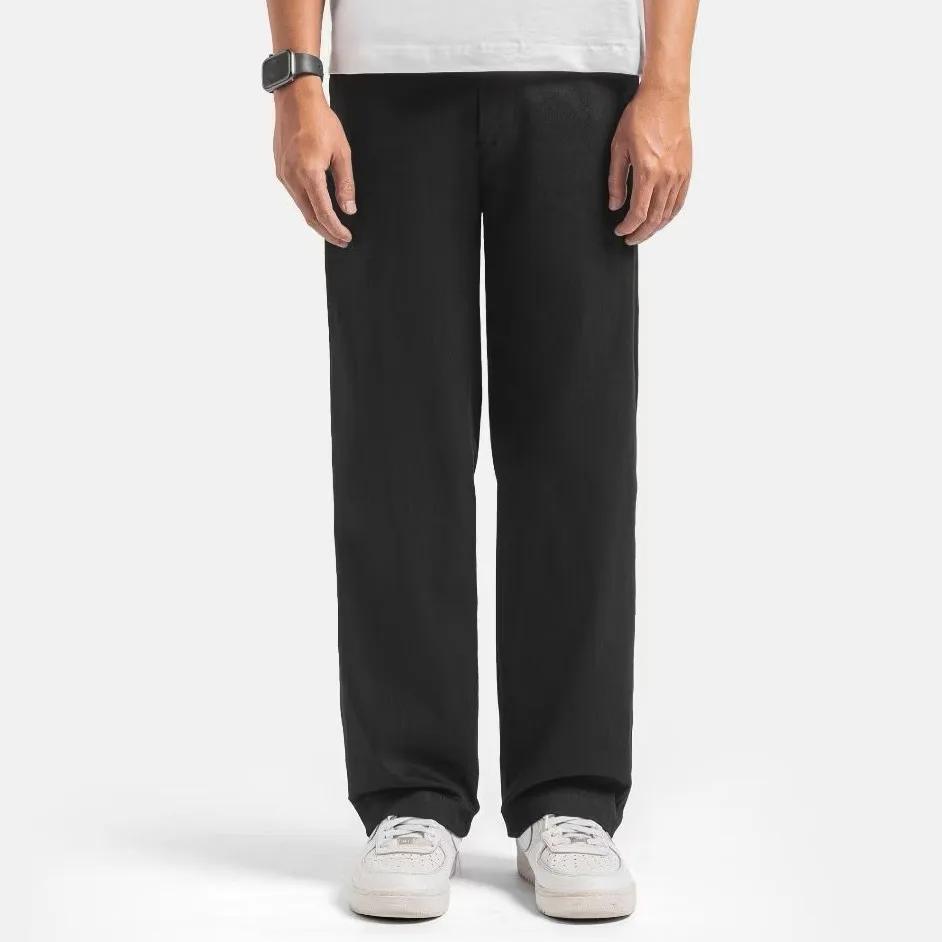
The Black Chino Workpant is one of the easier pairs to crouch in. The fabric is cotton with a little stretch fibre, so it gives as you go down and recovers its shape when you stand. The leg falls straight, and there's enough room in the thigh without it looking sloppy. From the outside the trousers still look neat, nothing like a pair of track pants.
Dark colours help too. Black or navy makes it easier to blend in, so people are less likely to notice you watching before you press the shutter. If black starts to bore you, the Chino Workpant also comes in other neutral colours, from dark grey to coffee brown.
Do a Crouch Test in the Mirror Before a Photo Walk
Before you head out, put on the full outfit just as you'll wear it on the day. Fill the pockets with what you'll actually carry, then hang the camera the way you usually do. In front of the mirror, drop into a crouch as if you're lining up a low angle, then raise the camera to your eye.
Now pay attention to what you feel. If the strap pulls at your collar, change your top. Anything in a pocket that presses into your thigh needs to move. And if the waistband digs into your stomach, switch trousers. Change one thing at a time, then crouch again until nothing nags at you.
Usually the culprit is the shirt with the stiff collar, and the plain T-shirt in your wardrobe has been waiting its turn for ages.