
Orientation is only half an hour in when HR asks the new hires to stand up one at a time and introduce themselves. Then it's your turn. You get up from your chair, and before you can even say your name, your hands are already moving on their own. The shirt tail that slipped out at the back gets tucked in again. The trousers that sagged a little get pulled back up. The whole room waits until you're done.
There's nothing actually wrong with what you're wearing. The colours are sensible and the fit is right. The trouble is that you bought the shirt and trousers only last week, and neither has been through a long stretch of sitting. The first day of work, it turns out, isn't about looking your sharpest in the mirror first thing in the morning. The real test comes in the hours that follow, when your clothes have to stay put until late afternoon without you having to tend to them.
Why Your First Day at a New Job Is Hard on Your Clothes
The invitation to orientation usually lists nothing more than a start time and a finish time. The day itself is far busier. In the morning you sit for two hours through the company introduction. Lunch is with people whose names you first heard a few hours earlier, and in the afternoon you change rooms again to meet another team.
Each change of session puts your clothes to the test as well. A tucked-in shirt creeps out a little more every time you stand. A waistband that felt fine when you left home starts to dig in after lunch. So before you decide what to wear on your first day, ask yourself just one thing: will all of this still be comfortable, and still in place, at three in the afternoon?
People Remember Busy Hands More Than the Colour of Your Shirt
Your new colleagues will almost certainly forget what colour shirt you turned up in. What they do notice are the small movements you keep repeating: a shirt tail tucked back in three times before lunch, or trousers tugged up every time you get out of your chair. Movements like these make you look nervous, even if you're actually quite calm.
That's why all the advice below has a single aim: clothes you can forget about once things get under way. Even the neatest outfit won't do you much good if you have to babysit it all day.
Pick a Shirt You've Already Worn for a Whole Day
Your first day is not the time to try out new clothes. A new shirt has no track record yet. The collar is still stiff, and you don't know whether the tails work loose easily when you sit for a long time. Choose a shirt that has been washed two or three times and has already seen you through from morning to night. An oxford shirt that has gone soft from regular wear is far more dependable than one whose tags you only cut off last night.
If you still want to wear something new, test it the weekend before. Wear it for a full day, including a long sit and a meal out. That will show you which parts to keep an eye on.
As for colour, a light, neutral top in white, light blue or cream is almost always safe. Pair it with dark trousers, such as black or dark grey. It's a combination that rarely looks wrong, whichever office you're starting at.
Tuck Your Shirt In, at Least on Day One
On your first day, you don't yet know how formal your new office is. A tucked-in shirt always looks ready. If it turns out everyone dresses casually, you can simply adjust on day two. A first impression that's too casual is much harder to undo.
The easiest way to learn the dress code is to ask. When you confirm you'll be at orientation, use the same message to ask HR or the person who hired you whether the office is formal or casual. If you don't get the chance, turn up a little smarter than you think you need to: shirt tucked in, trousers pressed.
Trousers You Don't Have to Hitch Up Every Time You Stand
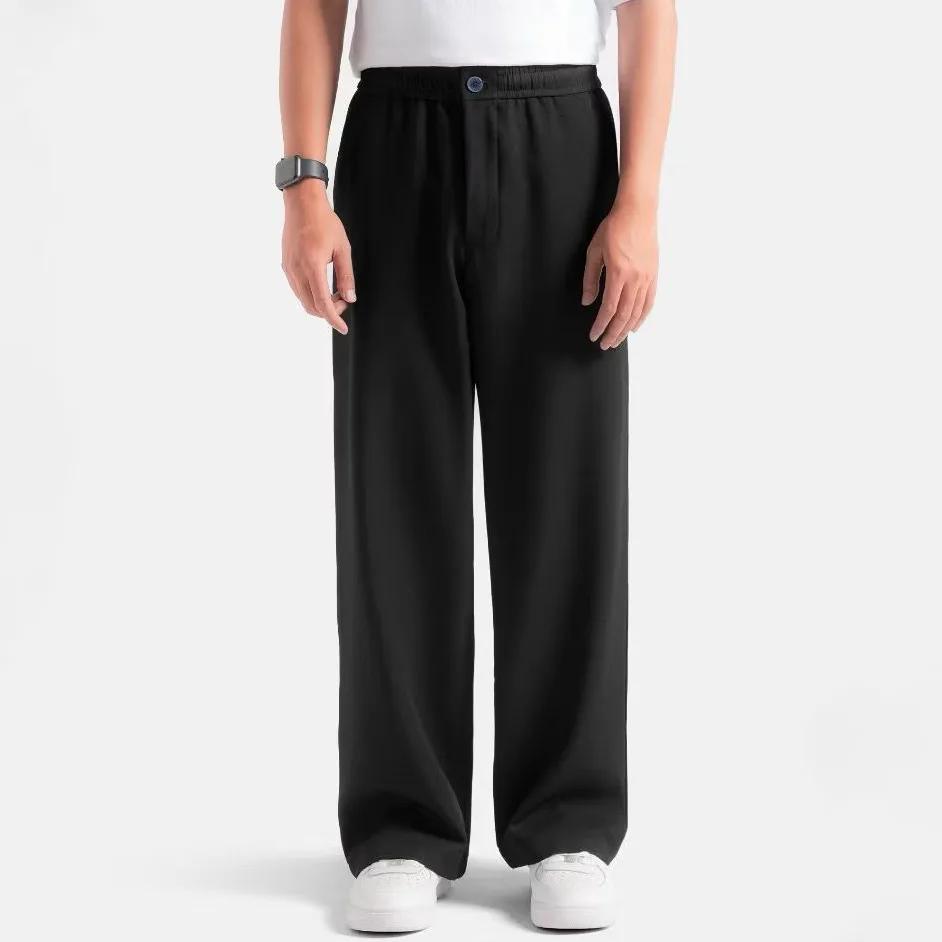
The part that gets adjusted most is usually the waist. Trousers get hitched up every time you stand, then quietly loosened after lunch. Look for a pair with a waistband that's willing to give a little when you're full. KASUAL's Smart Waist trousers, for example, have elastic in the waistband. It stretches slightly when you sit or eat, while the front stays flat.
For your first day, black ankle-cut trousers are the safest choice. An ankle cut means the hem stops just above the ankle bone, so no fabric piles up on top of your shoes. If the office isn't too stiff, chinos work too. Chinos are neatly cut cotton trousers, a common sight in offices. A dark grey pair looks a little more relaxed than black. If the office really is laid-back, sage brown trousers still look neat without feeling like a uniform.
Whichever you choose, pay attention to the hem. A hem that just meets your shoes without bunching often does more for a neat look than the type of trousers you picked.
Sneakers Are Fine on Day One, as Long as They're Clean and Simple
Sneakers still make sense for a first day, especially with tailored trousers or chinos. They just need to be clean and simply designed. If you're still unsure about the office, plain leather shoes are the safer bet. The rule is the same as with shirts: wear a pair that has already taken you on a long walk. A heel rubbed raw by midday is just as distracting as a shirt that keeps coming untucked.
Lay Out Your First Day Outfit the Night Before
On the night before you start, hang up one combination you've already tested: a shirt you've worn many times and trousers with a waistband you can trust. Leave your shoes by the door. The next morning, there are no clothing decisions left to make in a rush.
Then, when your name is called in the orientation room, all you have to do is stand up and talk. Your hands stay still at your sides, and your mind is free for the harder job of the day: remembering the names of everyone who introduced themselves just before you.