
How to Choose a Men's Jacket: Check the Shoulders and Fabric Before the Style
Published
Three jackets hang on the back of your bedroom door. There's a thick black bomber you bought back when everyone was wearing one. There's a faux leather jacket, a birthday present from your older brother. And there's an old denim jacket that's starting to fade at the elbows.
The bomber has been out of the house twice. The leather jacket has been out once, and you came home with your shirt stuck to your back. This morning, like almost every morning, your hand reaches past both of them for the denim jacket.
It isn't the most expensive of the three, and it isn't what everyone is wearing right now either. It wins on things the label doesn't mention. Its shoulder seams land right at the edge of your shoulders. The fabric is warm enough for the morning wind on a motorbike, but not so warm that you swelter at the office. And your work shirt fits underneath without bunching at the elbows.
Those are the things to check when you're choosing a men's jacket. The style name can come later.
A Jacket's Style Name Only Tells You How It Looks
Plenty of people start with the style name: bomber, leather jacket, windbreaker or denim jacket. The name does help you picture how the jacket looks. A bomber, for instance, is a short jacket with stretchy ribbed knit at the hem and cuffs. But the name tells you nothing about the fabric.
Two bombers can look like twins in a photo. One is thin nylon with no padding, pleasant to wear in the late afternoon. The other is padded with polyester fill, which makes it puffy and warm. Denim jackets are no different. Some have been washed at the factory until they're soft. Others are made from raw denim, meaning denim that has never been washed, so it's still stiff.
So a jacket that looks sharp on a model won't necessarily feel right on you.
Structured Jackets Shape Your Shoulders, Soft Ones Follow Your Body
Next time you toss your jackets on the bed after work, watch how they land. A raw denim jacket hits the mattress with its shoulders still in shape and its collar still standing. A windbreaker collapses flat straight away, like a puddle.
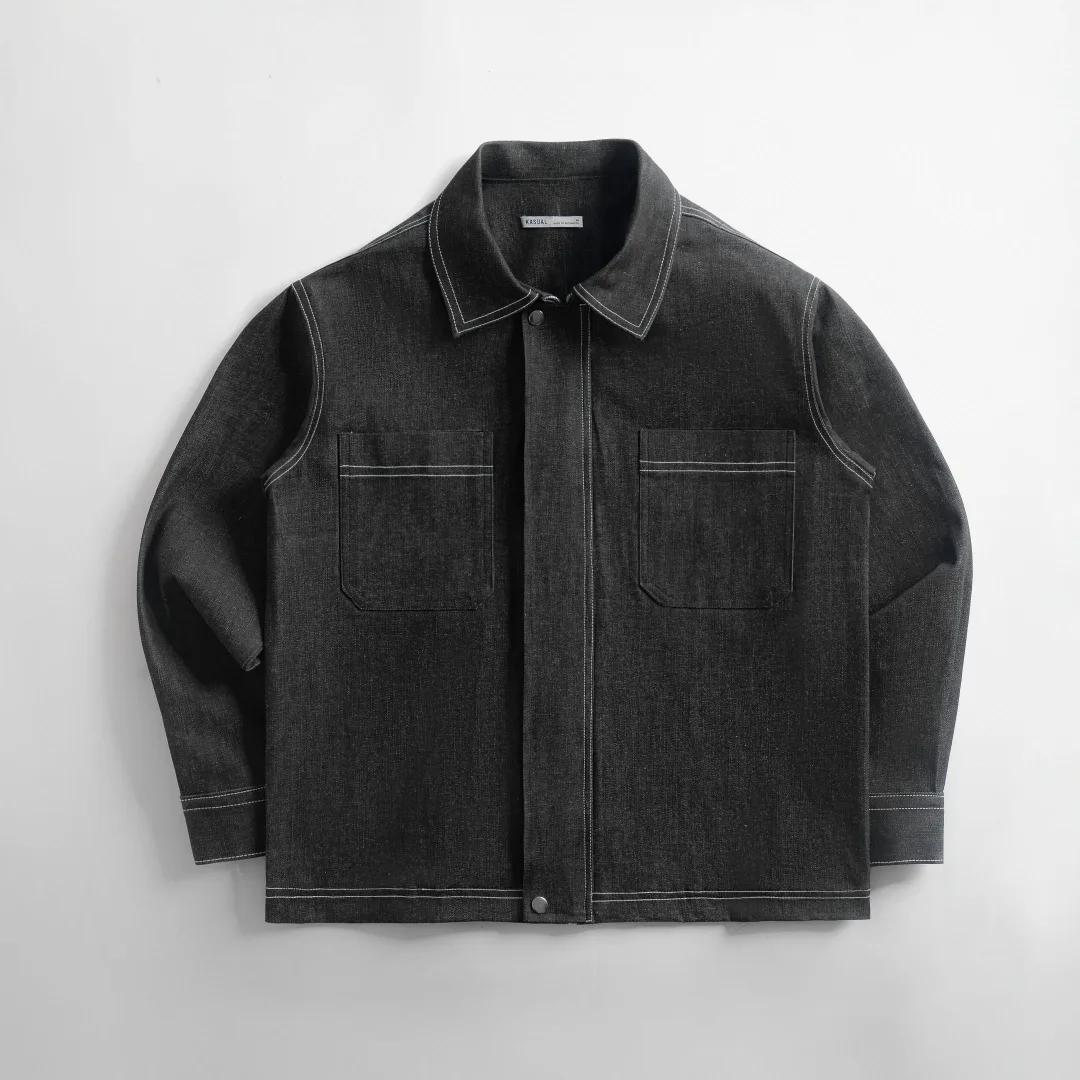
That's the difference between a structured jacket and a soft one. A structured jacket has a shoulder line of its own. Take the denim jacket from the Atelier line, which is made from raw denim and deliberately designed to hold a structured shape. On you, a jacket like this makes your shoulders look more defined, and the plain T-shirt underneath looks neater too. That helps if your shoulders are narrow or slope a little. A soft jacket follows your shoulders as they are, so it comes across as more relaxed.
Because the fabric won't give, a structured jacket has to fit your shoulders from the start. Check the shoulder seams in a mirror. The ideal spot is right at the bony tip of your shoulder. If the seam slides down onto your upper arm, the jacket's shoulders look hollow and the fabric creases there.
Soft jackets are more forgiving. A shoulder seam that drops a little still looks relaxed, especially on a jacket cut with a dropped shoulder on purpose.
Fabric Weight Decides When You Can Wear a Jacket
In most cities in this part of the world, a jacket gets carried more often than it gets worn. So when you're testing a jacket in a shop, don't put it on straight away. Drape it over your arm first while you browse the other racks. If you already want to put it down before you reach the checkout, picture carrying it through an entire lunch hour. When you shop online, the fabric named in the product description is a good first clue.
Heavy, warm fabrics suit the cooler hours, such as a morning ride on the motorbike or a meeting room with the air-con turned right up. Raw denim belongs in this group. The black Work Denim Jacket, with its contrasting white stitching, is one of them. It's better suited to a morning commute than to a walk in the midday sun. Light fabrics, such as windbreaker nylon or thin cotton, work better in the middle of the day and on drizzly afternoons. They also fold easily into a bag.
Faux leather has an extra problem. Air struggles to get through it, so your back gets sweaty fast even when the jacket isn't especially heavy. That's why your brother's birthday present has only been out of the house once.
Make Sure Your Shirt Sleeves Fit Inside the Jacket
A T-shirt rarely causes trouble under a jacket. A long-sleeve shirt is another story. As you slide your arm into the jacket sleeve, pinch the shirt cuff with your fingers so it doesn't get dragged up to your elbow. Once the jacket is on, bend your elbows and straighten them again a few times.
The shirt cuffs should come back down to your wrists as you straighten your arms. If they get left behind and bunch up at your elbows, the jacket sleeves are too narrow for your shirt. You'll rarely catch this if you only ever try jackets on over a T-shirt.
A mid-weight cotton shirt such as a white oxford shirt usually gets on well with a denim jacket. The fabric is thick enough to hold its shape, yet it still feels cool. A shirt with a roomier cut, like a Camden striped shirt, has more fabric to fit inside the jacket sleeve. With a shirt like that, look for a jacket with roomy sleeves as well, then repeat the elbow test.
Make Your Second Jacket a Different Weight, Not Just a Different Style
In a tropical climate, two jackets of different weights are usually enough. A light one for the middle of the day and drizzly afternoons. A heavier one for the cooler hours.
The trouble starts when you pick the second jacket on style alone. A padded bomber and a denim jacket look nothing alike, but you'd wear both at the same time of day, when the air is cool. One of them is bound to spend more time on the hook.
The bomber behind the door may not have been a bad buy. It simply lost out to your denim jacket. Your next jacket should cover the hours your other jackets don't, such as the scorching middle of the day, when the sun stings your arms on the motorbike.
Save the black bomber for a holiday in Lembang. In the cool highland air up there, its polyester fill finally earns its keep.