
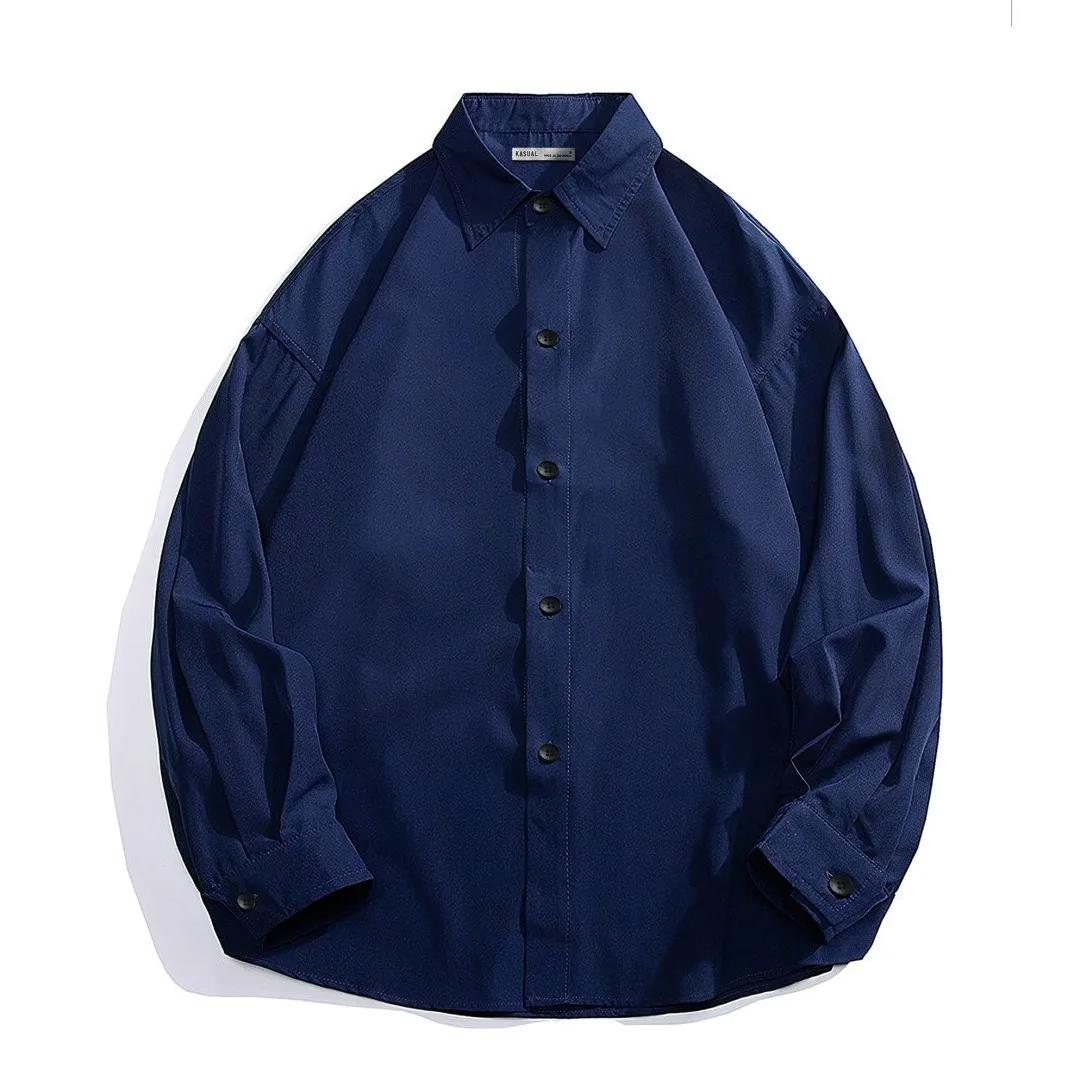
The group photo from your cousin's wedding lands in the family group chat. You zoom in and find yourself standing at the end of the row. The shirt looks good. So do the trousers. The trouble is the hem. It hangs down over your hips, and your legs look shorter than you remember them.
You had even tucked the shirt in that morning. At the last minute you pulled it back out, worried you would look too stiff.
That kind of doubt is normal, but you don't actually have to guess. Almost every shirt already carries a clue about how it should be worn. It sits in a place you rarely check before leaving the house: the hem.
The Hem Tells You Whether a Shirt Should Be Tucked In
Spread your shirt out on the bed and look at the shape of the bottom edge. If the shirt is short and that edge runs straight, with almost no curve, it was made to be worn untucked. Force a shirt like this in and it never really settles. Bend down once to pick up a dropped motorbike key, and the fabric is already poking out of your trousers.
It's a different story with a shirt whose sides curve upward while the front and back drop lower, like tails. That cut is there for a reason: the extra length stays tucked into your trousers however many times you sit down and stand up. Left out, the tails dangle front and back, and the shirt starts to look borrowed from someone taller.
Take this black superfine shirt: the collar is classic and the hem curves up at both sides, so it looks neatest tucked in. The fabric doesn't crease easily either, so the tucked part won't crumple quickly, even if you spend the whole day sitting down.
Between those two shapes sits the shirt whose hem curves slightly but isn't very long. A shirt like that can go either way, and the first thing that decides it is the waistband of your trousers.
When the Hem Could Go Either Way, Check Your Waistband
Tucking a shirt in puts your waistband in the spotlight. So ask yourself first: is there anything there worth seeing?
If the waistband is neat and the belt is one you picked on purpose, tuck the shirt in and let that part show. If the belt's colour matches your shoes, even better. If the waist is elastic that puckers, or a drawstring knotted in a hurry, an untucked shirt covers it more gracefully.
There's one more test you can do with a chair. Sit for a few minutes, then stand up. If the shirt puffs out over your waistband every time you get up, it may be too big, or its fabric may be too thick for tucking. A shirt like that is more comfortable worn untucked.
An Untucked Shirt Can Make Your Legs Look Shorter
An untucked shirt draws a horizontal line across your body, exactly where the hem ends. The lower that line sits, the shorter your legs look. That's what happened in the wedding photo.
As a rule of thumb, an untucked shirt should end roughly halfway down your fly. Any lower and your torso starts to look longer than your legs.
If you're of average height, there are two ways to go. Look for shirts with a short hem if you like wearing them untucked, or tuck your shirt in so your waistline shows. That line makes your legs look longer.
Oversized shirts, the ones cut loose on purpose, need slightly different handling. This cream oversized shirt has a boxy cut, and its shoulder seams drop down onto the upper arm, so there is plenty of fabric to begin with. Tucked all the way in, that much fabric bunches up at the waist, especially when you sit. Leave it out, then check in the mirror that the hem doesn't fall past that halfway point on your fly.
Want to look a little neater anyway? Tuck in only the middle of the front and let the sides and back hang loose. At casual events this works, as long as it looks deliberate and not like the shirt got stuck halfway. Check the back in the mirror too. If the back hem covers your backside completely, the trick no longer works, so either tuck it all the way in or leave it all the way out. For formal occasions, skip the half-tuck altogether.
Koko and Flannel Shirts Are Almost Always Worn Untucked
The hem rule has its exceptions. Koko shirts have long been worn outside the trousers, at prayers and family gatherings alike, whatever shape the hem takes. Tuck one in and it looks like a wardrobe mistake. This black koko shirt, with its mandarin collar (a short collar that stands up around the neck) and vertical pleats down the front, looks best left to fall over your trousers.
Flannel shirts are usually worn untucked too. Plenty of people wear them unbuttoned over a T-shirt, like a light jacket. Even buttoned up, a flannel looks more natural hanging loose.
For short-sleeved shirts, go back to the hem test. Most have a short, straight hem, so they are meant to stay out. If the hem turns out to be long and curved, and the occasion is fairly formal, that's when you tuck it in.
At the Office, the Culture Has a Say
A relaxed office usually won't mind an untucked shirt, especially if the hem is straight and the shirt is freshly ironed. Got an important meeting in your calendar that day? Tuck it in. It's the choice least likely to go wrong.
Next time your hands hesitate at the last minute, glance at the hem before you pull the shirt out. Who knows, in the next wedding photo your legs might look as long as they really are.