
The meeting is forty minutes in, and the presentation on the screen shows no sign of ending. You just want to check the time, quietly. You tilt your wrist a little. There's nothing to see but shirt fabric, because your watch has sunk out of sight inside the cuff.
Eventually, the index finger of your other hand hooks the edge of the cuff and tugs it towards your elbow. The gesture turns out to be bigger than you thought. The speaker at the front glances your way, and now the whole room knows you're watching the clock.
The watch is rarely what's wrong here, and the shirt isn't necessarily to blame either. Usually the two just haven't been arranged so that each gets its own place on that narrow stretch of wrist. More often than not, you can sort it out without buying anything.
Your Shirt Cuff and Watch Claim the Same Spot on the Wrist
The cuff on a long-sleeve shirt is cut to end at the base of your wrist. That's also where your watch usually sits. Two things are sharing the same few centimetres, so it's only natural that they jostle each other now and then.
So use the watch as your reference point. The cuff can cover part of it, as long as it doesn't swallow the whole thing. Nor should the cuff stop so far short of the watch that it looks as though you forgot to button it.
If the cuff covers the entire watch and you have to push the fabric back every time you check the time, it usually comes down to one of two causes. Either the sleeves are too long, or the cuff is too loose once buttoned and slips down onto the back of your hand.
The reverse problem is common too. The watch pushes the cuff up until the fabric bunches, or the edge of the cuff catches on the watch case every time you wave to a friend across the room. When that happens, it's the cuff that has run out of room.
Adjust the Cuff Button Before You Blame the Size
Before you decide that your watch or your shirt is the wrong size, check the cuff button. A lot of these problems end right there.
Some shirts have two buttons side by side on the cuff. The outer button usually gives a roomier fit, which suits a slightly thicker watch. The inner button pulls the cuff snug around your wrist, so it's less likely to slip down over the watch. Try each one once in front of a mirror, and after that you'll just know.
If your cuff has only one button, that button can still be moved a little. An alterations tailor usually needs only a few minutes, and if you're handy with a needle, you can do it yourself at home.
A plain button cuff, like the one on KASUAL's navy oxford shirt, is the most accommodating of all. There's nothing extra to attach. Undo it when you want to roll up your sleeves, and do it up again when you want to look neat.
Thin Watches Can Slip Under the Cuff, Thick Ones Belong Outside
How thick your watch is decides which position makes the most sense.
A thin watch can slip inside the cuff without lifting the fabric. When your arm moves, the watch peeks out. When your hand rests on the table, the cuff politely covers it. If only half the watch is covered, leave it alone, because that's actually the most natural position.
A thick watch, such as a sports watch or a smartwatch with a large case, is better left outside. The cuff stops just behind the watch case, on the side closer to your elbow. Either approach is perfectly fine as long as it looks deliberate. What looks like an accident is a thick watch forced inside, with the cuff wedged on top of it and unable to come down.
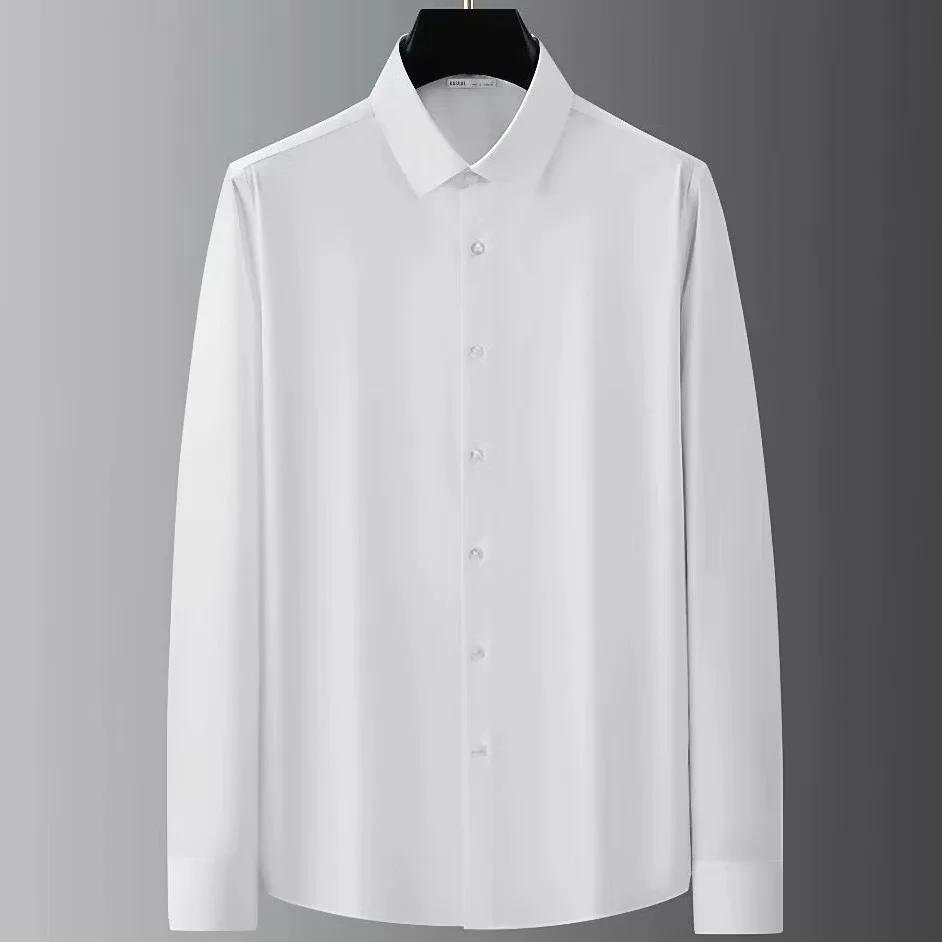
The shirt's fabric matters as well. A smooth cloth that slides easily against the skin, such as the one used for this white superfine shirt, helps the cuff glide past a thin watch without catching. That shirt's sleeves are cut a little closer to the arm, so it gets along best with a thin watch.
Shirts with a slim cut generally have narrower sleeves, which leaves almost no spare fabric to clear a thick watch case. You'll find an explanation of slim and the other fits in the KASUAL Help Centre.
For the dress shirts you wear to the office, the test is simple. As long as the cuff still buttons and slides past the watch without bunching, the watch passes. If the cuff still won't close, or keeps riding up even after you've loosened the button, the watch is too thick for that shirt. That leaves two options: a thinner watch, or a shirt with roomier sleeves.
Wear Your Watch on Your Non-Dominant Wrist
The next small habit is about which wrist you choose. A watch lasts longer, and snags less often, when you wear it on your non-dominant hand.
Your dominant hand works harder. It does most of the writing and typing, and it's also the one that rubs against the edge of the desk most often. A watch on that side knocks against the cuff more and picks up scratches sooner.
For most people, that means the left wrist. If you're left-handed, the right one usually feels more comfortable. This isn't a hard and fast rule. Try it for a week and you'll feel the difference for yourself.
When It Makes Sense to Roll Up Your Sleeves
Sometimes the best fix is to get the cuff out of the way for a while. Washing your hands before a meal, or tucking into a bowl of soto with a broth that loves to splash, is a perfectly good reason to roll up your sleeves. So is any work that keeps your hands busy. Two or three neat folds that stop just below the elbow are enough, and your watch is completely free.
In a relaxed setting, rolled sleeves can stay that way all day. In a formal meeting room, cuffs kept down usually look more respectful.
Striped shirts like the Camden Stripe line still look neat with the sleeves rolled up, and their generous cut lets the folds slide up easily without pinching your forearm. The watch that was hiding a moment ago finally takes centre stage.
At next week's meeting, you turn your wrist a fraction and the watch is right there. The presentation carries on. Nobody knows you're counting the minutes until lunch.