
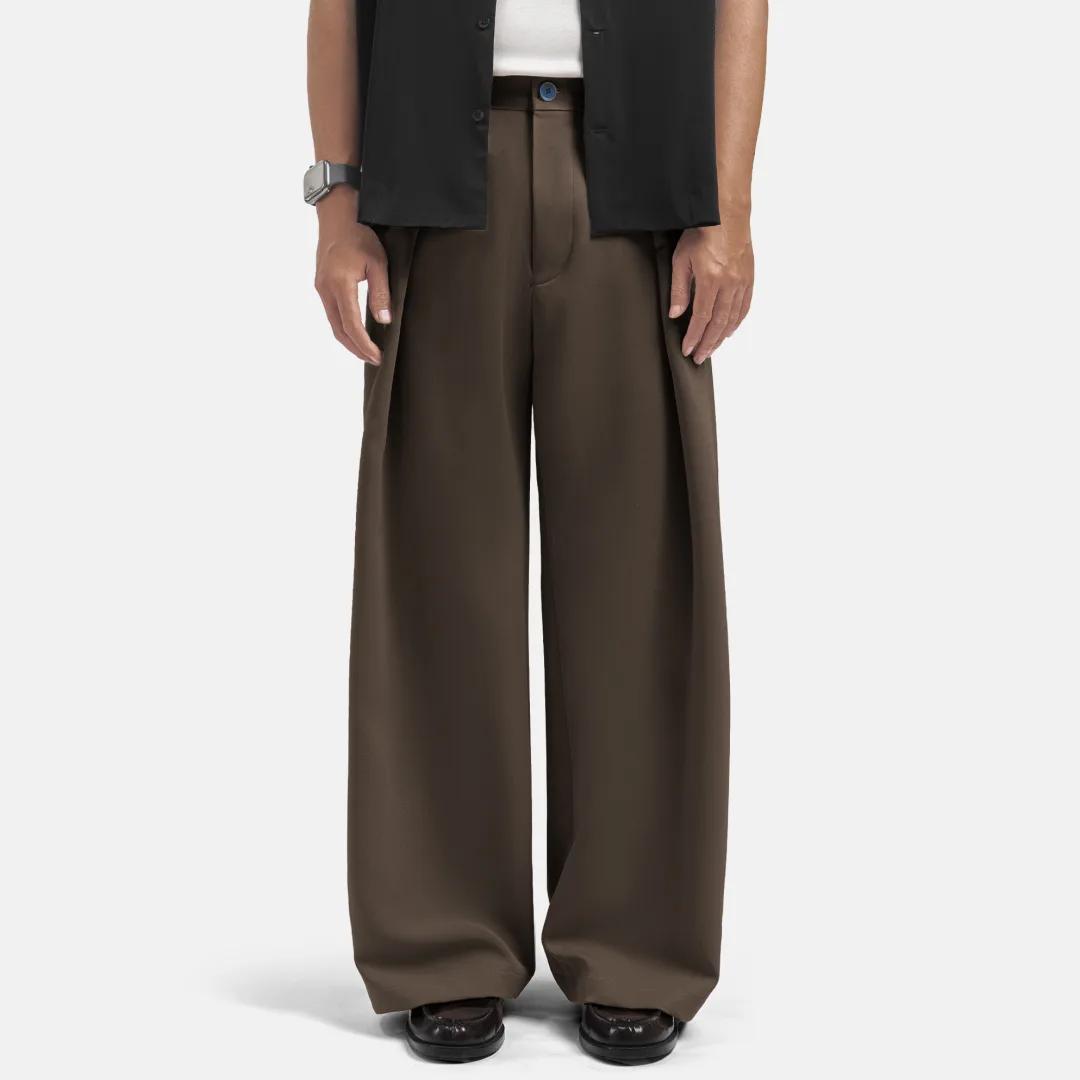
The new shoes arrived home that afternoon. You put them on with your go-to trousers, stood in front of the mirror, and something looked off at the bottom. The hems were suddenly bunching too much, or hanging too high. Nothing about the trousers had changed.
What changed was the pairing. Trouser hems never work alone. They're always read together with the shoes beneath them, and the problem often only shows up the moment you switch shoes.
The Right Length Is Only Half the Hem Story
Most people think the hem question is settled once the length is right. Take it to the tailor, cut it, done. In reality, length is just one of several details that shape the final impression. There's cuff width, there's stitching, there's the break point.
New shoes with a thicker sole lift your body by a centimetre or two, and the hems rise with them. Sleeker shoes make a stack of fabric that once looked reasonable suddenly seem excessive. The trousers aren't wrong. The combination just hasn't been checked.
Cuff Width and Stitching Determine the Weight of the Hem
A cuff adds visual weight to the very bottom of your legs. On slim trousers, a wide cuff can make the hems look heavy and draw the eye downward. On wide-leg trousers, a cuff actually helps the fabric fall straight and stop with conviction.
Stitching works in a similar way. The key is the hem itself, the folded stitching at the bottom of the trousers. A thick hem gives the fabric weight. The ends don't flap around easily, and the bottom line stays stable. That's why cutting trousers isn't just about removing centimetres. Every cut changes the weight of the fabric at the hem while also using up the spare fold hidden inside it.
Stitching that's visible from the outside, like on jeans, gives a casual impression. That's a deliberate construction choice, not a sign of low quality. Dress trousers are usually the opposite, looking sharper with a hem hidden from view.
The Break Point Shapes the Impression Standing and Walking
The break point is where the fabric ends relative to your ankles and shoes. Some hems stack slightly on top of the shoe, some touch it cleanly with no bunching, and some stop above the ankle like an ankle cut.
What's often missed is that hems ride up a little every time you take a step. A point that looks right while standing still can shift once you start walking. This is where an ankle cut like the Grey Executive Ankle Pant feels practical. Its break point is designed to sit above the ankle, so it doesn't depend much on the height of your soles.
How to Check Trouser Hems Before Buying or Cutting
Start with the shoes. When trying on trousers, wear the shoes you use most often, not whatever happens to be on your feet. Stand still, then walk a few steps, and look at the hems in both states.
Before deciding, turn the hem inside out. The spare fabric inside determines how much a tailor can raise or lower it later. When cutting, ask for stitching with a thickness close to the original so the weight of the hem doesn't change. When marking the cut point for the tailor, use the same approach. Mark once while standing still, then again after walking. Those two marks often differ, and the second one is usually more honest.
If you want to see firsthand how much the break point changes the impression, compare a few cuts in the Ankle Classic category. A difference of a few centimetres at the hem turns out to be enough to change the feel of the entire trousers.
Frequently Asked Questions
Can trouser hems that bunch up on top of shoes still be fixed by a tailor?
Yes, and it's one of the most common alterations. Bring the shoes you wear most often when getting measured so the break point is set correctly from the start.
Do cuffed hems make an outfit look more formal or more relaxed?
They lean relaxed and classic, especially on chinos and wide-leg trousers. For formal settings, a plain hem without a cuff usually looks cleaner.
Does visible stitching on the outside of the hem mean the trousers are low quality?
No. It's a common construction choice on jeans and casual trousers. What matters is how neat the stitching is, not whether you can see it.
Where is the ideal break point for ankle-cut trousers?
A few centimetres above the ankle bone, high enough to clear your shoes but not so high it reaches the calf. It's normal for the hem to ride up slightly when you sit.
Do jeans and dress trousers need different hem treatments?
Yes. Jeans work well with thick stitching or a cuff, while dress trousers look sharper with a hidden hem. Treating them the same can change the character of the trousers.
Is cutting your own trouser hems at home risky for the look?
It's risky without a clear guide. A slightly uneven cut is visible the moment you stand, and hand stitching rarely matches the weight of the original hem.