
The group photo taken on a villa terrace in Puncak has landed in the family group chat. You zoom in to check your own face, then your eyes drift a little lower. Your sweater has a small bump standing up on each shoulder, like a pair of horns that have only just started to grow.
The sweater isn't too small, and your shoulders haven't suddenly changed shape. The bumps were left by the hanger that had held the sweater in your wardrobe since last year's holiday. After months of resting on two small points, the shoulders finally gave in.
Why Sweaters Get Shoulder Bumps After Too Long on a Hanger
Sweaters are made from knitted fabric. It works the same way as a scarf knitted by hand on two needles, except that sweaters are usually knitted by machine. The yarn hooks into itself, forming rows of small loops. Those loops can stretch out and spring back, which is why a sweater feels flexible and comfortable to move in. The same trait makes it quick to lose its shape when something keeps pulling it in one direction.
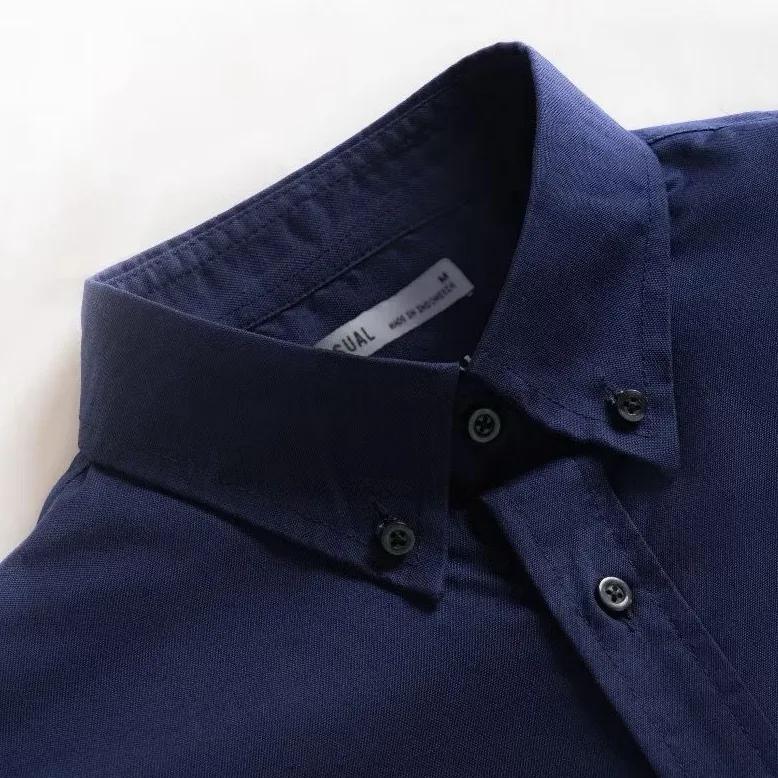
Shirt fabric is a different story. Its threads are woven, crossing over and under each other like the strands of a mat, so the fabric doesn't stretch out easily.
On a hanger, the whole weight of the sweater rests on two narrow tips, one on the left and one on the right. Every day the yarn at the shoulders gets pulled down a little further, and over time the shape of those tips is left behind in the fabric.
How quickly this happens depends on how heavy the sweater is. A fine knit might only show a mark after weeks of hanging without a break. A thick sweater with a raised knit pattern can be marked within a few days.
So a sweater that has spent just one night on a hanger is usually fine. If there's a faint dent, smooth it out with your hand before you put it on.
The Pull Test: Which Clothes to Fold and Which to Hang
Not every piece of clothing needs the same care as a sweater. To tell them apart, hold the fabric in both hands and pull gently. If it stretches straight away, it's a knit, and it belongs in the folded pile. If it holds firm and barely moves, it's a woven fabric, and it's safe on a hanger.
Work shirts clearly belong in the second group. The white oxford shirt and its navy twin, for example, are made from cotton woven in an oxford weave. A hanger won't stretch their shoulders, and a shirt really does stay neatest when it's stored hanging up. Every sweater you move to a shelf frees up a hanger for shirts like these.
How to Fold a Sweater Without Leaving Creases
Lay the sweater flat on the bed, front side down. Fold both sleeves across the back so they cross over each other. Then fold the body up from the hem, in half, or in thirds if your shelf is small.
Let the folds stay a little puffy. You'll be tempted to press them flat with your palm, but a fold that gets pressed down is exactly what turns into a crease later.
For a sweater you wear often, move the middle fold slightly each time it goes back into the wardrobe. Fabric that isn't always bent in the same spot won't develop a permanent line.
Three or four sweaters per stack is plenty. Any higher and the one at the bottom has to carry the weight of everything above it, and it ends up squashed flat.
Thin sweaters have another option: rolling. Roll them loosely, just firmly enough that they hold together.
Short on Shelf Space? Drape Sweaters Over the Hanger Bar
Not every wardrobe has roomy shelves. If yours has more hanging space than shelf space, you can still use a hanger, as long as the sweater isn't hung by its shoulders.
Fold the sweater from left to right so the left sleeve lies exactly on top of the right one. Drape the folded sweater over the bottom bar of the hanger, right in the middle, so both ends hang down like a sarong drying on the line. The long bar spreads the weight evenly, and nothing pulls on the shoulders.
This works well for a thin sweater you wear to an air-conditioned office almost every week. Thick, heavy sweaters are still safer folded on a shelf.
Hoodies follow the same rule, depending on the fabric. A fleece hoodie, made from a thick fabric with a soft, brushed inside, is heavy enough that its shoulders will stretch on a hanger too. That one is better folded. A thin hoodie in T-shirt jersey can hitch a ride on the hanger bar, just like the thin sweater.
Storing Sweaters Long Term? Wash Them First and Use an Open Shelf
A lot of sweaters only come out in the rainy season or on a trip to the highlands, then sleep in the wardrobe for months. Before that long sleep, wash them. Sweat and skin oils left in the fibres attract moths, and they're what you'll smell when you open the wardrobe again.
Make sure the sweater is completely dry before you fold it. Even a little dampness can turn into a musty smell in a closed wardrobe.
As for where to keep them, an open shelf is safer than a drawer, because a stack in a drawer gets squashed every time the drawer is pushed shut. If a drawer really is your only option, don't overfill it. A drawer you have to close with your knee is clearly too full.
How to Get Hanger Bumps Out of a Sweater
Bumps like the ones in that Puncak photo can usually still be fixed. The marks that are hard to undo tend to be the ones left for years.
If the bumps are still mild, a little water is all you need. Spritz the shoulders with water or pat them with a wet hand until damp, smooth them gently with your fingers until they're flat, then let the sweater dry lying on a towel.
Marks that have been there for months need a more thorough fix: wash the whole sweater. While it's still wet, lay it out on a towel and shape the shoulders with your hands until the line is smooth again. Wet knitwear does as it's told. Whatever shape you give it now, it will hold until it's dry.
Have a steam iron? Aim the steam at the shoulders from a few centimetres away, keeping the iron hovering so it never touches the fabric. Pressing the iron into the knit only crushes the loops of yarn flat, and the sweater's texture goes with them.
Once the shoulders are smooth again, fold the sweater and put it straight onto a shelf. Save the hanger for your shirts.