
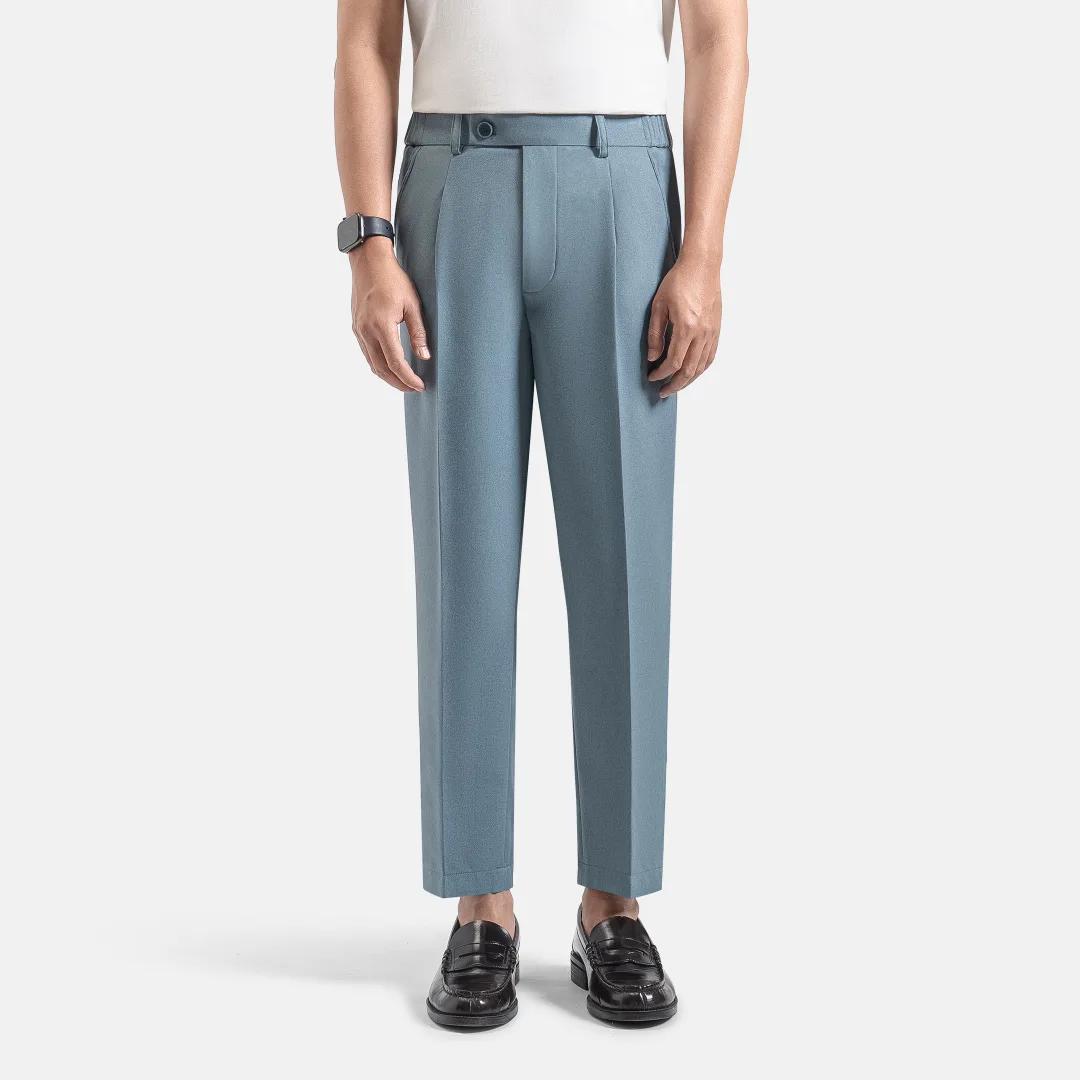
The parcel arrives late in the afternoon, and you try the new pants on straight away. The button fastens without you having to hold your breath. The length is spot on, too. Then you crouch down to tie your shoelaces, and the fabric across your thighs suddenly pinches.
That means an exchange. You fold the pants up again, slip them into a plastic bag, stick on a shipping label and take them to the courier. Then you wait for them to reach the warehouse and be checked before a replacement makes its way back to you. The whole business can easily drag on for more than a week, all because one number was off when you placed the order.
You can prevent all of that at home with a soft tape measure and about five minutes. There's just one rule: measure a pair of pants you already know fits, not your own body.
Why Measuring Yourself Often Gets the Size Wrong
The numbers on a size chart come from finished pants laid out flat. They already include room to move, and the amount of room differs from one style to the next. So if you wrap a tape measure around your middle and look for the same number on the chart, you'll almost always end up with the wrong size.
Height and weight can't be your only guide, either. They're enough to narrow your pants size down to two candidates, but not to choose between them. The same person can even be an XL in pants and an L in tops.
A more reliable reference is already sitting in your wardrobe: the pair of pants you find most comfortable. Take them out, lay them flat on the floor until there are no creases, then fasten the button.
The Four Numbers You Need to Write Down
Waist. Lay the tape straight across the waistband, from the left side seam to the right side seam. Double the result.
Hip. Move the tape about 20 centimetres down from the waistband, to the widest part of the hips. Measure straight across, then double it.
Thigh. Find the widest part of the thigh, usually just below the crotch. Measure straight across and double it. People often skip this one, yet a narrow thigh is the main reason pants dig in every time you sit down, and even more so when you crouch to tie your laces.
Length. Run the tape down the outside of the leg, from the top of the waistband to the bottom of the hem. This is the outseam, or outside leg, and it's the length KASUAL uses in its size charts. Some other brands list the inside leg, or inseam, which runs from the crotch to the bottom of the leg. That number will always be shorter, so don't mix the two up.
Save all four numbers in your phone's notes app. Whenever you're about to shop for pants, open that note first, whether you have your eye on a pair of coffee-brown chinos or another style. Chinos, by the way, are cotton pants that look smart but still feel relaxed.
How to Read a Pants Size Chart on the Product Page
Once you land on a product page, ignore the S, M and L options for now. Open the size chart and set it beside the four numbers in your note.
You can't go by letter sizes, because every style is cut from its own base pattern. An L in one style can be narrower than an M in another, even within the same brand. So each time you move to a different style, open the chart again, however well you think you know your size.
Fit names like slim and straight each mean something specific, too. If you're not sure how they differ, read the explainer on skinny, slim, athletic and straight fits in the KASUAL Help Centre first.
Between Two Sizes, Pick the Bigger One
Sometimes the numbers in your note fall right between two rows of the chart. Take the bigger size. Pants that are slightly too big are still comfortable to wear all day, while a pair that's too tight will bother you every time you move.
This matters even more for cuts that follow the shape of the leg, such as these black ankle-length pants. Because the fabric sits close to the leg, you notice even a small difference immediately.
KASUAL's exchange records point the same way. Among customers who exchanged an item after choosing the wrong size, more than twice as many asked to size up as asked to size down.
Waist and Hips in Different Sizes? Go by the Hips
Your waist measurement may match one size while your hip measurement lands in the next size up. If so, let the hips decide.
A slightly loose waist is easy to sort out. Wear a belt, or have an alterations tailor take it in. Tight hips and thighs are another story. A tailor can make pants smaller, but can't add fabric that simply isn't there.
If you'd like a middle ground, look for a style with an adjustable waistband, such as these silver-grey Gurkha pants. Gurkha pants have adjuster straps at the sides of the waist, so you can tighten or loosen the waistband to suit your body.
When You've Measured and the Pants Still Don't Fit
Measuring carefully lowers the chance of a mistake, but it doesn't rule one out completely. Quite a few returns at KASUAL come from customers who had read the size chart and still ended up with pants that didn't fit.
If that happens and you'd like a different size, request an exchange through KASUAL customer service on WhatsApp. Purchases made through a marketplace can usually only be refunded.
When the replacement pair arrives and fits, don't put it straight into the wardrobe. Measure it first, then update the note on your phone. That pair is your new reference now.