
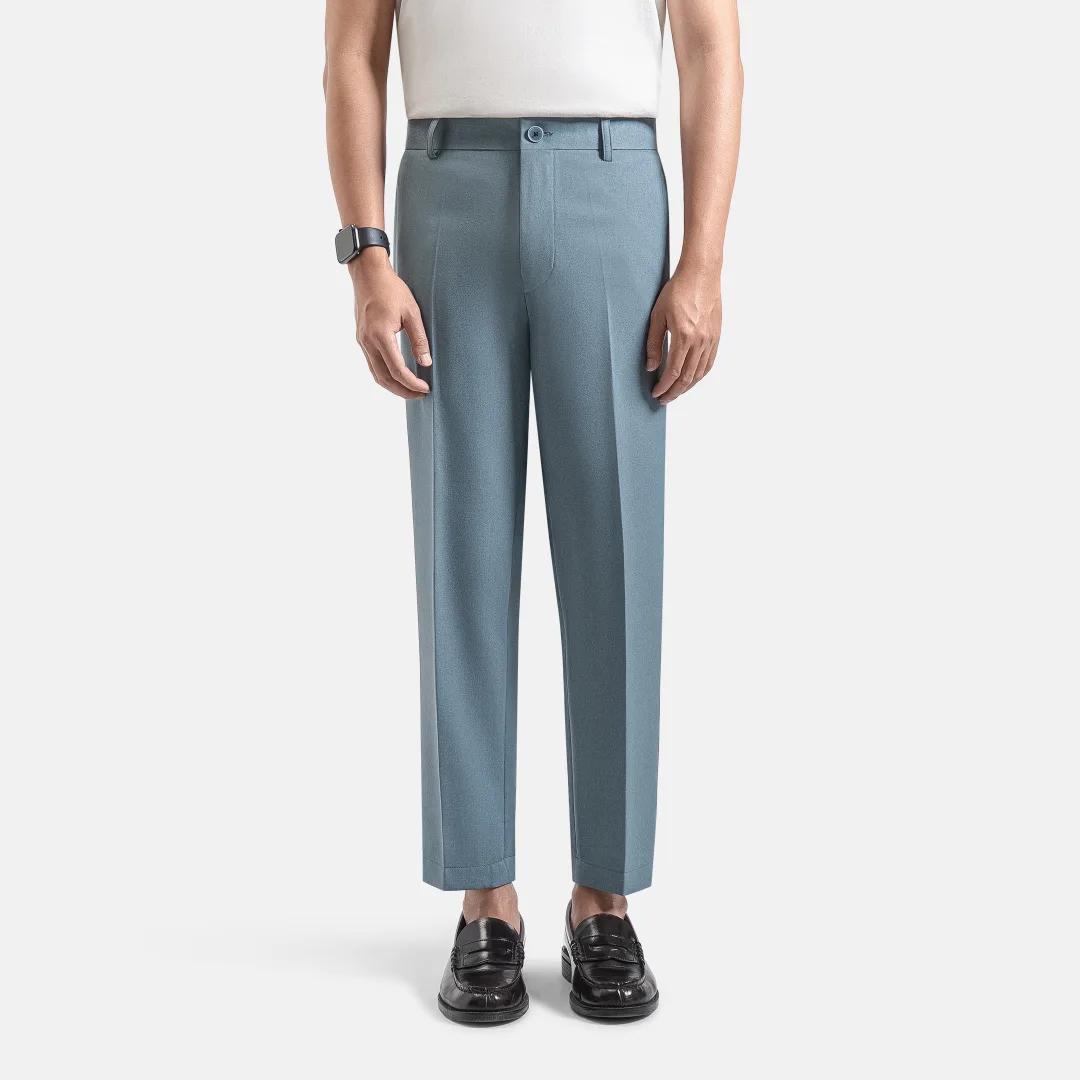
Your rain poncho kept your body dry the whole way home. Your legs weren't so lucky. Now you're on the porch, your pants soaked from the knees down and the cold fabric clinging to your shins. Your first instinct is probably to toss them straight into the laundry basket.
Hold off for a moment. Those pants don't necessarily need a wash. What matters is where the water came from.
Rainwater Is Fairly Clean, Puddle Water Isn't
If your pants were soaked by rain alone, the water in the fabric is relatively clean. There's no road dust or oil in it for detergent to dissolve. Pants like these only need to be dried properly.
Puddle water is a different matter. A roadside puddle collects everything left on the road, from sand and dust to drips of oil from passing vehicles. As your pants dry, the water evaporates, but the dirt stays behind between the fibres. You end up with faint marks along the hems, or a smell that won't go away. In this case, there's no skipping the soap.
The rule of thumb is easy to remember: look at which way the water came from. Water from above means your pants are only wet. Water from below means they're dirty, whether it's spray off the tyres of a car that passed too close or a foot that found a puddle before you saw it.
The Musty Smell Starts When Wet Pants Get Piled Up
The rain itself is rarely the problem. The trouble starts at home, when wet pants go into the basket and end up buried under T-shirts and towels until the next afternoon.
Fabric that stays damp for too long makes a cosy home for bacteria, and those bacteria are what cause the musty smell. Once the smell has set in, hanging the pants in front of a fan won't help. They'll need washing with detergent, then drying somewhere with good airflow until the smell is gone.
So if it was only rain that got your pants wet, you have one job that night: get them dry before they have a chance to smell.
How to Hang Wet Pants So They Dry Fast
Start with a dry towel. Lay the pants flat on top of it and press down until the towel soaks up the leftover water. It's a small step, but it can save you a fair bit of waiting.
Next, turn the pants inside out. The pockets and waistband are the thickest parts, and with the pants turned out, the air can reach both. Hang them with the legs apart, for example on a clip hanger.
Don't fold wet pants over the bar of a hanger. Where they fold, two layers of fabric sit on top of each other, and that part takes the longest to dry.
As for where to hang them, look for somewhere the air moves, like beside an open window or in front of a fan that's running. A bathroom with the door closed is actually the worst place. The air in there is already full of moisture, so the water in your pants struggles to evaporate.
What about an air-conditioned room? The air there does tend to be dry, so it helps a little. Moving air makes a much bigger difference, though. Pants hung flat against the wall of an air-conditioned room can take longer to dry than a pair in front of an ordinary fan in the living room.
A hair dryer is handy for small jobs, like the bottom of a pocket or a waistband that still feels cold to the touch. Hold it a little way from the fabric and keep it moving. For pants that are wet from the waist to the hems, a fan still makes more sense. It's hard to spread a hair dryer's heat evenly across that much fabric.
Dark Pants Are Better Off Drying in the Shade
Once the sun is back, it's tempting to hang your pants in full sun and be done with it. For dark pants, though, long hours in harsh sun only make the colour fade faster. Find a shady spot with a breeze instead, like the porch or somewhere near a window.
This matters most for the black pants you wear to the office almost every day, like the Black Ankle Prime. In the wet months, work pants can get caught in the rain more than once a week. Put them out in harsh sun after every soaking, and the colour will fade a little more each time.
When Pants Caught in the Rain Do Need a Wash
A hanger and a fan won't get dirt out. Your pants need a wash if the hems show faint splash marks, or if you had to plough through a puddle on the way home.
There's one more sign people often miss: a smell that's still there after the pants have dried. It means some dirty water soaked into the fibres, even if you don't think you stepped in a puddle.
Dirty hems don't mean the whole pair has to go in the wash. Take the hems to the sink, rub them gently with a little soap and rinse them clean. Wring them out and hang the pants the same way as above.
Chinos Last Longer When You Don't Wash Them Too Often
Holding off on the wash has a bonus, too. Take chinos, the cotton pants whose diagonal weave leaves fine slanted lines across the surface. Pants like these usually last longer when they rarely see the inside of a washing machine. The colour holds up better, especially on the thighs and knees. They hold their shape well, too. So if you get caught in the rain today wearing the Army Chino, hang the pants up before you decide whether they need a wash.
Keep a Spare Pair of Pants for the Rainy Season
You can't rush wet pants. Chinos hung up indoors usually take all night to dry. If the fabric is thick and the air is humid, it can take a full day.
To check whether they're ready, two quick moves are enough: slip a hand into a pocket, then feel the waistband. Those are the last two places to dry. If both have stopped feeling cold, and the only thing that got them wet was rain, the pants are ready to wear again without a wash.
If they're still damp, that's where a spare pair comes in. As long as there's another dry pair in the wardrobe, like the Grey Ankle Prime, there's nothing to rush. Yesterday's pants stay on the hanger until the pockets and waistband are dry, and you head out in the grey ones.