
On Sunday morning, you ride your bike to a café near home. It's only a few turns away. Before you reach the second turn, the seam on your inner thigh is already digging in. Then, as you park the bike, you notice a thin black line on the hem of your right leg. Chain grease.
Yet the pants looked fine when you tried them on. In the fitting room, all you did was stand and turn in front of the mirror. The problem is that pedalling pulls at parts of the pants that stay still while you stand. Luckily, you can mimic that pull right there with a single move, before you pay.
Why Pants That Feel Fine on Foot Can Pinch on a Bike
When you walk, your stride is short and your knees rarely come up very high. Pedalling is another matter. Every turn of the pedals lifts your knee much higher, then lowers it again, over and over. In the saddle, the crotch shifts a little too, every time your feet take turns pressing down.
That's why pants that feel comfortable when you stand can start to bother you before the end of the street. It's usually the crotch seam that protests first. Then the fabric across the front of the thigh joins in, pulling every time your knee rises.
For a short ride to the café or the office, you don't need dedicated cycling pants. Padded cycling pants only really pay off on long routes or fast rides. If it's just a casual ride of under half an hour, everyday pants will do. The one condition is that the cut gives you room in the places that move the most.
The One-Move Test: Lift a Knee, Then Lean Forward
Once the pants are on, hold off on judging them in the mirror. Lift your right knee until your thigh is almost parallel to the floor. That's roughly where your knee sits when the pedal reaches the top of its stroke. Hold it for a moment, lower it, then switch to your left knee. Repeat a few times, slowly.
Then lean forward slightly with both arms stretched out, as if you're holding the handlebars. The whole routine takes less than a minute.
The right pair for cycling is the one you don't feel at all during this test. Even a small niggle in the fitting room usually gets worse on the road, so note exactly where it comes from.
The Thighs Should Stay Roomy When Your Knee Comes Up
The thighs are where you get your answer fastest. With your knee raised, try pinching the fabric at the side of your thigh. If you can still pinch it and the inseam isn't pressing in, there's enough room. If the fabric is already pulling after a single lift, the ride to the café is going to feel a lot longer.
Straight and regular cuts usually have more room in the thigh, so they're more likely to pass. To give you an idea, the Black Regular Comfort pants have a regular cut: not tight, but not loose either. The fabric dries quickly and doesn't crease easily, so you still look neat when you get off the bike and walk into the café.
Thigh room isn't the same thing as pants that are big all over. Sizing up does free up the thighs, but the waist and the length get too big along with them. You're better off finding a cut with a roomy thigh in your own size.
You Can Still Cycle in Jeans or Slim Pants If the Thighs Have Room
A slim label doesn't automatically rule a pair out. Some slim pants still leave enough thigh room for a short ride, while others pull the moment your knee comes up. If the pair you're trying turns out to be the second kind, switch to a looser cut. There's a short explanation of each cut, from slim to straight, in the KASUAL Help Centre.
The same goes for jeans. The jeans themselves usually aren't the problem. It's the mix of heavy fabric and a narrow thigh: the denim chafes, and you get hot and sticky in no time. If the inseam is already pressing in during the knee-lift test, save those jeans for days on foot.
The Waistband Shouldn't Dig In When You Lean Forward
The second half of the test, leaning forward, checks the waist. It's close to how you sit on an easy ride: back slightly rounded, hands reaching for the handlebars. A stiff waistband will press into your stomach in this position, or leave a gap at the small of your back instead. A waist that's too loose has its own problem: the back slides down every time you lean over the bars.
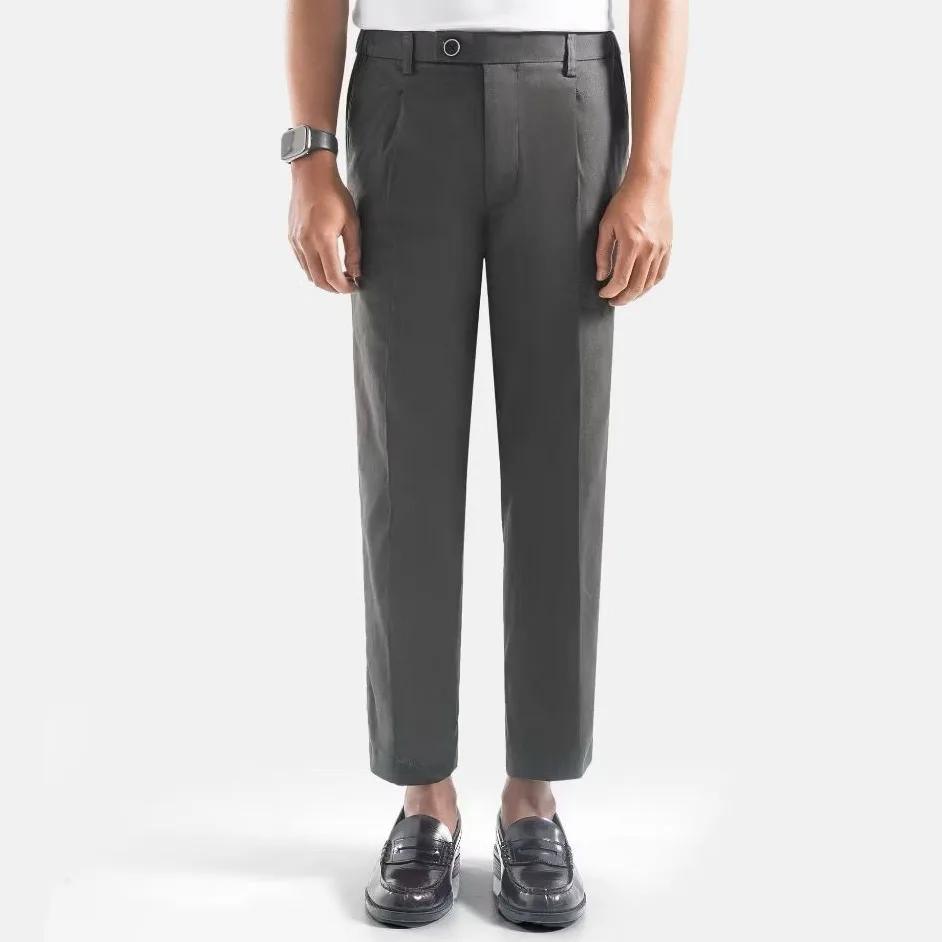
The most comfortable option is usually a waistband with a bit of give. Take the Smart Waist Ankle Chino, a cotton chino that looks neater than jeans. The Smart Waist part of the name refers to elastic hidden inside the waistband. When you lean forward, the waist gives with you, while from the outside it still lies flat.
Your Right Hem Sits Closest to the Bike Chain
While your knee is up, glance down as well. A wide hem that swings around can easily brush against the chain. Chain grease is one of the hardest stains to get out. On nearly every bike the chain sits on the right, so the right hem is the one most at risk.
A tapered hem, or one that stops before it touches your shoes, is much safer. The chino from earlier ticks both boxes. The word Ankle in its name means the length stops above the ankle bone, and the cut narrows towards the hem as well.
Full-length pants are still fine to wear, including the options in the Chino Workpant range. Roll the right hem up once before you set off, then roll it back down after you've parked.
Colours That Hide Road Dust and Saddle Marks
Black and dark grey do the best job of hiding road dust and the marks a saddle leaves behind. Beige and other light colours are still fine to wear. Just take a moment to check the back of your pants in the café's glass door before you walk in.