
The notification arrives at nine at night. Up to half price, only for twenty four hours. Your thumb opens the page before your brain gets a chance to ask anything. That's where the problem starts: a sale almost always begins from the size of the cut, not from need. And the size of the cut has its own way of winning.
A Discounted Price Changes How You Judge an Item
The moment a "save 40 percent" label sticks to a pair of trousers, you're no longer counting how often those trousers will get worn, but how many rupiah would be "a shame to miss". Yet the real saving is money that never leaves your pocket at all. A discounted item worn twice is still more expensive than a full price item worn every week. The September sale isn't wrong. It's the order of your thinking that needs flipping.
Write the Function First, Before the Promo Opens
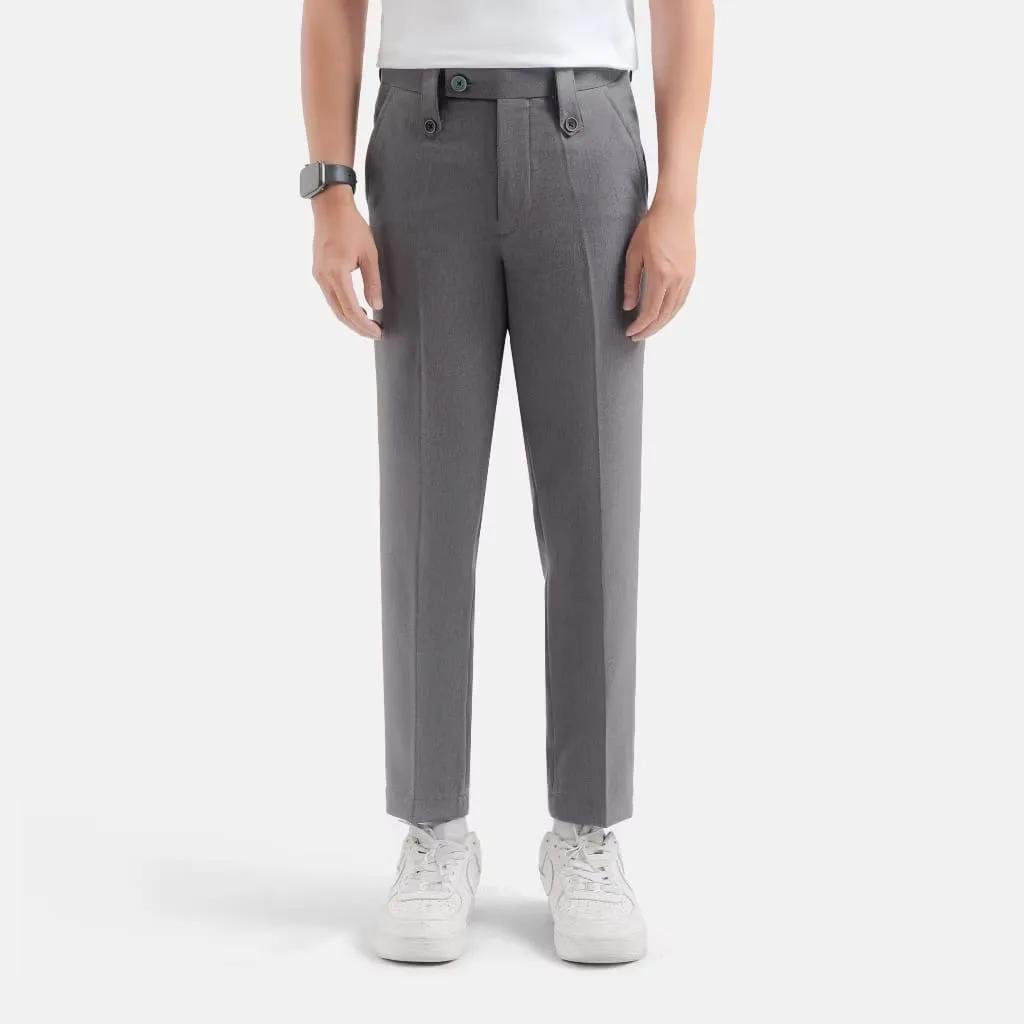
A week before the sale starts, open your wardrobe and look for the empty slots. Don't write "nice trousers", write the function: dark trousers that work from the office to a dinner out, or relaxed trousers to replace the jeans that have stretched out. If your empty slot is work trousers, something like the Executive Ankle in dark grey, with a hem that lands right at the ankle, can be a concrete picture. If the empty slot is a casual one, khaki trousers comfortable enough for daily wear make sense to note down. This list is short, and precisely because it's short, it holds firm against temptation.
Note Your Size Now, Not at Checkout
During a sale, popular sizes run out first, and the temptation to buy a size that's "almost right" gets very strong. Take the most comfortable trousers you own, and note the waist size, length, and fit. If you're not yet sure about the difference between slim, straight, and other fits, read the short explanation in the Help Center so your notes are accurate.
When the Sale Opens, You Just Match Things Up
With a shortlist in hand, your shopping order runs opposite to most people's. You don't scroll from the biggest discount, you go straight to the items on your list, for example starting from the trousers category, then checking price and size. If it's discounted, great. If not, the decision is still yours because the function is already clear. The sale becomes a tool that works for you, not the other way around.
Frequently Asked Questions
When is the right time to start building a shortlist?
A week to a few days before the sale opens. Enough time to open your wardrobe, check what's missing, and note your sizes without rushing.
How many items should ideally be on the shortlist?
Two to four items. More than that usually means you're writing based on wants, not on functions that are actually missing from your wardrobe.
What if an item on my shortlist turns out not to be discounted?
Still consider it, because its function is clearly something you need. A discount is only about when you buy, not about whether the item is useful.
Can I buy something outside the shortlist if the discount is huge?
Yes, as long as you can state its function in one sentence. If the only answer is that it's cheap, better to skip it.
Why should sizes be noted before the sale, not at checkout?
During a sale, popular sizes sell out fast and the temptation to buy a size that's almost right grows. A size note keeps you from gambling.