
You drop your motorbike key in the office car park. You crouch to pick it up, and straight away there's a breeze on your lower back. The shirt you tucked in so neatly this morning has worked halfway out. The back of your trousers has slipped down with it, and the parking attendant behind you gets a view they never asked for.
That night you go looking for a replacement pair online. For the first time, you notice the small label in the product description: low rise, mid rise, high rise. The logic seems simple. If low was the problem, just go for the highest.
For some people, that logic holds. For others, a waistband that sits too high ends up pressing into the stomach every time they sit down. The three labels aren't a ranking. Each one simply tells you where the waistband will stop on your body.
What Trouser Rise Means: Where the Waistband Sits on Your Body
Rise is the distance from the crotch seam to the top edge of the waistband. The longer the rise, the higher the waistband sits on your body.
A low rise stops below the navel, roughly level with your hip bones. A mid rise sits around the navel. A high rise comes up to your natural waist, which is the narrowest part of your torso. Here's an easy way to find it: lean to one side and see where the crease forms.
None of these three positions is automatically neater or more grown-up. Each one either suits your body and the way you dress, or it doesn't.
Rise is also a separate matter from the cut. Slim and straight describe how wide the trousers are from the thigh down to the hem, while rise is about how high the waistband sits. If the names for different cuts still confuse you, read the explanation in our Help Center.
Your Torso Length Comes First
Before you think about trends, look at the length of your torso, from your shoulders to your waist.
On a short torso, a high rise often overshoots. The waistband climbs too far, and the moment you sit down, your stomach takes the squeeze. A low or mid rise usually makes more sense.
On a long torso, the problem flips. A low rise lets your top come untucked easily and leaves your lower back exposed, exactly as it did in the car park. Anything from mid to high rise gives you enough fabric to keep your back covered.
Not sure which kind of torso you have? Your wardrobe can give you a rough clue. If shirts and tees that fit you at the shoulders almost always feel too long, your torso is probably short. If, on the other hand, your tees often ride up and show your stomach every time you raise your arms, it's probably long.
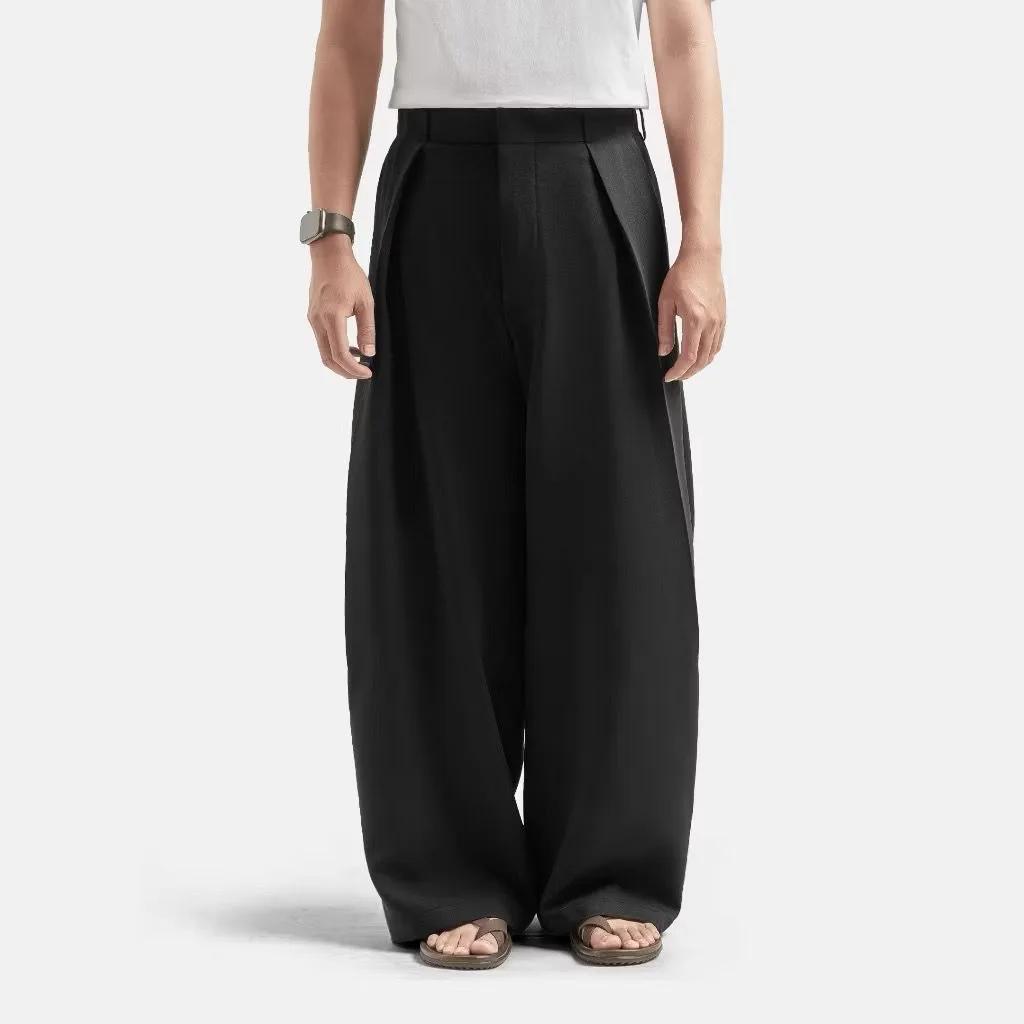
The shape of the trousers can help too. Front-pleated trousers, like the wide-leg pair from Neu Pleated, give you more room around the hips and crotch. That extra room makes them easier to get right across a range of torso lengths. Differences in torso length and trouser shape are exactly why two people with the same waist size can need different trousers.
Tucked or Untucked: Choosing Between High, Mid and Low Rise
The next question is simple: do you usually tuck your top in or not?
If you often tuck in your shirts or tees, a high rise makes the most sense. Because the waistband stops right at your natural waist, your top doesn't slip out easily. As a bonus, the higher waistline makes your legs look longer.
The clearest example is the gurkha trouser line. Gurkha trousers are high-waisted and have no belt loops. Instead, adjustable straps at the sides tighten the waistband, so it holds its position and keeps a tucked-in top neat until late afternoon. The dark grey gurkha trousers, for example, have a waistband that sits right on the natural waist, and you won't need to adjust it every time you get up from your chair. If your torso is short, though, sit down in them before you decide, because a rise that high can feel like it's pressing on your stomach.
It's a different story if you almost always leave your top untucked. The waistband is hidden anyway, so nobody can tell what rise you're wearing. Dressed this way, a low or mid rise feels more relaxed, and comfort is the only thing you need to chase, as long as your back stays covered when you crouch.
How to Measure Trouser Rise and Test It in the Fitting Room
Start with the trousers you already have at home. Take the pair that has always felt the most comfortable, button them up, and lay them flat on the bed. Measure from the crotch seam to the top edge of the waistband at the front. That's your front rise.
Then measure the back. The back rise is usually longer, and it's the part that keeps your lower back covered when you crouch. Note down both numbers, then compare them with the size chart on the product page when you shop online. If the rise isn't listed, just ask the seller before you pay.
One more thing if you're switching to a rise you don't usually wear: check the length of the trousers again too. A waistband that sits higher or lower can also shift where the hem lands on your shoes.
If you're shopping in person, take the trousers into the fitting room and sit the way you would at your desk. The waistband shouldn't press into your stomach. The crotch shouldn't feel like it's pulling either, and there shouldn't be a gap opening up at your lower back. After that, crouch for a moment, as if you were picking up a dropped key.
All clear? Then that rise is right for you, whatever the label says. Your motorbike key can drop again whenever it likes.