
Some people set reminders on their phones for their jeans. Wear on Monday and Tuesday, rest on Wednesday so the fabric can recover, first wash after six months, keep it away from just any soap. The schedule is tidy, almost like a watering schedule for the plants on the balcony. And yet all he bought was a pair of pants.
If you have ever read a ritual like that on a forum and quietly backed away, that is fair. The rumors going around make raw denim sound like a pet: it needs a schedule, it needs commitment, one small mistake in care and it is ruined. The reality is far more boring, and that is exactly the good news.
Raw Denim Is Not a Project, Just Pants the Factory Hasn't Washed
The difference between raw denim and regular jeans is a single step at the factory. Most jeans are washed after being sewn so the fabric softens and the color fades slightly before they reach the store shelf. Raw denim skips that step. The fabric is still stiff, the color still deep, and beyond that it is the same pair of pants. That is the whole difference. No membership requirements, no blood pact.
Which means there are no special rules you must follow for the jeans to succeed. Wear them every day, fine. Wear them once a week, also fine. The only thing that changes is how fast the fabric softens and the color fades. Not whether they survive or not.
The Break-In Period: Stiff at First, Then the Fabric Gives In
The part of raw denim you genuinely feel comes at the beginning. The first three days feel like wearing cardboard. Your knees resist bending, the waistband feels firm, sitting for long stretches takes adjustment. This is what people call the break-in period: the stretch of time when new fabric learns to follow your body. Normal, and simply how the thing is.
The good news is that denim gives in gradually. After a few weeks of being worn through your days, the knees start following your bends, the waist starts sitting where it should, and the pants that once felt like a plank begin to feel like yours. The creases that form behind the knees and at the crotch are the imprint of your body, the paths where the color will fade first. There is no shortcut that truly matters. Living in them, that is the trick.
One note on sizing: do not buy too tight in the hope that the fabric will stretch. Denim does loosen a little where it gets pulled often, but not by that much. Buy a pair that is already comfortable from day one, because the stiff period is far easier to get through when the fit is not torturing you along with it.
Rotating Your Wear Is Fine, Your Jeans Won't Die From a Day Off
One of the most stubborn myths: raw denim must be worn every single day for months so the creases lock in. As a result, people feel like failures if their jeans go unworn for even a week.
In reality, change in raw denim comes from total wear, not from consecutive days. Jeans worn rarely still soften and fade, just more slowly. The difference is only on the calendar. Giving your jeans a rest actually makes sense. Fabric that gets to recover generally lasts longer, and you get a reason to wear the other pants you own.
So wear them when you feel like it, hang them when you don't. There is nothing to chase.
Fades Arrive on Their Own, Fast or Slow Is Not a Report Card
About fades, meaning the lightening of color where the fabric bends and rubs most, this is the part people misunderstand the most. Photos on forums show dramatic contrast at the knees and thighs, and people assume it is a target that must be reached through some specific method.
But fades are not a target. They are a side effect of your life. The parts that fade are the parts you bend and rub the most: the knees if you walk a lot, the thighs if you sit a lot, the pocket where your phone sleeps. How fast or slow depends on how often the jeans are worn and washed, and that is not a report card. Jeans that are still deep in color after a year are not failed jeans. Maybe their owner simply stays home more, and that is valid.
Color also changes how the fading looks. Blue raw denim fades toward light blue, while black raw denim fades toward grey, quieter but still full of character. Both are natural. Just pick the kind of change you enjoy watching.
On Washing, the Rules Are Simpler Than the Rumors
This is the part with the most rituals on the internet, and what you actually need to remember is very little: wash when dirty or starting to smell. That is the core of it. Turn the jeans inside out, use cold water and a modest amount of soap, dry in the shade. Done.
Washing does not ruin raw denim. What happens is simply that the color drops more evenly, not only at the creases. If you are not chasing dramatic contrast, that is no problem at all. The longer details, like how often you should wash and which soap is safest, we cover in a separate care article so things don't pile up here.
Choosing a First Pair of Raw Denim That Makes Sense for the Long Haul
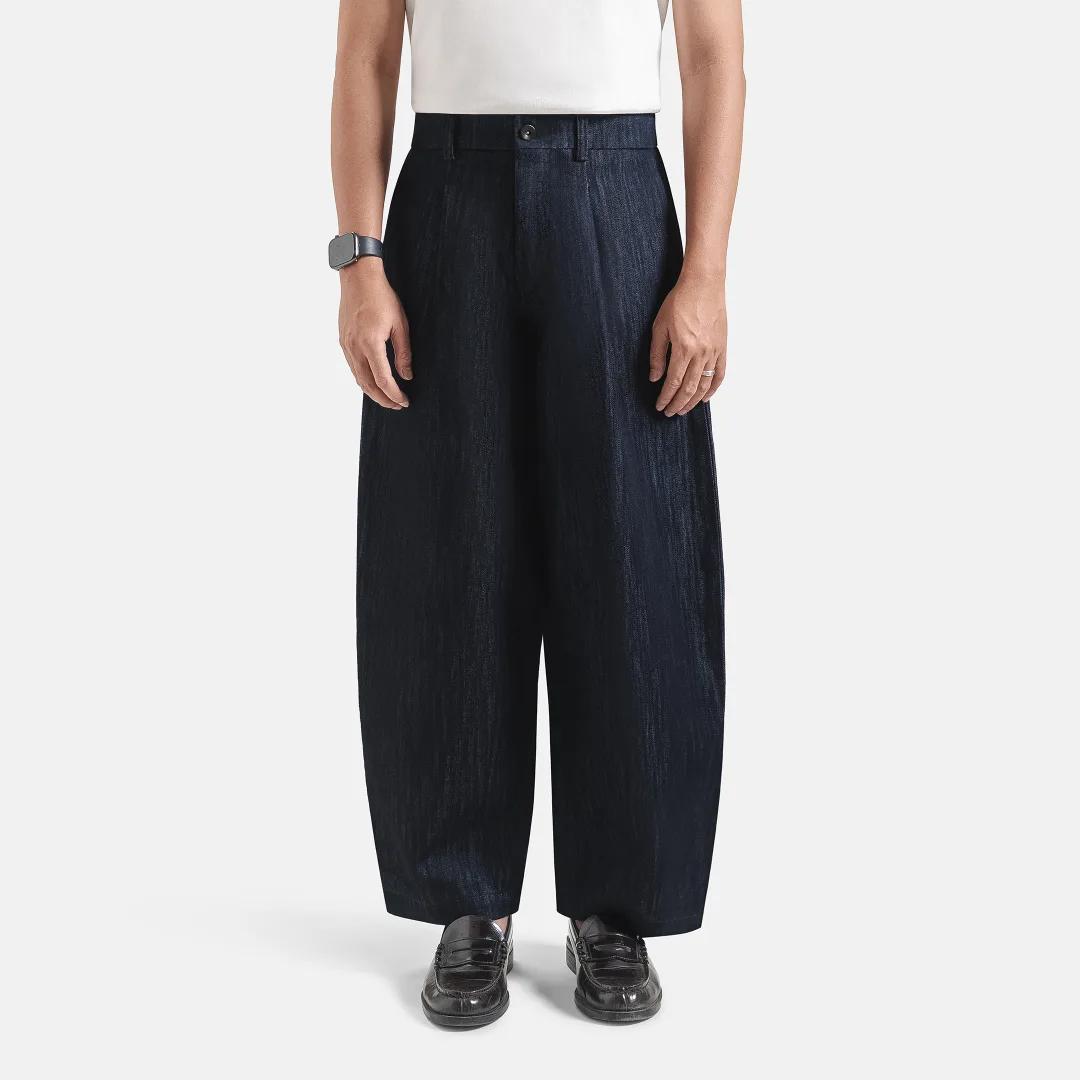
If this is your first pair of raw denim, start with the easiest one to live with. A classic dark color is the safest: it works with almost any top, fits both workdays and weekends, and still looks sharp even before the color starts to change. Navy raw denim in a wide cut falls into this category. The silhouette is roomy, so your body doesn't have to adjust twice, to the fabric and to the cut at the same time. If terms like wide, slim, or straight feel confusing, there is a short explainer in the Help Center you can read before choosing.
If you want fabric that already has character from day one, there is raw denim in slub fabric. Its surface is unevenly textured, so when the color starts to drop later, the fading looks more alive than it would on a smooth fabric.
And if, after reading all of this, you feel the stiff period still holds no appeal, that is a valid decision too. Dark jeans that come pre-washed from the factory give you a similar look from day one without any adjustment period, and they can still keep you company for years.
The best raw denim is not the one with the most dramatic fades. It is the one you reach for most often without thinking twice.