
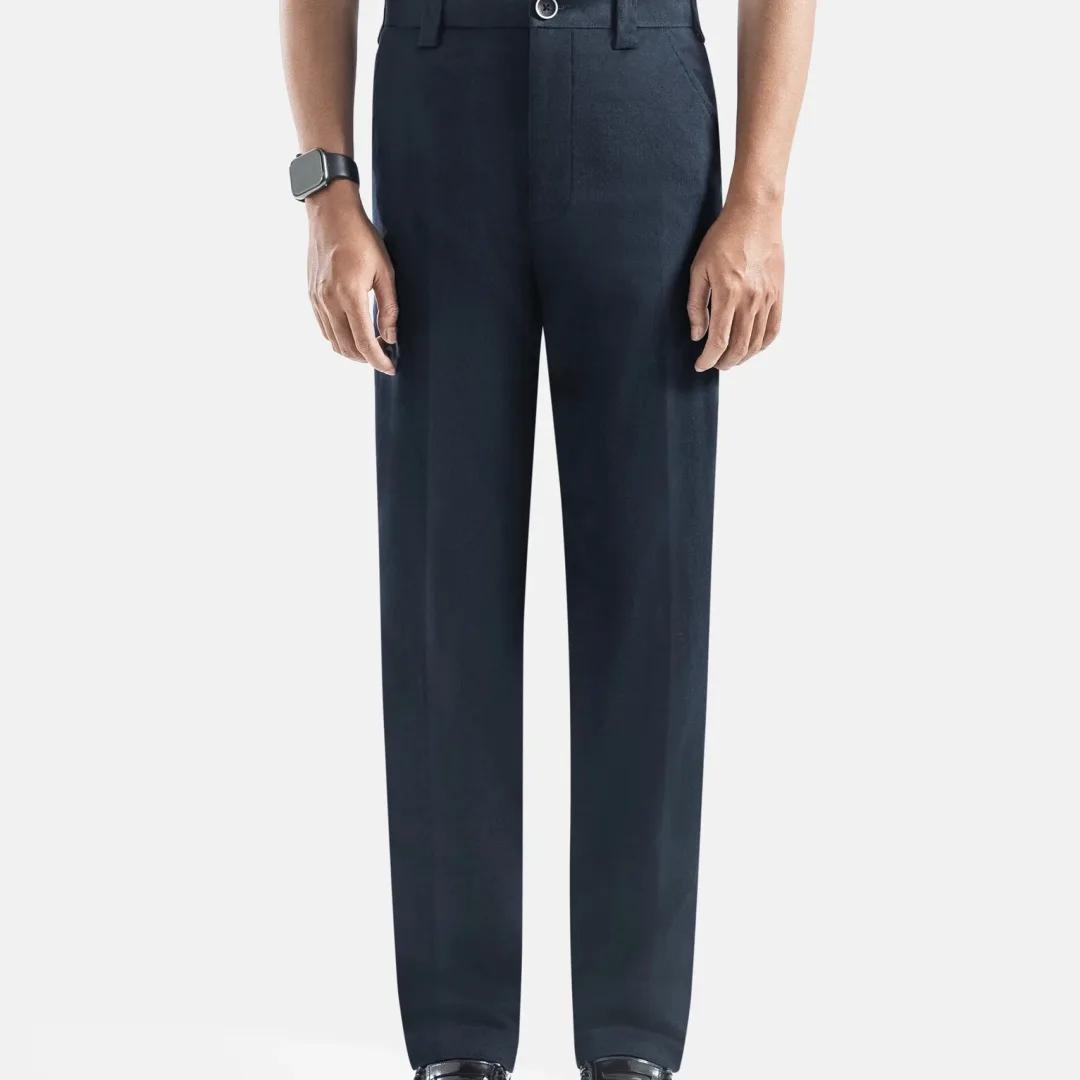
Just before the midday prayer, you sit down on the wooden bench outside the office prayer room to take off your shoes. You lift one foot onto the other knee so the laces are easier to undo. From there, for the first time today, you can see the back of the hem on your cream trousers.
There are dozens of brown specks on it. They're thickest near the hem and thin out as they climb. Where the fabric has sat bunched on top of your shoe since morning, a dull line runs along the edge of the fold. The other leg turns out to be no different. At least they match.
Yet the rain stopped before you left home, and as far as you can remember, you didn't step in a single puddle.
Mud Specks on the Back of Both Legs Come From Your Own Shoes
Pavements stay wet long after the rain stops. Every time your foot lifts, the sole of your shoe flicks tiny drops of water backwards. Those drops carry dust and fine sand from the road. The first thing they hit is the fabric hanging behind your heel.
If your trousers are too long, that's exactly where the fabric bunches. Those bunches form little folds that hold water for longer, so the mud has time to soak in before it dries. The dull line along the edge of the fabric comes from this bunching too. As the fabric dries, fine mud is left behind where the wet patch ended.
Splashes from passing traffic leave a different pattern. The spots are bigger and can reach as high as your knee. They also tend to hit only the leg nearest the road. Against these, the length of your trousers won't help much. You're better off walking a little further from the kerb.
Ankle-Length Trousers Get Splashed Less Often
Trousers that stop just above the ankle bone leave no fabric behind your heel. Most of the drops your shoes throw up land on your socks, which go in the wash every day anyway. A few specks can still reach your calf, but there are fewer of them, and there's no fold to hold the water.
The difference shows most when you get off a motorbike. Your foot usually lands at the edge of the road, where water lingers longest. The back of a full-length trouser leg nearly touches the tarmac, so it gets dipped too. A hem that stops above the ankle stays hanging clear of the water.
Trousers cut this way are usually called ankle pants. For everyday wear, one option is the Ankle Fino in dark grey, made from cotton twill. If your office expects a sharper look, the Executive Ankle Pant in dark grey has a crease down the centre of each leg. It's made from quick-drying polyester.
If Your Trousers Are Full Length, Roll Them Up Before You Leave
The full-length trousers in your wardrobe still work in the rainy season. Before you head out, roll the hems up until they sit above the ankle bone. Two turns are usually enough. Rolling them turns the inside of the fabric outwards, so most of the splashes that do land end up there. Once you unroll them at the office, the specks are hidden on the inside of the trousers.
If a pair always bunches on top of your shoes, have an alterations tailor shorten it until the hem just touches the shoe. The bunching disappears, and splashes have no fold left to nest in.
In a few minutes you'll be rolling up your trousers for wudu anyway. Tomorrow morning, do it earlier, on your doorstep.
Frequently Asked Questions
How do I clean mud splashes that are already on my trousers?
Let them dry first, then brush them off with a clothes brush or a dry old toothbrush. Scrubbing mud while it's still wet only pushes it deeper into the fabric. If a mark remains, work a little liquid soap into it by hand, then wash the trousers as usual.
Will the dull line along the hem come out?
It usually comes out in the wash. Don't just scrub the line and hang the trousers out to dry, because a new line often forms at the edge of the damp patch. Wash the whole pair in one go.
Why do the splash marks look pale on black trousers?
Splash water carries road dust. Once the water evaporates, the dust stays on the surface of the fabric, and it's a lighter colour than black. Specks like these usually just need a brush once they're completely dry.
Does the way I walk affect how much I get splashed?
Yes. Short, unhurried steps throw less water backwards. Also try not to drag your shoes across wet ground.
Are ankle pants too short for riding a motorbike?
When you sit on a motorbike, the hem of any trousers rides up towards your shins. With ankle pants, the gap above your shoes gets wider. Socks that are long enough cover that gap, and on rainy days they also catch whatever splashes still get through.