
Your phone pings: the ojek driver is already waiting at the end of the lane. You only plugged in the iron a minute ago, and it's still cold. The shirt you planned to wear hangs on the back of the door. A crease cuts across the chest, left over from a night crumpled in the laundry basket. One collar point is sticking up, and the sleeves still show where the clothes pegs were.
You can still make it, as long as you stop chasing a shirt that's smooth from collar to hem. Nobody you meet today is going to inspect it inch by inch. There are parts they'll definitely see, and parts that slip right past them. Fix what shows and forget the rest.
The Four Parts of a Shirt People Look at First
Watch where someone's eyes go when they're talking to you. Their gaze settles on your face, and your collar sits right below it. A collar that sticks up instantly makes you look like you're not quite ready. From the collar, the eyes drop to the button placket. That line splits your body right down the middle, so the eye almost always follows it. The chest on either side is in view too, especially the side that isn't covered by a bag strap or a jacket. Then there are the cuffs. Every time your hands move as you explain something, the cuffs come into view with them. Collar, button placket, chest and cuffs: those four spots are the only ones you need to rescue this morning.
Wrinkles anywhere else are much easier to forgive. Your back disappears from view as soon as you sit down. Creases in the sleeves bother no one, because sleeves never keep still anyway. Tuck the shirt in and the bottom half vanishes into your trousers. So those peg marks on the sleeves? Leave them.
The Quickest Way to Unwrinkle a Shirt: Slightly Damp Palms
This trick is fast enough for that kind of morning, and it works just as well in the office toilet before a meeting. Wet your palms, shake off the excess water, then press them onto the creased area. Pull the fabric in opposite directions until it lies flat, the way you'd smooth a sheet on a bed. If you have a spray bottle, a few light mists do the job too. Cotton usually falls into line as soon as it's a little damp and pulled taut.
A collar that won't lie flat gets the same treatment: dampen it, then press it down for a few seconds. If the collar points have small buttons, like the ones on the navy oxford shirt, simply button them down so the collar stays put.
There's just one thing to watch: keep the fabric damp, not wet. A shirt that's still wet when you put it on will crease up again before you get where you're going.
If you go by car, you have the seatbelt to deal with as well. It leaves a diagonal line right across your chest, the part people look at most. Once you're out of the car, tug the shirt down a little by the hem, then sweep your palm over the fabric from your chest towards your stomach. By the time you've crossed the lobby, it's usually gone.
With Fifteen Minutes Left, Let the Shower Steam the Wrinkles Out
If you haven't showered yet and there's hot water at home, take the shirt into the bathroom with you. Hang it where the steam can reach it but the splashes can't, then close the door. Ten minutes is enough, fifteen at the most. The steam relaxes the fibres, and light wrinkles ease out without you having to touch them.
After your shower, your hands take over. Gently pull the collar and button placket flat, following the line of the seams. Give it a few minutes until the fabric no longer feels damp, and only then put the shirt on.
A cold shower makes no steam. Use a hair dryer instead. First dampen the creased area with your palm, then aim the dryer at it on medium heat from about a hand span away. Keep the dryer moving. A thin shirt overheats easily if the hot air stays on one spot for too long.
Which Parts to Iron First When You Only Have Five Minutes
One kind of wrinkle still needs an iron: a fold line as sharp as a crease in paper. You see it on shirts that have spent weeks squashed at the bottom of the wardrobe. Steam and damp palms usually can't flatten it. Luckily, the iron doesn't need to touch the whole shirt.
The collar goes first. Run the iron from each point in towards the middle, so the tips don't curl. Then comes the button placket. Once that line down the centre of your chest is straight, the shirt instantly looks much tidier. The cuffs follow, and the chest comes last if you still have time.
Leave the back and sleeves alone. Your five minutes are better spent on the parts people actually see.
Some Fabrics Hide Wrinkles, Others Resist Them
Not every shirt is equally high-maintenance. An oxford shirt, like the navy one earlier, is made of cotton, and cotton does crease easily. But the oxford weave has a slight texture, something like a very tight basketweave, so small wrinkles blend in. If the back misses out on the iron, not many people will notice.
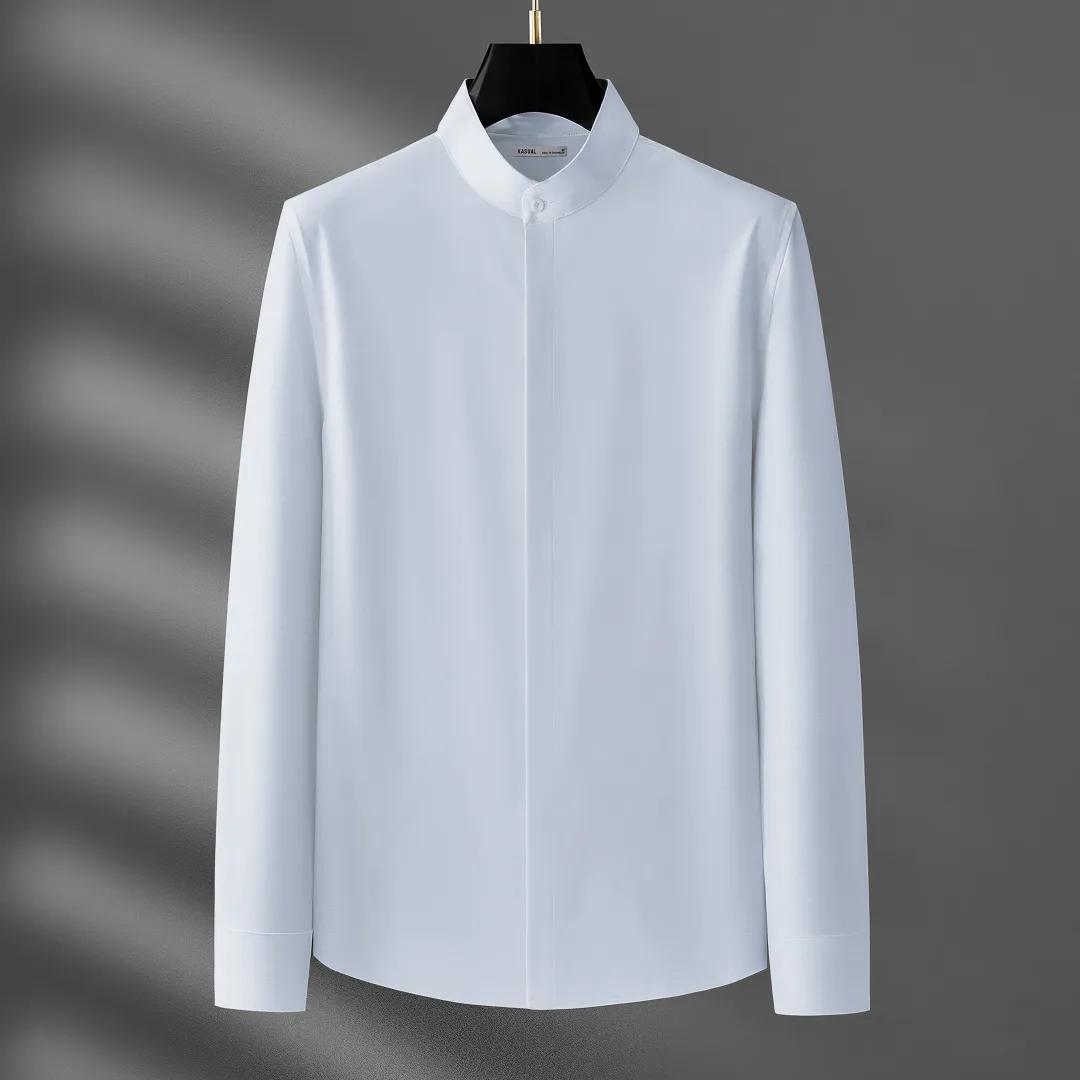
A shirt in a fine fabric made to resist creasing is another story. Hang the white Superfine shirt up the night before, and its light creases are often gone by the time you wake up. What's left smooths out quickly with a bit of steam.
Preventing Wrinkles While Your Shirt Dries
Wrinkles are easiest to prevent while the shirt is still wet. Give it a few sharp shakes before you hang it out. Dry it on a hanger instead of pegging it to the line. Do up the top button, then settle the shoulders so they sit snugly on the curve of the hanger. Before you walk away, smooth the collar and button placket flat with your hand. A shirt that dries in the right shape usually needs only a quick touch-up the next morning.
Ironing the whole shirt can keep until the weekend, when there's no ojek waiting for you at the end of the lane.