
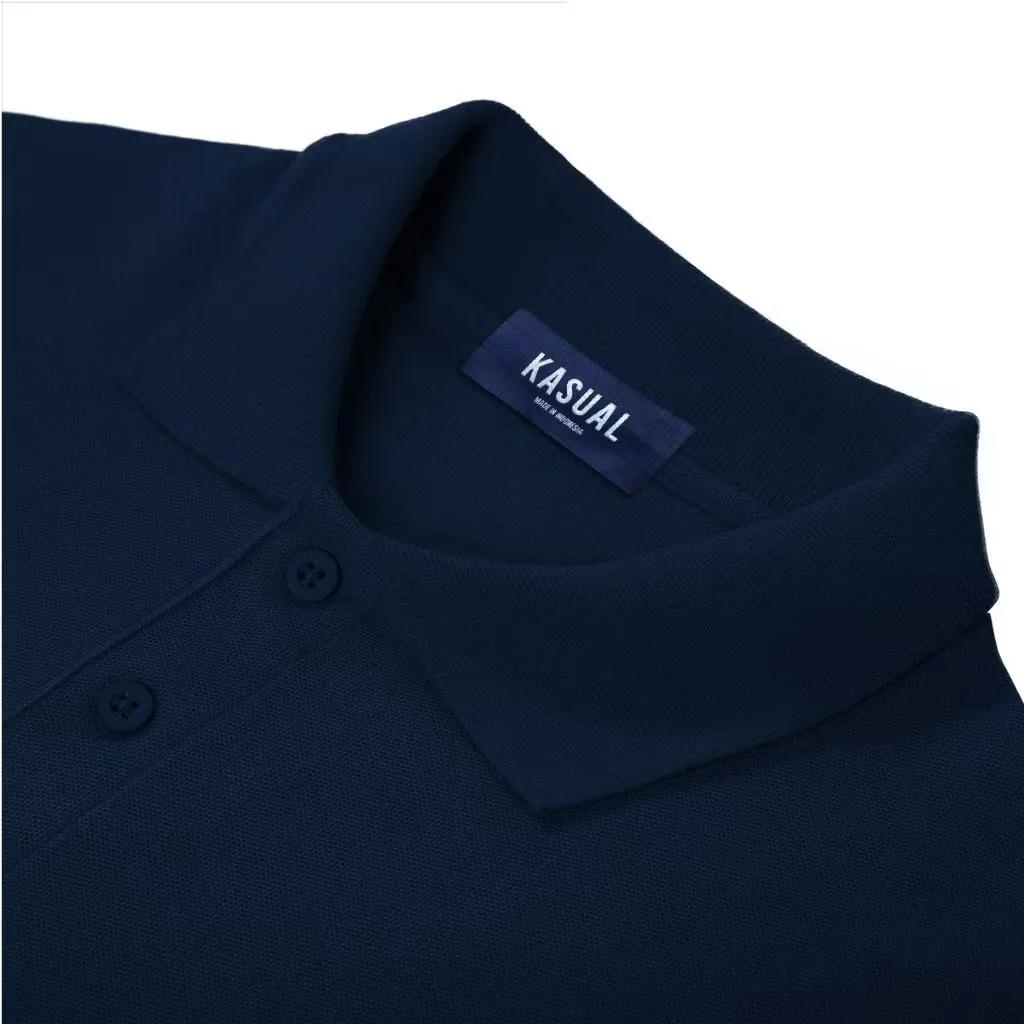
The photos from Sunday's family gathering land in the WhatsApp group. Like everyone else, you zoom in on your own face first. Then your eyes drift down to your arms, and something doesn't sit right. The hem of your polo sleeve is wrapped tight around your biceps. The skin just above it bulges a little, like a takeaway iced tea in a plastic bag, tied off with a rubber band.
That morning in front of the mirror, though, the polo felt just right. Your arms filled the sleeves, and you thought you looked a bit more built. Plenty of men judge a polo this way: the tighter it is on the arms, the better it seems to fit. Sadly, the camera had other ideas.
Tight Doesn't Always Mean a Good Fit
The idea that tight means fitted is borrowed from gym tees and bodybuilding photos. In that world, a sleeve that grips is deliberate, because its whole job is to show off muscle. A polo has a different job. You wear it to the office or to dinner with your in-laws, where people notice how neat you look far more than how big your arms are. And neat isn't measured by how closely the fabric hugs your skin.
A polo sleeve that fits follows the shape of your arm. There's still a little room between fabric and skin, enough to move in, but not so much that the sleeve flares open. If you take the polo off and find a red line circling your arm, don't read that as a good fit. It means the polo is too small.
Where Polo Sleeves Should End: Mid-Bicep
Sleeve length plays its part too. On a short-sleeve polo, the hem looks best when it stops around the middle of your biceps, roughly halfway between shoulder and elbow. If it drops towards the elbow, the sleeves look too long and the polo looks borrowed from your big brother. If it sits too high, it looks like a T-shirt from your school days that you insist still fits.
Signs Your Polo Sleeves Are Too Tight or Too Loose
A sleeve that's too tight usually gives itself away. Besides that red line, watch the hem when you raise your arm. If the fabric travels a long way up and then catches on the muscle, there isn't enough room. From the side, a sleeve that's too narrow also leaves a dent where the hem ends, just like in that family photo. There's one more sign people often miss: the hem rolls up on its own and won't lie flat. The fabric has nowhere left to go.
A sleeve that's too loose sends the opposite signals. The hem flares out like a small wing and flaps with every step you take. Your arm looks lost inside it. This often happens when men size up to get a looser fit through the body. The body does loosen up, but the sleeves get bigger along with it.
A word on cuffing the sleeves. A thin, flat cuff is fine now and then, for style. But a cuff doesn't add room. If anything, the hem climbs to the thicker part of your biceps, so the pinch can feel even tighter. If you're cuffing because the sleeves are tight, the problem is still the size.
Try the Two-Finger Test Before You Settle on a Size
You don't need a full-length mirror to judge a polo sleeve. Put the polo on, then slide two fingers into the sleeve opening. If both go in without forcing and the fabric still falls along your arm, the size is right. Struggling to get even one finger in? That sleeve is too tight. If it's so loose that the opening gapes, it's too wide.
Then move the way you would on an ordinary day. Wave as if you're calling to a friend across the street. Fold your arms across your chest, then bend your elbow as if you're taking a call. It's fine for the fabric to move with you. What you're watching for is fabric that feels pulled taut, or a hem that leaps up whenever you raise your arm.
You can do this test in a fitting room or at home. Say a parcel with a Rise Polo in dark grey has just arrived. Try it the moment you open the packaging, before the polo disappears into the wardrobe and gets forgotten.
When the Body Fits but the Sleeves Pinch
It's a complaint you hear fairly often. The body of the polo hangs just right, but the sleeves nip at your arms. Before you rush to size up, don't go by S, M or L alone. Measure the old polo you reach for most often, then compare it with the size chart on the product page. On the Rise Polo in burgundy page, for example, the chart gives the chest and body length for each size.
For the sleeves, that old polo is still your best reference. When the new one arrives, lay the two on top of each other on the bed with the shoulders lined up. You'll see straight away whether the new sleeve opening is narrower than the one you're used to.
Don't expect tight sleeves to loosen up on their own after a few wears. If the hem is already leaving marks, swapping for another size is the most sensible move. Going up one size is sometimes enough. But if the body then hangs off you, that cut simply doesn't suit the shape of your arms. You're better off finding a different style than forcing it.
Getting the Sleeves Right on a Long-Sleeve Polo
A long-sleeve polo has its own stopping point. The sleeve should end at your wrist rather than mid-bicep. As for room, the rule stays the same: the fabric follows your arm without gripping it.
If you wear a polo like the long-sleeve Rise Polo in black, there's one extra test many men will know well. Push the sleeves up the way you would for wudu before prayer. If the fabric gets stuck before it clears your elbow, there really isn't enough room.
The next family photo will land soon enough. This time, your face is the only thing you'll need to zoom in on.