
The drizzle starts as you walk from the station to your client's building. It isn't heavy, so you don't bother looking for shelter. At the front desk, the receptionist hands you a visitor pass and glances at your shoulders. You follow the glance. The shoulders of your light blue oxford shirt are peppered with dark spots.
The meeting starts in twenty minutes. In the lobby toilets, you bend your knees and lean sideways to get one shoulder under the hand dryer. It cuts out every time your shoulder shifts. A middle-aged man walks in and takes his time washing his hands while he waits his turn.
Twenty minutes is enough to dry some shirts but too short for others. The difference lies in the thickness of the fabric, and you can check that at home before the next drizzle arrives.
Thick Yarns Hold On to Drizzle Longer
Drizzle doesn't just sit on the surface of a shirt. The water soaks into the yarns, and thick yarns have more room to hold it. Take an oxford shirt. Look closely at the fabric and you'll see fairly thick yarns woven like a tiny mat. Flannel and denim shirts are thicker still.
A fabric like this can look dry on the outside while the inside of its yarns is still wet. That leftover water evaporates slowly, so your shoulders keep feeling cold in the meeting room. Even the hand dryer only dries the surface.
Thin Fabric Dries Faster in Air-Conditioned Rooms
Thin fabric made from fine yarns is a different story. Drizzle does reach your skin sooner, but the fabric holds very little water. In the dry air of an air-conditioned room, that water evaporates quickly, so the spots are often gone before the meeting starts.
If you still want light blue, the Superfine Koko shirt with a mandarin collar in the same colour is a good example. Its fabric is smooth, and the product page describes it as quick-drying and wrinkle-resistant.
Test Your Work Shirts with a Spray Bottle This Weekend
The easiest way to find out which shirts pass is to make your own drizzle. Hang two or three of your work shirts side by side. Take the spray bottle that usually keeps you company at the ironing board and fill it with clean water. Give the shoulders of each shirt the same number of sprays.
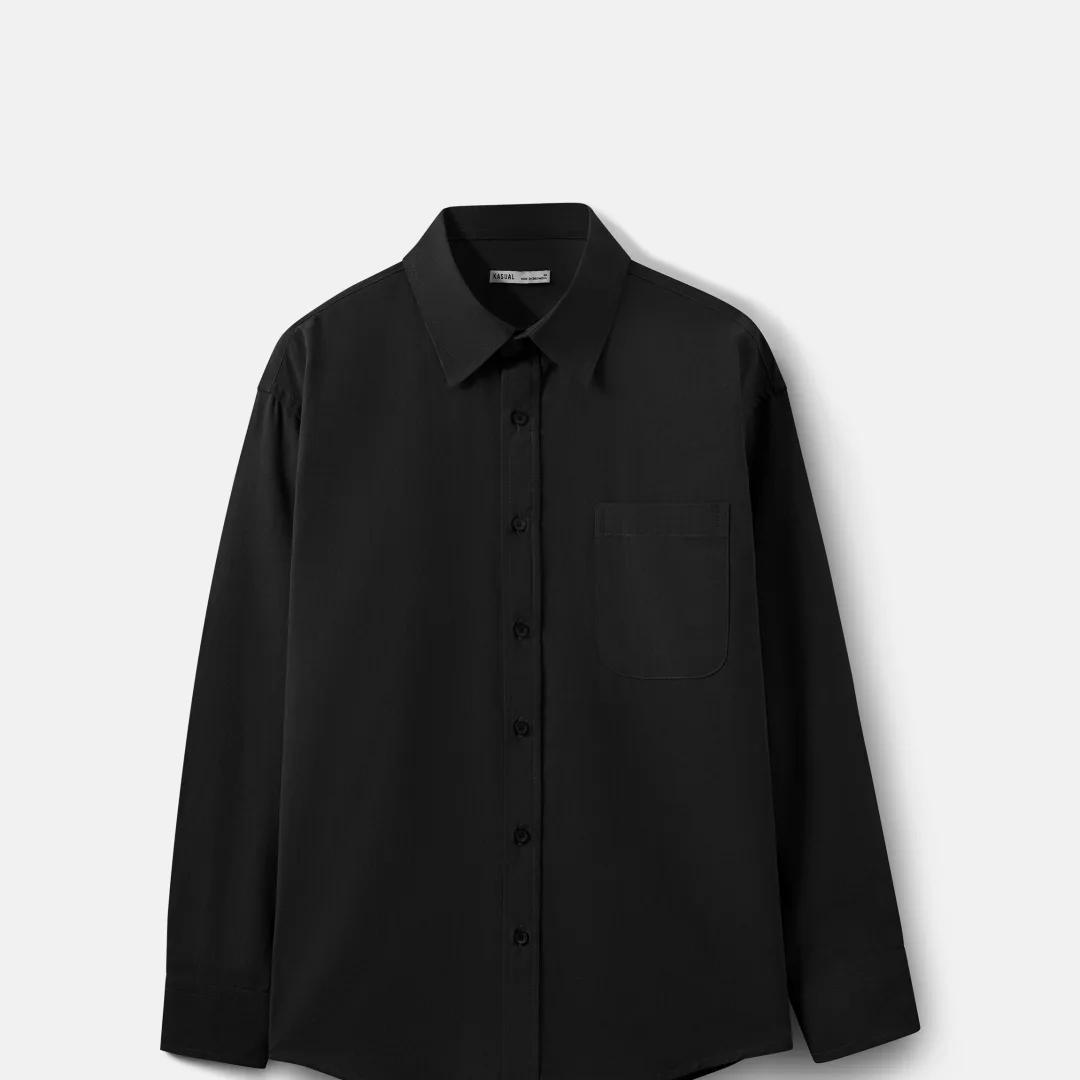
Before you leave them, check how each one looks while wet. Light blue and khaki show every drop as a dark spot, and a thin white can turn slightly see-through. Black and brown are much better at hiding them. A lightweight fabric in a dark colour, like the black Ease Linen shirt, is a safer bet for the rainy season. Its light creases are meant to be part of the look, so it suits meetings with a more relaxed feel.
Then put them all in an air-conditioned room or in front of a fan. After twenty minutes, the same time you had left in the lobby, feel the shoulders one by one. Move the shirt whose shoulders dried first to the front of your wardrobe. That's your shirt for grey-sky mornings.
The light blue oxford stays in the rotation for sunny days. And the man in the lobby toilets won't have to wait his turn again.
Frequently Asked Questions
Does a linen shirt always dry faster than a cotton shirt?
Not always. Linen is known for shedding moisture quickly, but a thick linen can dry just as slowly as a thick cotton. Fabric thickness is the more reliable guide, whatever the material is called.
Does wearing an undershirt make a shirt take longer to dry?
The shirt itself barely changes. What stays damp longer is the undershirt, because it is covered by the shirt and pressed against your skin. In the rainy season, choose a thin undershirt. Under a white shirt, an undershirt close to your skin tone shows through less when the shirt gets wet.
Should you take off a jacket that got caught in the drizzle as soon as you're indoors?
Ideally, yes. A wet jacket holds moisture around your shirt, so your shoulders take longer to dry. Hang it over the back of your chair until your shirt and jacket are both dry.
Is a small folding umbrella enough to keep drizzle off your shoulders?
Often, no. A small folding umbrella covers your head, but the wind easily blows drizzle onto your shoulders. A backpack gets wet too, because it sits outside the umbrella's shelter. Choose an umbrella with a canopy that is clearly wider than your shoulders.
Are short-sleeved shirts more practical for the rainy season?
For the commute, yes. There's less fabric, and the skin on your arms dries quickly on its own. For a more formal meeting, a long-sleeved shirt still looks neater, so choose one in a thin fabric.