
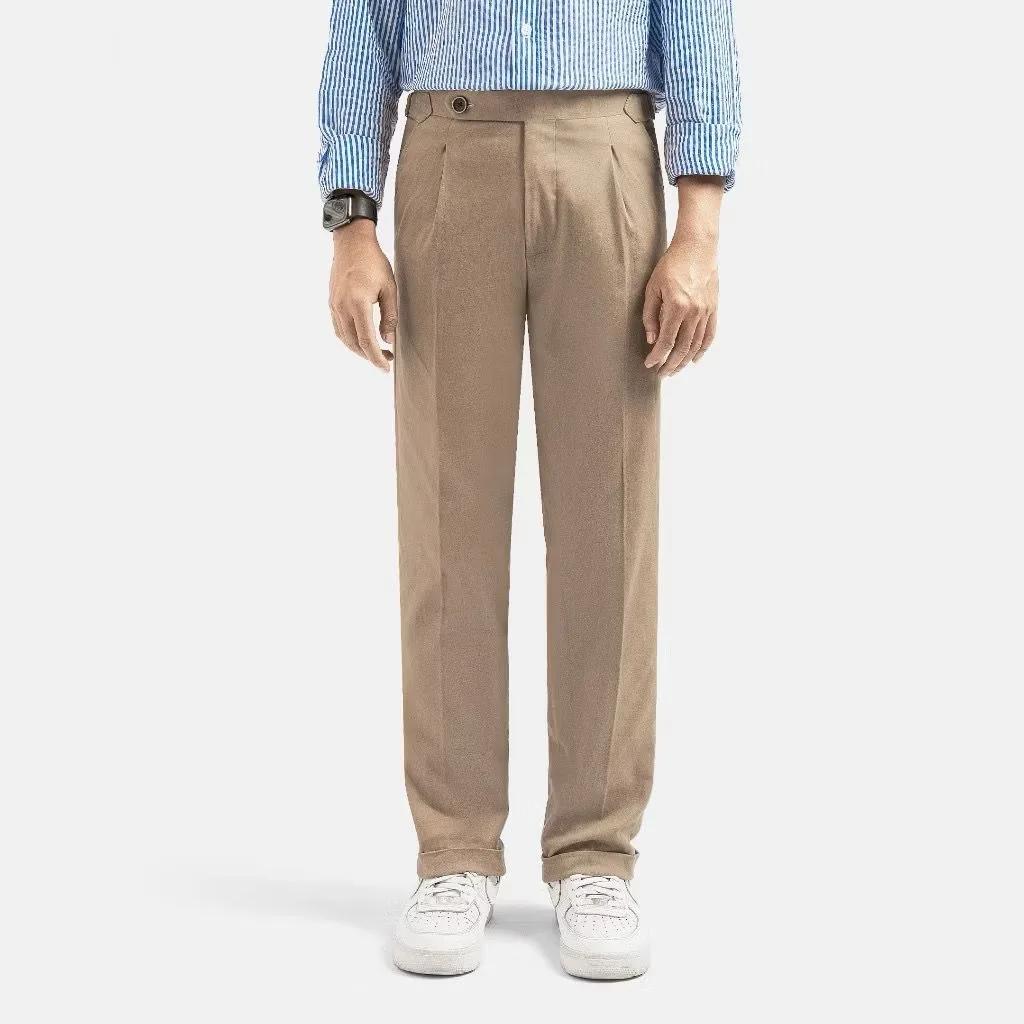
Two trousers can share the same color, nearly the same fabric, and a similar cut, yet one feels right for the office while the other is clearly a weekend pair. If you have ever felt that without being able to explain why, take a look at the pockets. That is where trousers usually reveal their class.
Pockets rarely get much thought when buying, yet their shape determines two things at once: how neat the trousers look, and how much you can carry without ruining their lines. There are three types you will come across most often.
Slash Pocket: The Angled Opening at the Front Sides
A slash pocket has an angled opening at the front sides, following the direction your hand naturally enters. It is the most common type, found on almost every pair of chinos, the cotton trousers many men rely on daily. The impression it carries is neutral: neat enough for the office, relaxed enough for the weekend. Because the opening follows the line of the trousers, no new surface appears on the fabric.
For everyday wear, slash pockets are also the most comfortable. Your hand slides in without searching, and your phone sits securely. The angled opening keeps the phone from slipping out when you sit down. Trousers like the coffee brown gurkha use a buckle strap at the waist instead of belt loops. The look stays composed precisely because the slash pockets add no extra noise to the surface.
Welt Pocket: The Thinnest, Neatest Line
A welt pocket is just a single thin horizontal line, sometimes with a small button, and it usually sits at the back of dress trousers. People call it a lipped pocket because the edges are finished with a narrow strip of fabric. With no visible extra panel of cloth, this is the pocket with the neatest impression.
That neatness comes at a price. Welt pockets are not designed to hold much. A thick wallet forced inside will pull at the line and distort the shape of the back. Trousers that rely on a clean line, like the Black Smart Wide Loose Pants, look sharp precisely because no pocket bulges out and interrupts the fall of the fabric.
Patch Pocket: The Sewn-On Pocket with a Visible Panel
A patch pocket is sewn on: a panel of fabric stitched over the surface of the trousers, so its square shape is clearly visible from the outside. You find it on cargo trousers and chinos designed for heavy work. Its impression is the most casual, because patch pockets were born from the need to carry things, not the need to look polished.
The upside is real space. Phone, keys, and wallet go in without pulling at the trouser line, because the pocket sits on the outside. The cream chino workpant is a fitting example: pockets ready for a full day of use, with a look that is still easy on the eyes.
Choosing Pockets Based on the Occasion and What You Carry
The fastest way to read a pair of trousers is to match its pockets to your plans. For the office or occasions that call for a composed impression, slash and welt pockets keep the lines calm. For days loaded with things to carry, patch pockets make more sense because the space is genuinely provided. If you are trying trousers on in a store, slide your hand into each pocket to feel the depth, then sit down for a moment.
One habit is worth keeping whatever the type: never turn the back pocket into a storage room. A thick wallet there ruins the shape of the trousers and makes sitting uneven. If you need everyday trousers with roomy pockets, the navy blue workpant is a dark-colored alternative that pairs easily.
Once you know the difference, your eyes will automatically look for the pocket shape before the color.
Frequently Asked Questions
What type are the back pockets on chino trousers usually?
Usually a welt pocket, sometimes with a small button. The shape is deliberately just a thin line so the back of the trousers stays looking neat.
Do patch pockets make trousers look more casual or more formal?
More casual, but there are gradations. A small patch pocket at the back is still fine for a casual office, while a large one on the thigh like cargo trousers is fully weekend territory.
Does keeping a thick wallet in the back pocket ruin the shape of trousers?
Slowly, yes. Repeated pressure stretches the fabric and distorts the pocket line, especially on thin welt pockets. Move it to a front pocket or a bag if the contents are thick.
Should the welt pocket that's still stitched shut on new trousers be opened or left alone?
Either is fine. That stitching is only temporary to keep the pocket flat in the store. Open it carefully with small scissors if you want to use it, or leave it stitched if you like a completely smooth back line.
How can you tell the pocket type when shopping online?
Zoom in on the front and back of the product photos. Slash pockets appear as diagonal lines on the front sides, patch pockets show their fabric panels, while welt pockets are only thin horizontal lines.
Which pocket type is safest for keeping a phone while sitting for a long time?
A deep front pocket, whether a slash pocket or a front patch pocket. A phone in the back pocket risks getting pressed every time you sit down.