
The hoodie was bought with good intentions. The first week, it still got worn twice. A month later, its job had changed to bag resident: folded neatly every morning, carried everywhere, almost never actually put on. Not because you don't need it. Every time you wear it, your body feels a size bigger. The heat also kicks in before you reach your destination. So before lunch, the hoodie is folded away again.
The problem is rarely the color or the brand. It sits in three things people often skip when buying: fabric weight, body length, and the room left inside. Get these three right from the start, and a hoodie becomes the thing you wear most, not the thing you carry most.
Fabric Weight Decides When a Hoodie Can Be Worn
Weight is the first decision, because it determines which hours of the day the hoodie is useful. A thick hoodie with heavy inner fleece is genuinely comfortable in a strongly air-conditioned room. But wear it on a morning commute, on a motorbike or in a packed commuter train, and it turns into punishment. On the other hand, a hoodie that is too thin is useless exactly when you are actually cold.
For everyday wear in Indonesia, look for something in the middle. When you lift it, the weight registers in your hand but it doesn't feel like picking up a wet towel. When you squeeze the fabric, there's substance to it, but it isn't stiff. A hoodie at this weight can stay with you from the morning commute to an air-conditioned desk without being taken on and off all day.
The fastest way to judge weight is to hold two hoodies, one in each hand. The heavier one isn't necessarily better. It just has a narrower window of hours when it works.
Body Length Decides Whether a Hoodie Looks Sharp or Swallows You
A hoodie that's too long makes your legs look short and your body look sunken in fabric. One that's too short has its own problem: the hem rides up every time you raise your arms, and your stomach shows when you sit down.
An easy reference: the bottom hem should land slightly below your trouser waistband, around the middle of the zipper. Enough to keep you covered when you bend over, but not so far that it covers your front pockets. The ribbing at the hem also shouldn't grip your hips too tightly, because that's where the fabric starts to balloon and your body looks fuller than it is.
When trying one on, don't just stand still. Sit down for a moment. If the hem piles up thickly at your crotch, the length is too much for your frame.
Inner Room: Enough for One Layer, No More
An everyday hoodie is not a winter jacket. It only needs to be loose enough for one t-shirt underneath. If you can still comfortably wear a thick flannel shirt under it, the hoodie is actually too big, and when worn with just a tee it will balloon everywhere.
On the flip side, if with just a t-shirt your shoulders and elbows already feel locked in, the hoodie is too tight to work as an outer layer. The easy tell is at the armpits and the back. When you reach your arms forward, like holding handlebars or a grab rail on the train, the fabric across your back shouldn't pull.
The right amount of room lets the hoodie drape along your body. Not clinging, not floating either.
A Thin Base Layer Keeps the Hoodie Light on Your Body
Often what makes a hoodie look heavy isn't the hoodie itself, but what you wear under it. A thick tee, a collared shirt, let alone a button-up under a hoodie makes your neck and shoulders look stuffed before the hoodie even gets a chance.
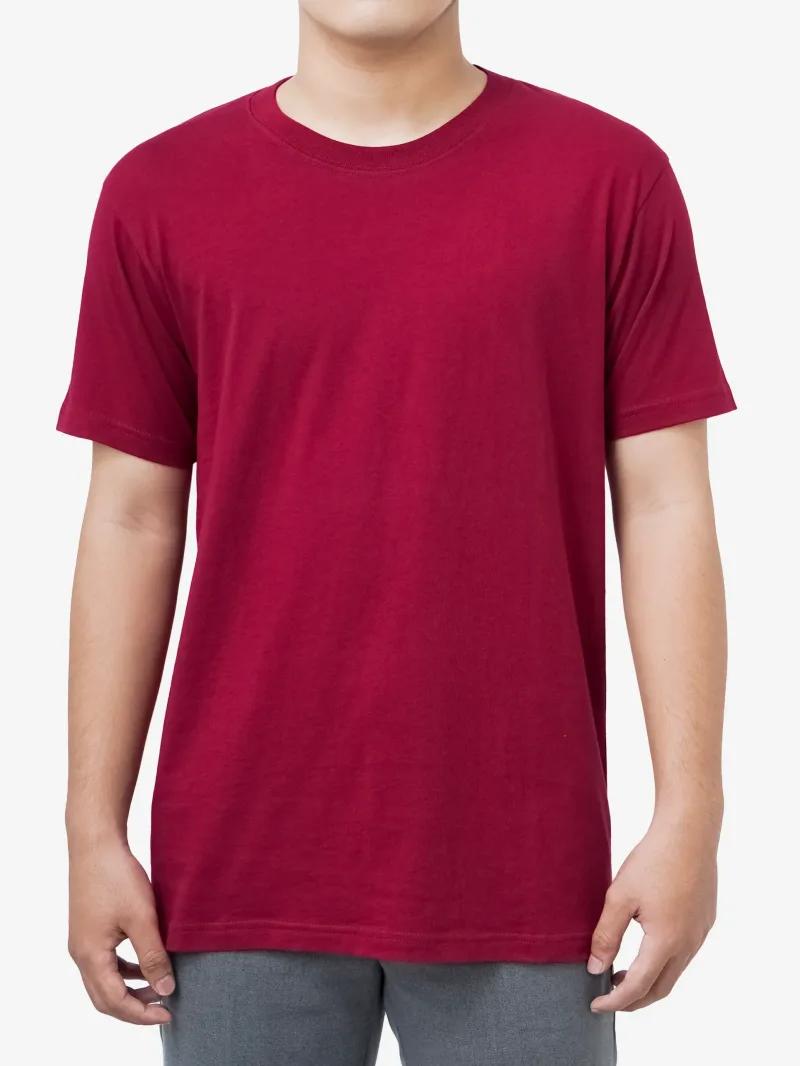
The best base layer for an everyday hoodie is a plain, thin tee that lies flat. Its collar should still be neat too, because from behind the hood, that collar is what peeks out and what other people see first. A tee like the Crew Black Tee is safe under any hoodie color because it adds no bulk at the neck. If you want a variation that stays neutral, the Crew Charcoal Tee offers a dark grey softer than black, working under light and dark hoodies alike.
One thin tee, one hoodie. That's it. If you're still cold, the hoodie has the wrong weight, not your base layer being too thin.
How to Check a Hoodie Before Buying, In Store or Online
In a store, the order goes like this. Lift the hoodie first to judge the weight. Put it on over the tee you're wearing, then look in the mirror: the shoulder seams should sit right at the edge of your shoulders, not drooping down your arm, and the hem should stop around the middle of your zipper. Last, move your arms forward and overhead to feel the room at your back and armpits. Three minutes, three checks, and you know almost everything you need to know.
Shopping online takes a bit of homework. Measure your best-fitting old hoodie: its body length from shoulder to hem, and its chest width. Compare those numbers with the size chart on the product page, don't rely on the letters S, M, or L because every brand sizes differently. Model photos also need careful reading. If the hem already covers part of the pockets on a tall model, on most Indonesian bodies it will fall even longer.
One Right Hoodie Can Be Worn Almost Every Day
Once the weight, length, and room are right, only then is color worth discussing. Black, grey, and navy slip into a daily rotation most easily because they go with almost any trousers. The base layer is actually where you can play a little. The Crew Military Green Tee under a grey or black hoodie adds an army green that shows when the zipper comes down, without adding a single layer.
A hoodie that passes those three checks rarely ends up living in a bag. It gets worn on the way out, stays comfortable in air conditioning, and still feels good on the way home. A good hoodie doesn't ask for attention. It comes off the hanger without a second thought, gets worn all day, and the next morning you reach for it again. If your old hoodie spends more time folded than worn, don't rush to buy a new one. Find out first which check it failed.