
You Brought an Umbrella, So Why Are Your Pants Still Soaked by the Time You Reach the Office?
Published
Your umbrella did its job that morning. Shirt dry, shoulders safe, bag untouched by water. But the moment you stepped into the office corridor, something flicked against you with every step: the bottom twenty centimeters of your pants, soaked, clinging to your calves, and still cold at ten o'clock.
We're trained to protect ourselves from rain that falls from above. Umbrellas, jackets, hoodies, all prepared for the parts of the body that would actually dry fastest on their own. Meanwhile, the real source of wetness comes from below: puddles, splashes from passing vehicles, and the water your pant hems sweep off the surface of the road.
What Gets Wet First Isn't Your Body, It's Your Pant Hems
Watch your walk from the bus stop or parking lot to the building. Your shoes step into water, and every stride throws droplets backward, right toward your pant hems. Regular long pants that fall over your shoes have a wider surface to catch all of it. The hems sweep the wet sidewalk like a small mop.
The result isn't just wetness. Street water carries dust and grit, so once it dries, the marks set in as a dull line around your ankles. This is where the neat look you put together in the morning falls apart, not in the part the umbrella was protecting.
Pant Length Decides How Much Water Comes to the Office With You
The solution is simple: shorten the distance between your hem and the road. An ankle cut, which ends around the ankle bone, gives the fabric no chance to touch puddles. Water can still hit your shoes and socks, but your pants survive.
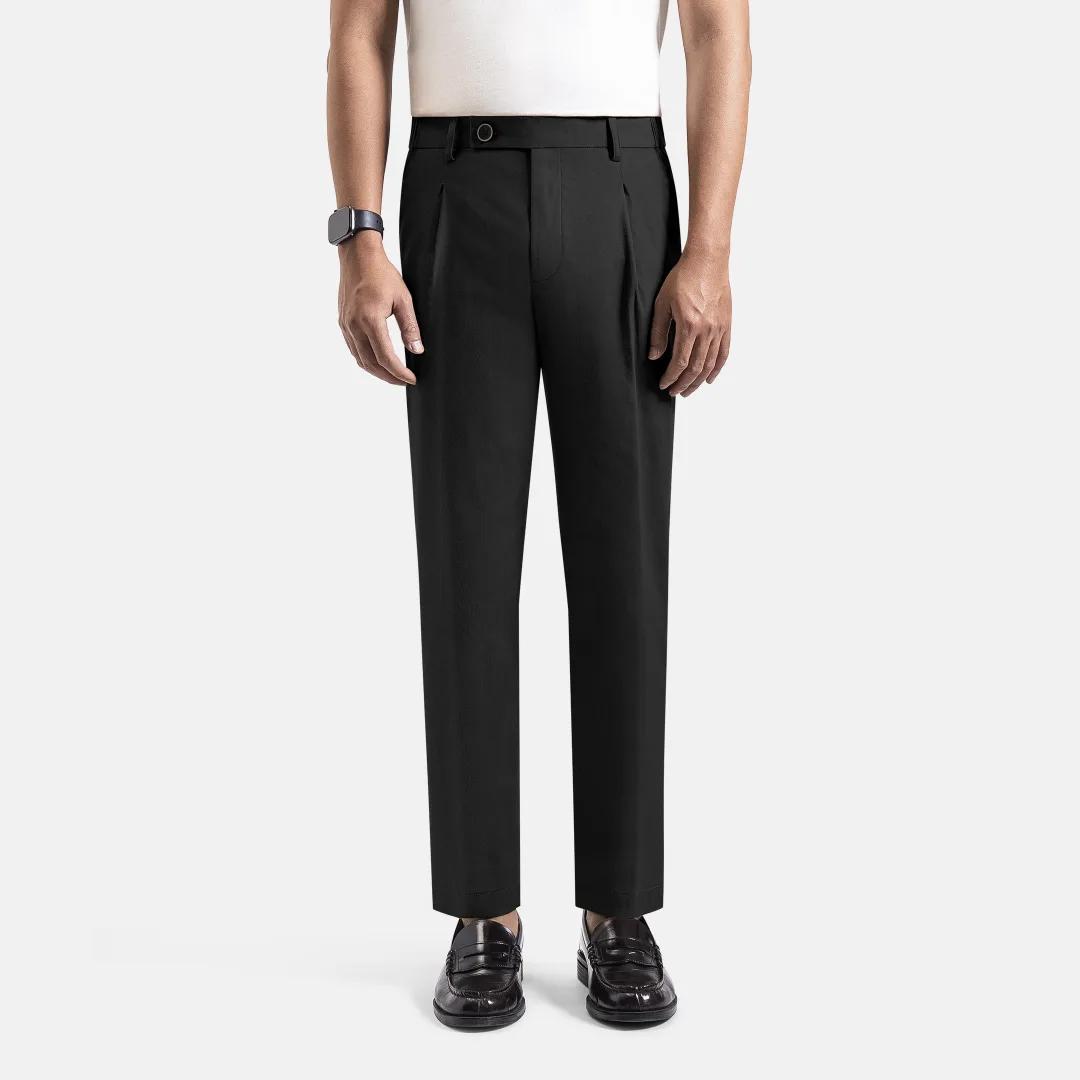
Take the Charcoal Grey Ankle Prime: the leg line stays sharp enough for the office, but the hem stops high enough to never sweep a wet road. If you're not sure about this cut yet, try cuffing your old pants twice before leaving the house, then feel the difference after one rainy commute.
Fabric That Recovers Quickly After Getting Wet
Length solves half the problem. The other half lives in the cloth. Some fabrics hold water like a sponge (thick denim is the clearest example), and some release water and dry before lunch.
Chino cloth, cotton with a diagonal weave that's lighter than denim, belongs to the quick recovery group. The Black Smart Waist Ankle Chino combines the two things discussed so far: fabric that doesn't hold water for long and a waistband that stays comfortable through a full day of sitting once it's dry. On days with a grey forecast, that combination is far more useful than the thickest pants in your wardrobe.
Outer Layers and Colors That Help
On top of all that, choose an outer layer that doesn't store water either. A light jacket you can shake dry is more useful than a thick hoodie that absorbs rain and stays damp until late afternoon. Then there's the damp spot people often forget: socks. Your pants may dry fast, but thick socks holding water feel like wearing a small towel all day. On rainy days, pick a pair that isn't too thick.
Color works too. Splash marks show most clearly on light fabric, so black and dark grey are the rainy season's best friends. The Black Smart Waist Ankle Prime hides splash marks well, and its cut keeps the hem far from the road. Save the cream colors for the dry season.
The rainy season doesn't ask for a new wardrobe. It asks for one small decision before you leave: make sure the part of you closest to the road is the part most ready to face it.
Frequently Asked Questions
Are regular long pants that cover your shoes still okay to wear in the rainy season?
Yes, especially if your commute is short and sheltered. But on days with a bad forecast, cuff the hems twice or choose an ankle cut so the fabric doesn't sweep through puddles.
What pant colors are safest from street water splashes?
Black and dark grey. Splash marks are almost invisible once dry. Light colors like cream are best stored away until the season changes.
Are jeans suitable for the office during the rainy season?
Not ideal. Thick denim absorbs water for a long time and feels heavy on your calves once wet. If you still want to wear them, pick a pair whose hems don't cover your shoes.
Should you bring a spare pair of pants to the office during the rainy season?
It depends on your commute. If you ride a motorcycle or often wade through puddles, one spare pair in your bag helps a lot. If your trip is short, the right length and fabric are usually enough.
Are ankle pants appropriate for a formal office?
In most Indonesian offices they still are, as long as everything else is neat: clean shoes, matching socks, a tidy shirt. If your office is very conservative, choose dark colors so the cut doesn't draw attention.
What should you do as soon as you arrive at the office with wet pants?
Pat off the remaining water with a tissue or cloth, then stretch your legs out so the fabric doesn't cling to your calves. Don't hold them against the hand dryer too long, because excess heat can leave dull marks on the fabric.