
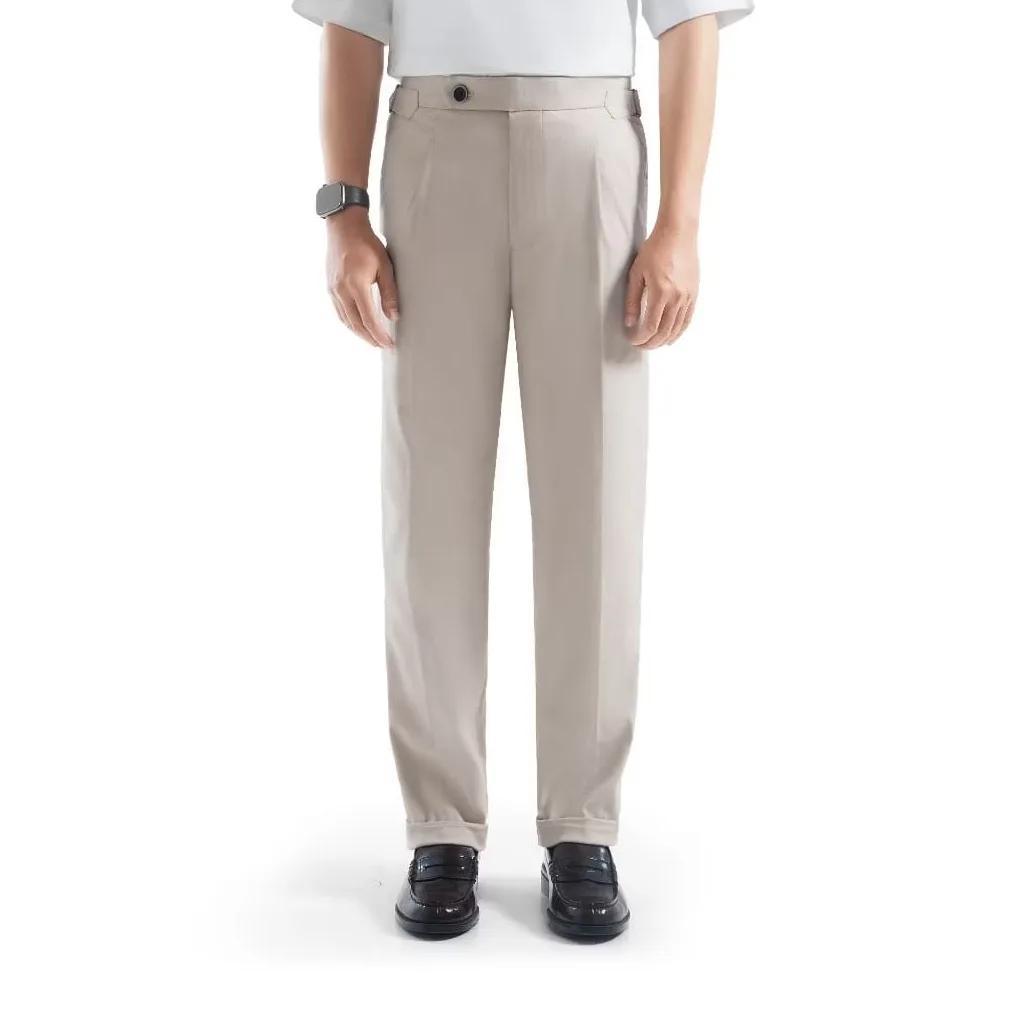
Your pants were still in the wash, so that afternoon you borrowed your older brother's pair for a family gathering. One size up from your usual. The waist was loose, comfortable for sitting through a long event.
But in front of the mirror, lines still radiated from the crotch. They looked different from the wrinkles on your own pants, yet they were clearly there. That was when you realized the problem was not simply about big or small.
Loose Doesn't Automatically Mean Smooth
Crotch wrinkles come from two opposite sources. The first is a shortage of fabric, visible as lines pulled from the crotch point outward. The second is excess fabric, visible as folds hanging at the top of the thigh.
Going up one size adds fabric everywhere at once. If your problem is pulling, it might help a little. If your problem is actually too much fabric, the wrinkles don't disappear. They just change shape, like the borrowed pair that afternoon.
The Crotch Is Where Three Measurements Meet
At the crotch, three measurements converge: rise depth (the distance from the waistband to the crotch point), thigh room, and the shape of the seat. Pants with a rise that's too short pull the fabric downward and create tense lines across the front. Pants with narrow thighs pull the fabric sideways.
This is where sizing up often fails. A bigger number adds width at the waist and thighs, but it doesn't add length downward. Yet a short rise needs length, not width. The waist ends up too big, while the point that genuinely lacks room keeps pulling.
Read the Wrinkle Direction Before Deciding
In the fitting room, stand facing the mirror in a normal posture. Lines pulled tight, like fine cracks in dry ground, mean the fabric is short at one point. Fabric that folds on itself or hangs loose means there's too much room.
Then sit down. Wrinkles while sitting are normal, because the body genuinely needs extra fabric in that position. What you should watch is when you stand back up: does the fabric fall neatly again, or does it stay bunched.
Cuts That Put Room in the Right Place
The answer is not a bigger size, but a cut that places fabric where it's needed. Gurkha pants, for example, have a higher waist with side adjusters and pleats at the front. Those pleats work as a fabric reserve around the crotch, so pulling eases without making the waist too big.
Another option is a cut with more thigh room, like the Silver Regular Comfort Pant. You stay at your usual size, but the thighs finally get the space they've been missing. For office wear, the Dark Grey Gurkha Pants are a safe pick, since the dark color softens the shadow of the pleats.
If cut terms like slim or straight still feel confusing, the KASUAL Help Center explains them in plain language.
So before going up another size, stand in front of the fitting room mirror first and read the wrinkle direction. The right pants are not the loosest ones, but the ones with room exactly where you need it.
Frequently Asked Questions
Do wrinkles at the crotch always mean the pants are too small?
Not always. Pulled lines do signal a lack of fabric, but bunched fabric actually signals too much room. Both look like wrinkles.
Are wrinkles that only appear when sitting still normal?
Yes. Sitting makes your body need extra fabric at the crotch. What you should check is when standing: the fabric should fall neatly again.
Can ironing the pants until crisp remove crotch wrinkles?
No. Ironing smooths the fabric surface, but wrinkles caused by size or cut will return the moment you move in the pants.
Does fabric with a bit of stretch help reduce pulling at the crotch?
It helps if the pulling is mild. But if the rise is too short or the thigh too tight, stretchy fabric only postpones the problem.
What cut should men with larger thighs choose?
Choose a cut with roomy thighs like Regular Comfort or straight, instead of going up a size. The waist stays right, the thighs get space.
How do I check for this problem in the fitting room?
Stand normally in front of the mirror and look at the wrinkle direction. Pulled lines mean too little fabric, bunching means too much. Sit briefly, stand again, and see whether the fabric falls back neatly.