
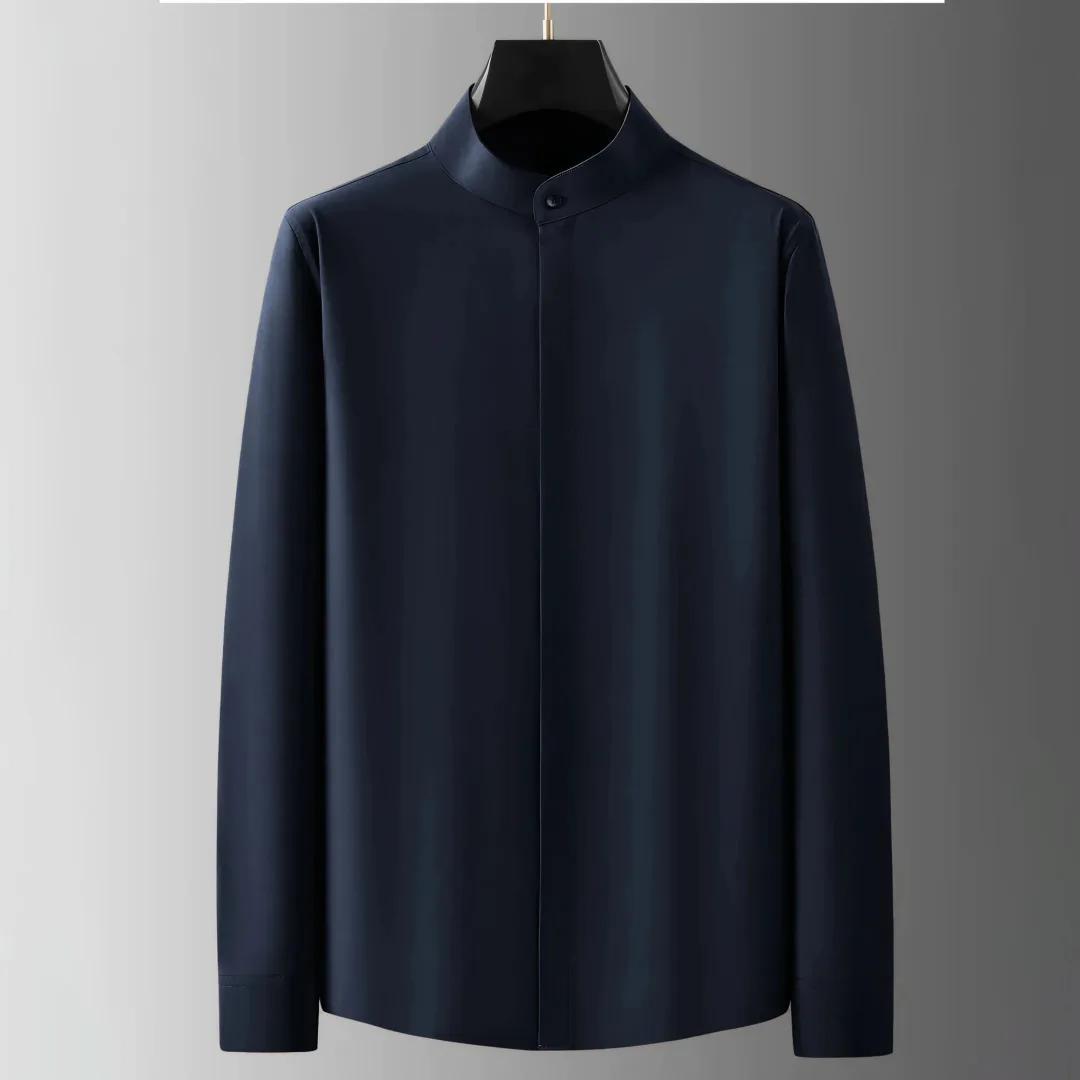
The folding clothes rack moved into the living room two days ago. The washing machine has just beeped to say the next load is done, but the rack is still full of yesterday's shirts. You run your fingers over the chest of the white oxford shirt. Dry. You fold it onto the pile in the wardrobe, and its hanger goes straight to the new load.
Three days later, you open the wardrobe and it smells like a towel left overnight in a gym bag.
In the rainy season, a shirt that's dry at the chest isn't necessarily dry at the collar. Before you fold, check the parts where the fabric is thickest. As long as they're still damp, the shirt stays on its hanger.
The Layered Parts of a Shirt Are the Last to Dry
The chest of a shirt is a single layer of fabric. The collar, cuffs and button placket are made from several layers stitched into one. A chest pocket adds another layer at the front. Water trapped between those layers takes longer to work its way out.
Rainy-season air is already heavy with moisture, so every fabric dries more slowly. The gap between a dry chest and a dry collar grows longer, too. Take the white Superfine shirt. Its collar and cuffs are interlined to hold their shape, so both have one more layer that needs to dry.
In a closed wardrobe, a shirt folded with a damp collar has no way to let its leftover moisture escape. The damp creeps into the shirts above and below it. Within a few days, mould and bacteria start to grow, and the smell spreads through the whole wardrobe.
No Sun? Dry Clothes Indoors Where the Air Moves
When the sky stays overcast for days, a breeze is more reliable than the sun. Moving air sweeps moisture off the surface of the fabric. Still air lets it hang around the shirt. So a rack in the living room is fine, as long as the air around it keeps moving.
Put shirts on hangers instead of draping them over a line. Leave about a hand's width between them, and unbutton the cuffs. A room with windows or doors open on two sides works best, because the air can flow through. If you don't have one, point a fan at the rack. Keep the rack away from the bathroom and kitchen, where the air is full of steam.
How long you wait also depends on the fabric. The white oxford shirt is mid-weight 100% cotton, which soaks up a lot of water and takes longer to dry. Wash shirts like this first thing in the morning so they get a full day on the rack. Its care instructions fit the season, too: dry in the shade and store in a dry place. The grey Superfine Koko shirt, a polyester and modal blend, is described as quick-drying on its product page, so it's usually the first one ready to fold.
Before You Fold, Press the Collar to Your Cheek
Damp fabric feels cooler than dry fabric, because the water in it is evaporating. Fingertips can be fooled, but your cheek is far more sensitive. Hold the collar against your cheek, then compare it with the chest of the shirt. Do the same at the cuffs and the button placket, and at the chest pocket if there is one.
Any part that feels cooler means the shirt isn't ready for the wardrobe yet. If you're still not sure, assume it isn't. Leave it hanging outside the wardrobe for one more night, then test it again in the morning.
Frequently Asked Questions
Can I iron a shirt that's still slightly damp so it dries faster?
Yes. The heat of the iron drives off the moisture left in the collar and cuffs, and slightly damp fabric is actually easier to press smooth. Use the temperature on the care label. After ironing, hang the shirt until it has cooled, then fold it.
Should I put a moisture absorber or mothballs in my wardrobe?
A moisture absorber can help keep the air inside the wardrobe dry through the rainy season. What it can't do is dry out clothes that go in damp. Mothballs deal with insects, and their smell clings to the fabric.
Can I get rid of the musty smell in a shirt just by drying it again?
Usually not, because the smell means mould and bacteria have already had time to grow. Wash it again with your usual detergent, then dry it until the collar and cuffs are completely dry. Check the clothes that were stacked with it, too.
What should I check when I use a wash-and-fold laundry service?
Take everything out of the plastic bag as soon as you get home, because plastic traps leftover moisture. This matters even more if the laundry was bagged while still warm from the dryer. Hang your shirts for a while and check their collars before they go into the wardrobe.
Does this work for T-shirts and trousers too?
It does. On a T-shirt, the slowest parts to dry are usually the collar and the folded hem at the bottom. On trousers, check the waistband and the inside of the pockets.