
Before this month's salary disappears into things you won't even notice, stand in front of your closet for a moment. The t-shirt you bought with last month's paycheck is in there. How many times has it actually left the house with you? Twice? Three? Or is the tag still attached to the collar?
This question matters right now, because your balance just got topped up. And like every month before it, the shopping app is usually open before the question has even been answered.
Payday Makes Everything Feel Necessary
Early in the month, every item suddenly makes sense. You already own three black t-shirts, but the one on display feels different. Dark pants are piling up, yet one more pair seems harmless.
The result is predictable. This month's cart looks a lot like last month's cart. The cause is simple: the money is there. As long as your shopping benchmark is a healthy-looking balance, your wardrobe will keep filling with the same items in slightly different colors.
Find the Function Your Wardrobe Is Missing
The fastest way to break the habit is to change the question. Not which item looks good, but which situation still has no answer in your closet.
Maybe you're always stumped whenever an invitation lands somewhere between casual and formal. Or every time you're asked to come into the office on a day off. If there's a situation that always has you rearranging your closet with no result, that's where the empty function is.
Here's a simple example. If semi-formal events always get answered with the same old shirt, one cream oxford shirt can close that gap. The color is neutral, so it slips easily into combinations you already own.
One Item That Fills a Real Need
From there the rule becomes easy: one paycheck, one item. This isn't about being stingy. One right item gets worn constantly, while five impulse buys queue up waiting for a turn that never comes.
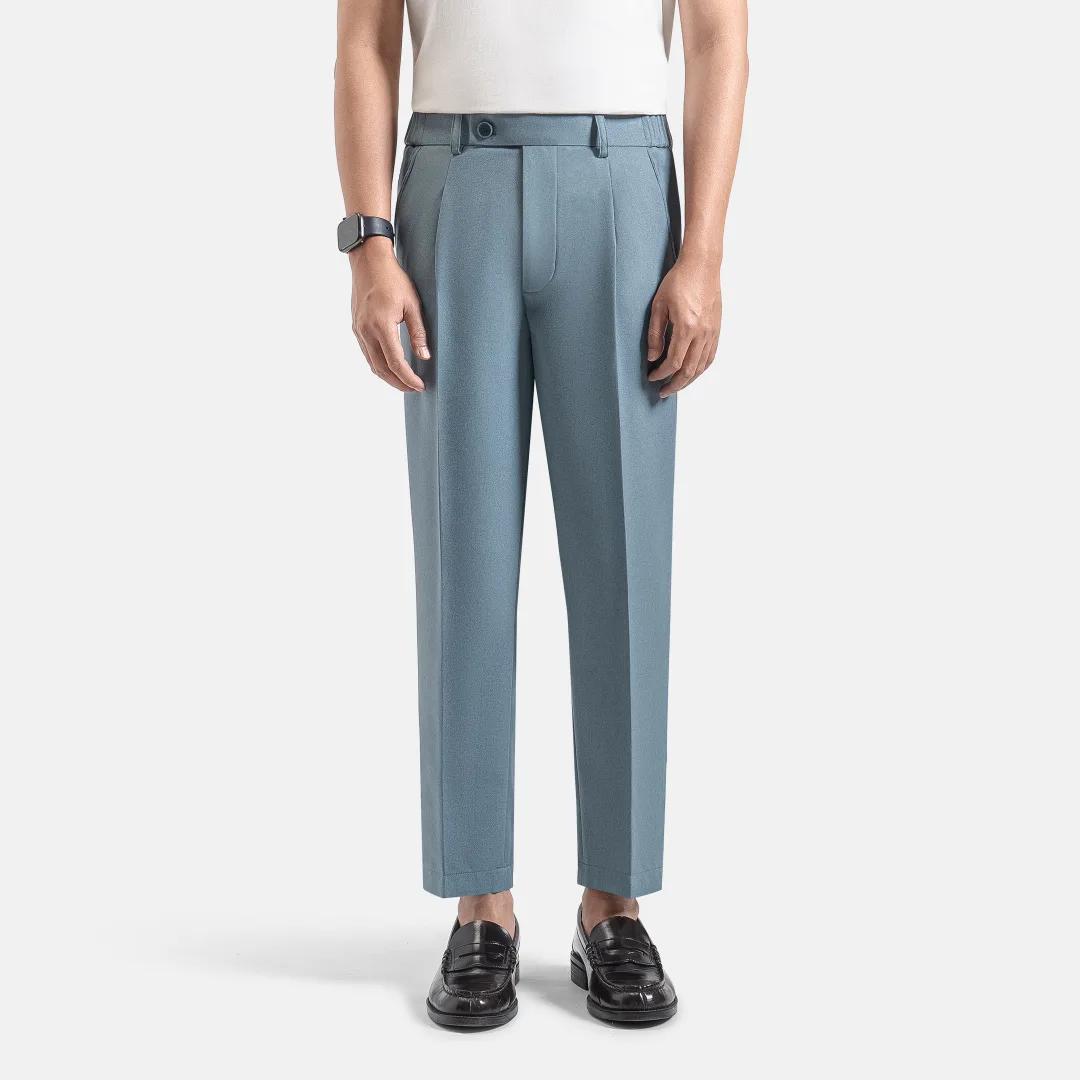
Pick something that works in more than one situation. Dark grey trousers from the Ankle Prime line, for instance, belong in the office on Monday and still look right at dinner on Saturday. An item worn in two settings never gets the chance to sit idle on a hanger.
The Seven-Day Test Before Money Leaves
Before you actually pay, give it a seven-day pause. Save the link in your phone notes, not in your cart, and write the date next to it. Carts are designed to make you rush. Notes are not.
Seven days isn't a magic number. It's just enough distance to separate a passing urge from a genuine need. During that week, watch your days. If the situation from earlier keeps coming up, the need is real and the item is worth buying. If you forget you ever saved the link, congratulations, you just saved money without feeling like you saved anything.
Items that pass this test usually have a clear function from the start, like black trousers from the Smart Waist line filling the daily work-pants slot. You won't need to debate when you'll wear them, because the answer existed before the item was even bought.
Next month the paycheck arrives again, and the process starts from the same place: your wardrobe.
Frequently Asked Questions
Is it okay to shop right on payday, or should I wait?
Go ahead, as long as you've saved the link and it passes the seven-day test. If the idea only popped into your head that day, hold off. Something you truly need will still feel necessary next week.
How do I know which clothing function is still missing from my wardrobe?
Recall the moment you showed up to an event unsure about your outfit, or turned down an invitation because you couldn't decide what to wear. That moment signals an empty function, not boredom with what's in your closet.
If two items both feel necessary, which one should I pick?
Choose the one that works in more situations this very week. Note the other for the next paycheck, so the one-item-per-month principle keeps running.
Will waiting seven days make the item I want run out of my size?
Sometimes. But stock usually comes back, and similar styles almost always exist. Losing one coveted item costs far less than buying the wrong one.
How many new items is reasonable to buy each payday?
One is enough for most people. If a month goes by with no shopping at all because no function is missing, that's a sign your wardrobe is working properly.