
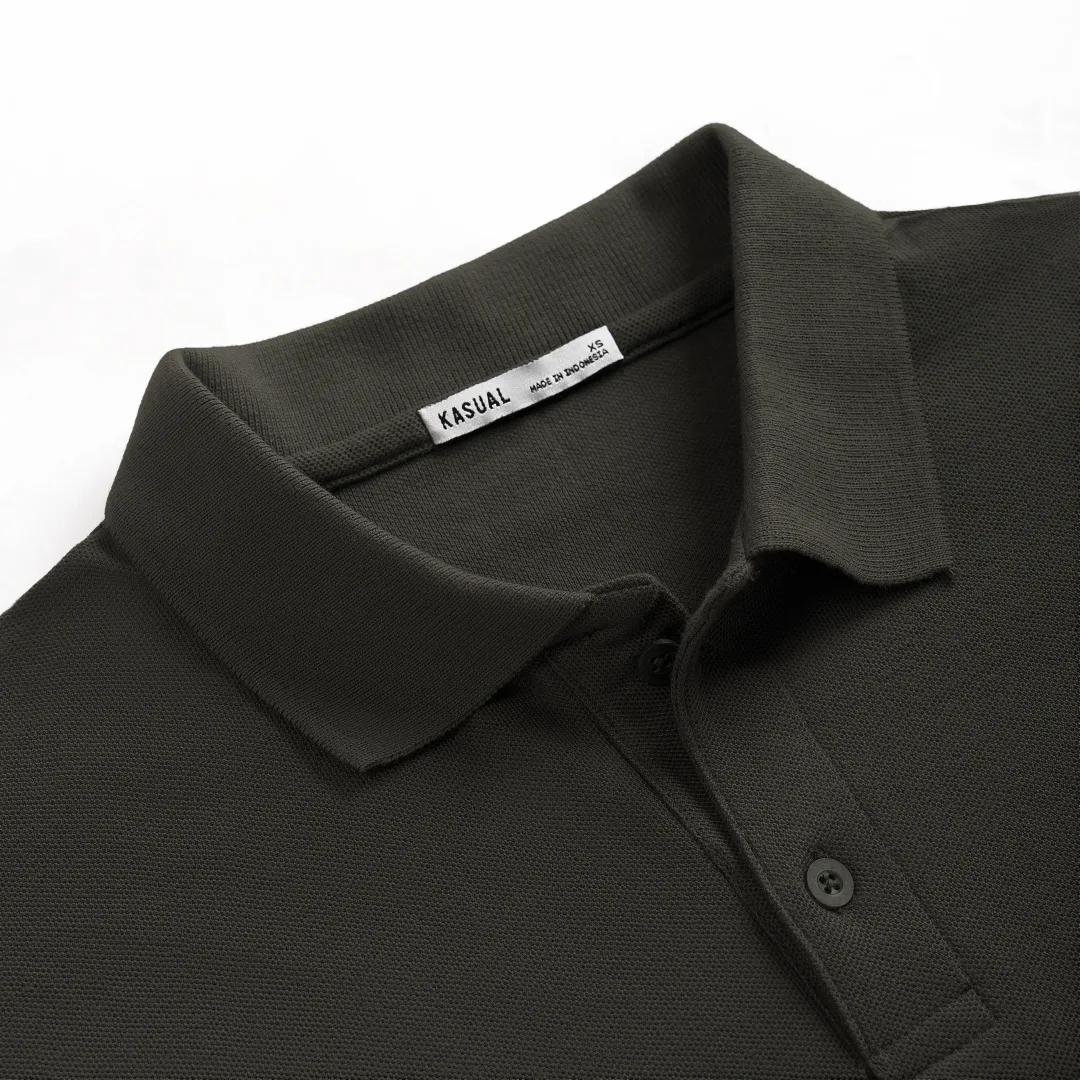
In a chilly shop, you rub the edge of a shirt between your thumb and forefinger and like it straight away. The surface is smooth and cool to the touch. Your verdict comes quickly: this fabric will keep you cool.
A week later you're waiting for a bus in it, the sun directly overhead. Before ten minutes are up, the fabric is plastered to your back like cling wrap.
The shirt wasn't lying about feeling cool. You just tested it in the wrong place. On a hot day, whether a shirt feels comfortable comes down to how easily sweat can evaporate through the fabric, plus a little room under the arms. You can check both before you pay.
That Sticky Feeling Comes From Trapped Sweat
Your body cools itself by sweating. Sweat comes out onto your skin and evaporates, and your body heat leaves along with the vapour.
The trouble is that this process stalls when fabric holds the sweat against your skin. The sweat never gets a chance to evaporate, and heat builds up under your clothes until you feel like you're being steamed. The air temperature hasn't changed, but you feel twice as hot.
That's why feeling comfortable in an air-conditioned room is no guide. In a cold room you barely sweat, so the fabric hasn't been tested yet. The test only begins once you step outside. Out there, a dense fabric becomes a wall that sweat vapour can't get through.
How to Tell if a Fabric Is Breathable: Light and a Puff of Air
In the shop, hold the fabric up to a light. If light still shows through between the threads, air can usually pass through too. A slightly open weave or a textured knit has tiny gaps that let air move in and out.
Next, blow through it. Hold the fabric close to your mouth, put your palm behind it and breathe out. If you feel the air on your palm, the fabric breathes. If the air gets stuck, so will your sweat later on.
Be wary of fabric that is slick and dense. It almost always feels cool at first touch, just like that shirt in the shop. But cool to the touch isn't always cool to wear.
Shopping online? Zoom in on the product photos until you can see the surface of the fabric. A fabric that looks textured is usually more open than one that looks dense and shiny.
Leave a Little Room Under the Arms
Your armpits get damp faster than anywhere else, and that's where sweat vapour most needs a way out. Once fabric hugs them tight, the exit closes. The trapped sweat then shows up as dark patches every time you raise your arms.
A little room goes a long way. Every time your arms swing as you walk, the gap under them works like a small pump: fresh air gets drawn in, hot air gets pushed out.
Check in front of a mirror with your arms relaxed at your sides. If the fabric still clings at the armpits, the shirt is too tight. If it balloons out so much you can see it from behind, it's too big, and you lose the neat look without getting any cooler. What you're after sits in between: not clinging, but not flapping either.
That's why a regular T-shirt one size up often feels cooler than a thin one that fits tight. However thin the fabric, if it sits against your skin all day, the sweat still gets trapped.
Moving In and Out of Air-Con Calls for Quick-Drying Fabric
If you spend much of your day indoors, hot weather is a double test. Inside, it's cold. Outside, it's scorching. In a single day you might go back and forth three or four times. Count them up: the walk out for lunch, a meeting or class in the next building, the trip home, plus every red light on hot asphalt if you ride a motorbike.
Fabric that soaks up sweat but dries slowly punishes you twice. Outside, your back gets wet. Step back into the air-conditioning and that wet patch turns cold, like a damp towel pressed against your body. This is often how office workers end up catching a chill.
For a day like that, choose fabric that lets go of moisture quickly. In a hot, humid climate, light to mid-weight fabric almost always makes more sense than anything heavy. A slightly textured surface helps too, because when it's wet the fabric doesn't lie flat against your skin, so it dries faster.
Shirts That Work in Hot, Humid Weather
Most polos are made from pique, a knit with a textured surface full of fine pores, not as smooth as a regular T-shirt. The texture keeps the fabric from lying fully against your skin, and the pores give air a way through. The collar also keeps you looking neat when you head back indoors.
You can see this in a polo like the Rise Polo Dark Grey, which has a honeycomb knit in a cotton blend. Its photo gallery includes close-ups of the fabric, so you can judge for yourself how open the surface is.
For T-shirts, stick to two rules: the knit shouldn't be too tight, and the fit shouldn't hug your body. If you're often outdoors, a Cuban-collar shirt is worth a look too. The collar lies open and flat in a V across the chest, so nothing closes in around your neck and air can come in from the top.
Colour and Sleeve Length Also Change How Hot You Feel
In direct sun, dark colours absorb heat faster than light ones. You feel the difference after five minutes on the pavement, waiting for a motorbike taxi whose pickup pin landed in the wrong spot. On days spent mostly outdoors, a light-coloured T-shirt like the Crew Light Pink Tee won't build up heat as fast as your go-to black one.
Long sleeves aren't automatically hotter, either. If you ride a motorbike, thin long sleeves actually protect your skin from the sting of the sun, and as long as the fabric is breathable, you stay cool. Polos come in long-sleeve versions like the Panjang Rise Polo White too, with the same pique knit, and the knit cuffs roll up easily once you're off the bike.
The rest comes down to habit. Don't tuck your shirt in too tightly. Undo the top button as soon as you leave the building, and roll up your sleeves for a long walk.
Next time you're in a chilly shop, hold the fabric up to the light as well, and blow through it once. The shop assistant may give you a puzzled look. Let them. They won't be the one standing at a bus stop at noon.