
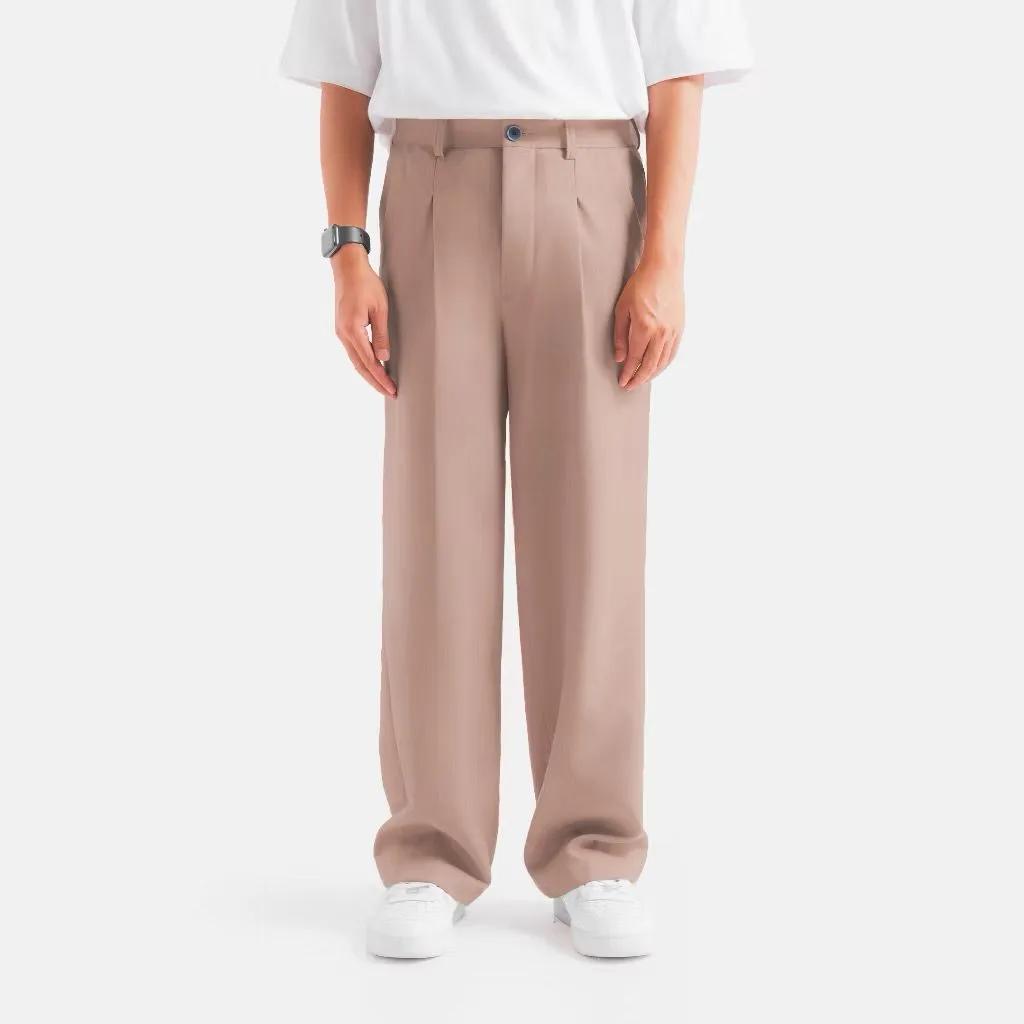
In the fitting room, you're holding two pairs of pants. Both feel roomy when you try them on. One is spacious at the thighs; the other runs wide and straight from the hips down. The labels are different: one says loose, one says wide, and the line outside is already waiting. You have to decide, even though there's only one question in your head: what exactly is the difference?
The answer turns out to be simple. Look at where the fabric widens. From there, every term becomes easy to map out.
The Difference Is Where the Fabric Widens
Wide, loose, and baggy aren't just names meant to sound cool. Each one places its width in a different spot.
Wide widens evenly from the hips all the way down. The fabric falls straight, much like classic tailored trousers, and the shape stays consistent from top to bottom.
Loose adds extra room at the thighs, then tapers slightly toward the ankle. The result looks closer to regular pants, just roomier. This is the right pick if you have larger thighs or a day full of movement: riding a motorbike, squatting, sitting for hours. You get freedom of movement without looking like you're wearing pants a size too big.
Baggy stacks a large amount of fabric around the thighs and hips, then narrows sharply at the ankle. This is the most extreme of the three.
If you're also curious about other fit terms like slim or straight, there's a full explanation in the Help Center.
Why Baggy Disappoints Most Often on the Body
Baggy is designed to look excessive. That's part of its style. The problem is, the piled-up fabric at the hips makes your waist look wider than it actually is. On the average Indonesian height, the result quickly reads as oversized rather than intentional.
This is also why Kasual doesn't make baggy pants. Not because the style is wrong, but pants that are too loose get returned far more often than ankle cuts, where the hem lands right above the ankle. The reason for the return is almost always the same: neat in the photos, too big on the body.
Choose Wide or Loose Based on Your Needs
Here's the quick rule: if you only need room at the thighs, go loose. If you want an even, clearly visible width as a style statement, go wide.
For wide pants, the safest option is one where the waist sits clearly in place. The fabric stays straight and wide, but because there's no extra stacking at the hips, the result looks like a deliberate style choice rather than a sizing mistake.
You can start with the classic black wide pants, or try the Black Brown City Loose Wide Pant if you want pleat detailing at the front. For something bolder, there's the Black Elite Wide Raw Denim Pant. Raw denim means denim that hasn't been washed after sewing. The color runs deeper and the fabric feels stiffer during the first few wears.
One companion rule: pair them with a shorter top or one that's tucked in. A long top over wide pants erases your waistline, and that line is exactly what keeps wide pants looking right on your body.
If you want to compare them side by side, open the wide pants collection and watch how the fabric falls on each pair.
Frequently Asked Questions
Do wide pants work for shorter people?
Yes, as long as the waist sits clearly in place and the length hits right at your shoes without bunching at the ankle.
Is loose fit the same as baggy?
No. Loose gives room at the thighs and then tapers slightly downward, while baggy piles a large amount of fabric around the thighs and hips.
What tops go well with wide pants?
A shorter top or one that's tucked in, so your waistline stays visible and your silhouette doesn't get swallowed up.
Can baggy jeans still be worn daily?
Yes, but you need to know how to style them. Without that, the stacked fabric tends to look oversized rather than intentional.
What's the difference between loose fit and straight fit?
Loose has extra room at the thighs, while straight runs straight from the hips down with no added space.